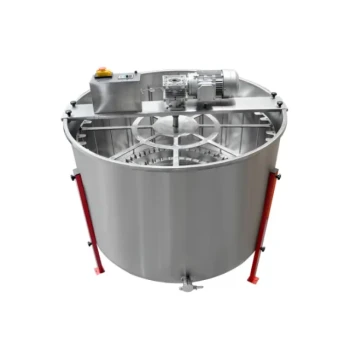
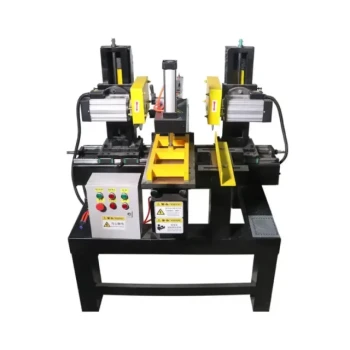
Industrial-grade hive-making machinery acts as the logistical backbone for large-scale oil palm beekeeping by transforming hive construction from a manual craft into a precise manufacturing process. By enabling the rapid production of standardized, durable habitats, this technology ensures the uniformity required to manage thousands of colonies systematically across vast plantation areas.
Success in large-scale apiaries relies less on individual hive craftsmanship and more on systemic uniformity. Industrial machinery provides the critical "hardware foundation"—precision, interchangeability, and volume—that allows managers to shift focus from maintaining equipment to managing biological pollination vectors efficiently.
Establishing the Hardware Foundation for Scale
The Power of Precision and Standardization
In a large plantation environment, inconsistent equipment creates logistical bottlenecks. Industrial machinery utilizes high-precision mechanical processing to ensure every hive component is identical.
This standardization guarantees interchangeability, meaning parts from one hive can fit another without modification. This is a physical prerequisite for intensive beekeeping, allowing for the seamless rotation of equipment between different sectors of the plantation.
Ensuring Habitat Stability
Bee colony health is directly linked to the quality of their enclosure. Industrial manufacturing produces tightly sealed structures that manual assembly often struggles to match consistently.
These uniform, gap-free hives provide a stable internal environment, protecting colonies from external threats and weather fluctuations. This stability effectively improves the resilience of bee colonies, which is essential for maintaining the population density required for effective pollination.
Rapid Deployment Capabilities
Oil palm plantations often cover thousands of hectares, requiring a massive influx of hives simultaneously. Industrial machinery facilitates rapid mass production, cutting down the time required to build inventory.
This speed allows project managers to achieve uniform colony distribution quickly. Instead of a staggered rollout that leaves parts of the plantation under-pollinated, machinery enables a synchronized deployment strategy.
Optimizing Operational Efficiency
Reducing Maintenance and Labor Costs
When hive dimensions are consistent, maintenance becomes a standardized procedure rather than a custom repair job. This significantly reduces labor costs and technical requirements for field staff.
Furthermore, precision cutting reduces material waste during production. This makes the entire operation more economically viable, particularly in resource-constrained environments where unit production costs must be minimized.
Facilitating Systematic Management
Standardized hardware is the enabler of scientific colony management. It allows for the precise application of treatments, standardized feeding protocols, and systematic hive inspections.
Additionally, uniform hives create a solid foundation for integrating automated harvesting and processing equipment. As the project scales, the compatibility with modern automation tools prevents the need for costly hardware retrofits.
Understanding the Trade-offs
While industrial machinery offers immense benefits for scale, it introduces specific challenges that must be managed. The primary trade-off is the high initial capital investment required to procure and install the machinery compared to traditional manual tools.
Additionally, this approach creates a dependency on specific raw material standards; the lumber must be of a quality and dimension that the machines can process without jamming or defect. Finally, the operation shifts from needing skilled carpenters to needing skilled machine operators, requiring a different training pipeline for your workforce.
Making the Strategic Choice for Plantation Management
To maximize the return on investment for your beekeeping project, align your hardware strategy with your operational goals:
- If your primary focus is rapid pollination coverage: Prioritize machinery with high throughput capabilities to deploy the maximum number of hives in the shortest window, ensuring immediate biological impact.
- If your primary focus is long-term operational efficiency: Prioritize machinery that guarantees high-precision interchangeability, as this will drastically lower labor and maintenance costs over the multi-year lifespan of the project.
By standardizing the hive, you stabilize the colony, turning beekeeping from a variable art into a scalable, industrial science.
Summary Table:
| Key Benefit | Impact on Large-Scale Projects | Operational Value |
|---|---|---|
| Precision Standardization | Guarantees interchangeability of all hive parts | Simplifies logistics & part replacement |
| Rapid Mass Production | Enables simultaneous deployment across vast hectares | Ensures uniform pollination coverage |
| Structural Stability | Creates tightly sealed, durable habitats | Enhances colony resilience & health |
| Cost Optimization | Reduces manual labor and minimizes material waste | Lowers long-term unit production costs |
| Automation Readiness | Provides foundation for automated harvesting tools | Future-proofs the apiary infrastructure |
Scale Your Beekeeping Operation with HONESTBEE Precision
Transitioning from manual craft to industrial science is the only way to manage large-scale oil palm pollination effectively. HONESTBEE specializes in empowering commercial apiaries and distributors with the robust hardware needed for success.
We provide a comprehensive wholesale range of industrial hive-making machines, honey-filling equipment, and high-quality consumables designed for durability and precision. Whether you are establishing a new plantation project or upgrading a distribution network, our machinery ensures your hives meet the highest standards of interchangeability and performance.
Ready to optimize your production? Contact our experts today to discuss how HONESTBEE can supply the tools and machinery to turn your beekeeping project into a scalable success.
References
- Dunsford, Brian, Jayarathne, Isuri. Evaluating Apis cerana (L.) beekeeping as a strategy to enhance pollination and yield in Sri Lankan oil palm plantations. DOI: 10.5281/zenodo.17736363
This article is also based on technical information from HonestBee Knowledge Base .
Related Products
- Stainless Steel J Hook Hive Tool for Beekeeping
- Multi-Function Plier-Style Frame Grip Hive Tool
- Stainless Steel Honey Bee Smoker Hive and Honeycomb Smoker for Beekeeping
- Automatic Honey Filling and Filtering Machine for Beekeeping Bottle Filling
- HONESTBEE 72 Frame Industrial Electric Honey Extractor for Beekeeping
People Also Ask
- What specific challenges do beekeeping hive tools address during hive maintenance? Essential Solutions for Apiaries
- What is a J-hook hive tool and why is it favored by some beekeepers? Master Gentle Frame Handling
- What are the features of a J-hook hive tool? Effortlessly Lift Frames with Superior Leverage
- What is the purpose of the J-hook hive tool? Effortlessly Lift Frames with Superior Leverage
- How is a J-hook hive tool designed and what is its primary use? Master Effortless Hive Inspections