Reversing brood boxes functions as a spatial reset button that disrupts the colony's instinct to swarm. During the winter months, honey bee colonies naturally cluster and move upward through the hive as they consume resources, often resulting in a congested upper box and a largely abandoned lower box by spring. By physically swapping these positions—placing the empty box on top—you provide the bees with immediate vertical space to inhabit, alleviating the perception of overcrowding that primarily drives the urge to swarm.
By manipulating the hive configuration to place empty comb above the brood nest, you effectively trick the colony into perceiving unlimited room for expansion. This delays the biological "crowding" signal that tells the colony it has outgrown its home.
The Mechanics of Hive Migration
The Upward Shift
Honey bees are distinct in their winter behavior; they do not hibernate but rather cluster for warmth. As they consume honey stores, this cluster moves upward.
The Spring Imbalance
By the time spring arrives, this upward movement often creates a top-heavy distribution. The upper brood box becomes packed with bees, brood, and resources.
The False Ceiling
Simultaneously, the lower brood box is often left completely empty. However, because bees prefer to move up rather than down, they may ignore this empty space below them, perceiving the top of the hive as a "ceiling" that restricts further growth.
How Reversing Prevents Swarming
Relieving Congestion
When a beekeeper reverses the boxes, the crowded upper box becomes the bottom box. The empty lower box becomes the top box.
Encouraging Vertical Growth
This reconfiguration places a vast area of empty comb directly above the active brood nest. Because the bees' natural instinct is to expand upward, they immediately move into this space to lay eggs and store honey.
Disincentivizing the Split
Swarming is essentially a reproductive split triggered by a lack of space. By providing this "new" overhead space, you remove the immediate pressure to split, keeping the workforce focused on expansion rather than departure.
Important Considerations and Trade-offs
Reversing vs. Expansion
Reversing utilizes space the hive already has. However, as the population explodes during peak productivity seasons, simply rearranging existing boxes is not enough.
The Necessity of Additions
To maintain swarm prevention throughout the season, you must eventually add new vertical space. This involves placing additional deep boxes or honey supers (with queen excluders if necessary) to accommodate the growing population.
The Timing Risk
Reversing must be timed carefully. If done too early in the season when nights are still freezing, moving the brood nest to the bottom (where it is colder/draftier) can chill the brood and set back colony development.
It Is Not a Cure for Active Swarming
Reversing is a preventative measure. If the colony has already initiated swarm preparations (such as building swarm cells), reversing boxes will rarely stop them. At that stage, more drastic measures like splitting the hive are required.
Making the Right Choice for Your Goal
To manage your colony effectively, assess the current state of the hive's population density.
- If your primary focus is Early Spring Management: Reverse the brood boxes to encourage the cluster to expand upward into the empty comb they abandoned during winter.
- If your primary focus is Peak Season Productivity: Add new honey supers or deep boxes immediately, as reversing alone will not provide enough volume for a booming population.
Successful swarm prevention is not about restricting the bees, but about ensuring they never perceive the limits of their environment.
Summary Table:
| Feature | Effect of Reversing Brood Boxes |
|---|---|
| Primary Goal | Relieve upper-box congestion & prevent swarming |
| Mechanism | Places empty comb above the brood nest to simulate unlimited space |
| Timing | Early spring (after the risk of freezing nights has passed) |
| Constraint | Effective only before swarm cells are built; not a cure for active swarms |
| Next Steps | Add honey supers or deep boxes once the population outgrows existing space |
Maximize Your Apiary's Productivity with HONESTBEE
Effective swarm management is the key to a successful harvest, but having the right equipment is what makes it possible. HONESTBEE is dedicated to supporting commercial apiaries and distributors with a comprehensive wholesale range of professional beekeeping solutions. From high-quality hives that simplify brood box management to advanced honey-filling machines and specialized beekeeping tools, we provide everything you need to scale your operations.
Why partner with HONESTBEE?
- Comprehensive Catalog: One-stop shop for tools, machinery, and essential industry consumables.
- Commercial Grade: Equipment designed to withstand the demands of professional beekeeping.
- Growth Focused: We supply the hardware you need to manage more hives with less effort.
Ready to upgrade your equipment or expand your inventory? Contact HONESTBEE today to learn how our wholesale offerings can drive your business forward.
Related Products
- Langstroth Honey Bee Box Hive Boxes for Different Depths
- Professional Reversible Beehive Hive Entrance
- Australian Langstroth Beehive Boxes for Beekeeping Wholesales
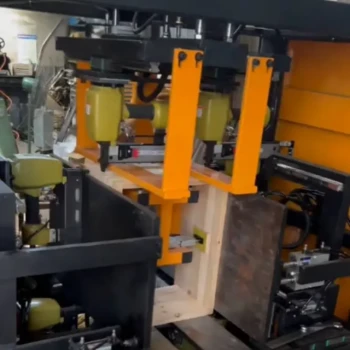
- Automatic High-Speed Bee Hive Box Stapling Machine
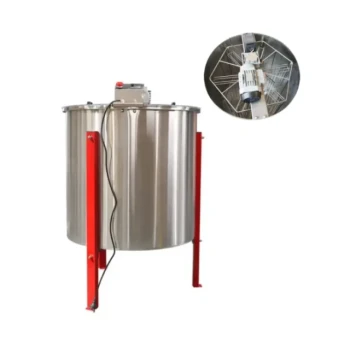
- HONESTBEE 6 Frame Self Reversing Electric Honey Extractor for Beekeeping
People Also Ask
- What role do standardized Langstroth boxes play in commercial apiary management and honey bee research? | HONESTBEE Guide
- What are the differences between the three standard depths of Langstroth boxes? Choose the Best Size for Your Apiary
- What are the primary advantages of using standardized Langstroth boxes? Scale Your Commercial Beekeeping Operation
- What features of Langstroth hive boxes contribute to expandability and honey yield? Maximize Your Apiary Production
- What are the typical uses for the different box sizes in a Langstroth hive? Master Hive Management & Efficiency