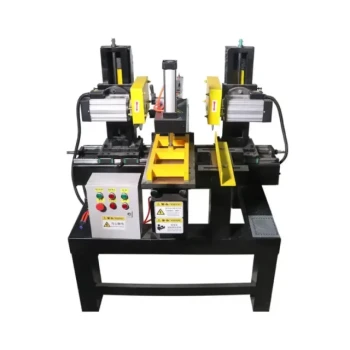
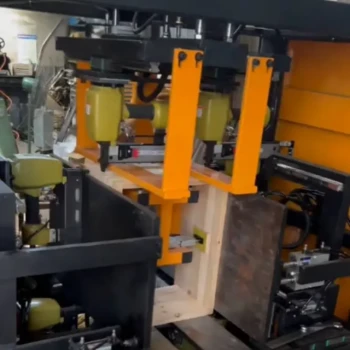
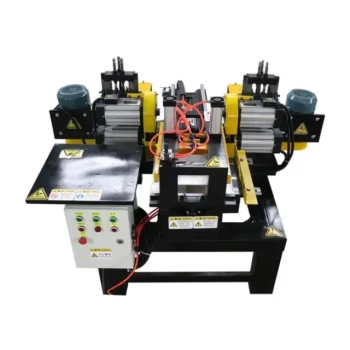
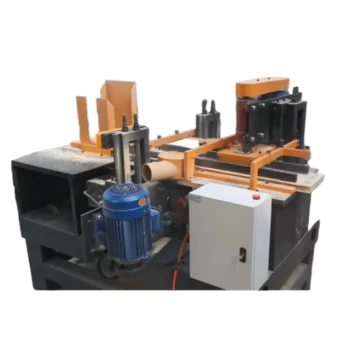
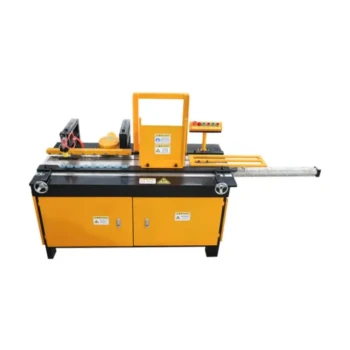
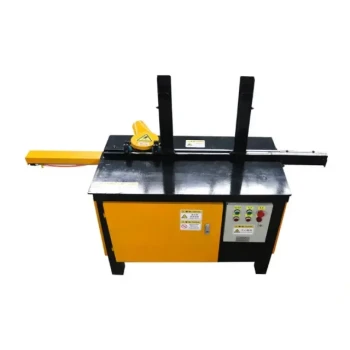
Specialized beehive manufacturing machinery serves as the backbone of modern commercial apiculture by shifting hive construction from manual craftsmanship to high-precision industrial engineering. This technology ensures that every component produced—from brood boxes to individual frames—is dimensionally exact and completely interchangeable across thousands of colonies. By eliminating physical inconsistencies, this machinery solves the logistical and mechanical friction that otherwise limits the scale of beekeeping operations.
The Core Insight Industrial manufacturing machinery does not just build boxes faster; it creates a universal hardware standard that enables automation and logistics. Without the high-precision structural stability provided by this equipment, large-scale migratory beekeeping and automated honey extraction would be operationally impossible.
The Foundation of Scalability: Precision and Standardization
The primary contribution of this machinery is the creation of a standardized physical environment. In a commercial setting managing thousands of hives, the ability to mix and match components without modification is essential.
Total Component Interchangeability
Manual hive construction often leads to slight variations that make parts incompatible. Specialized machinery ensures high-precision dimensions for every cut and joint. This allows beekeepers to move frames and supers between any hive in their operation instantly, streamlining colony management and resource balancing.
Enabling Automated Processing
Modern honey production relies on automated extraction lines that uncap and spin honey frames. These robots and conveyors require strict dimensional uniformity to function without jamming or breaking equipment. Precision-manufactured hives provide the standardized geometry required to integrate with these advanced harvesting technologies.
Reducing Infrastructure Costs
By utilizing mechanized processing for wood or composite materials, this machinery drastically lowers the unit cost of infrastructure. This economy of scale provides the physical foundation necessary for professional beekeepers to rapidly expand colony numbers without being cost-prohibitive.
Operational Efficiency and Logistics
Commercial beekeeping is rarely stationary; it is a logistics-heavy industry involving the transport of livestock across vast distances. The manufacturing process directly impacts the viability of these operations.
Resilience in Migratory Beekeeping
Large-scale operations frequently transport hives long distances for pollination services. Hives produced by specialized machinery feature superior structural stability. They are engineered to withstand the vibration, stacking pressure, and handling stress associated with frequent loading and transport, preventing equipment failure on the road.
Improved Thermal Insulation and Sealing
Precision manufacturing minimizes gaps in the hive structure that occur with manual assembly. Tighter joints provide better thermal insulation and sealing properties. This helps the colony regulate its internal temperature more efficiently and offers a robust defense against pests, such as hornets, that exploit structural weaknesses.
Biosecurity and Disease Management
Standardized equipment facilitates better hygiene and biosecurity protocols. Uniform surfaces and compatible parts make inspection, cleaning, and component rotation more systematic. A consistent physical environment is fundamental for maintaining colony health and minimizing disease transmission across an apiary.
Understanding the Trade-offs
While industrial manufacturing is critical for scale, it introduces specific constraints that operators must acknowledge.
Capital Investment vs. flexibility
High-volume machinery requires significant upfront capital and creates a dependency on a specific standardized system (e.g., Langstroth). Once an operation commits to a specific machine-tooled dimension, switching to a different hive style or customizing equipment becomes difficult and expensive due to retooling requirements.
Material Dependencies
The efficiency of these machines often relies on specific grades of timber or composite materials to maintain precision. Reliance on processed materials can sometimes distance the beekeeper from traditional, locally sourced inputs, potentially increasing vulnerability to supply chain fluctuations.
Making the Right Choice for Your Goal
The value of specialized machinery depends on the specific bottleneck in your current operation.
- If your primary focus is Rapid Expansion: Prioritize machinery that lowers the unit cost of production to maximize the number of colonies you can house within your budget.
- If your primary focus is Migratory Pollination: Focus on equipment that guarantees joint strength and structural rigidity to withstand the physical stress of frequent transportation.
- If your primary focus is Processing Efficiency: Ensure your manufacturing tolerances align perfectly with your automated honey extraction lines to prevent downtime.
True scalability in beekeeping is achieved when the hardware becomes invisible—reliable, interchangeable, and robust enough to let you focus on the biology rather than the box.
Summary Table:
| Key Support Factor | Impact on Large-Scale Operations | Primary Benefit |
|---|---|---|
| Dimensional Precision | Guarantees total component interchangeability | Streamlined colony management |
| Standardized Geometry | Seamless integration with automated extraction lines | Increased processing speed |
| Structural Stability | Withstands vibrations and stacking during transport | Optimized for migratory beekeeping |
| Thermal Engineering | Minimized gaps and tighter joints | Enhanced insulation & pest defense |
| Economic Scaling | Drastically lowers the unit cost of infrastructure | Faster apiary expansion |
Scale Your Commercial Apiary with HONESTBEE Precision Engineering
At HONESTBEE, we empower commercial apiaries and distributors with the industrial-grade tools needed to dominate the market. Our comprehensive wholesale catalog includes high-precision beehive-making machines, automated honey-filling lines, and professional beekeeping equipment designed for maximum durability.
Whether you are looking to lower infrastructure costs through in-house manufacturing or need reliable machinery that integrates with your automated logistics, our team is ready to provide the specialized hardware and consumables your business demands.
Ready to industrialize your honey production? Contact HONESTBEE Today for Custom Solutions
References
- John P. Howse. Using the theory of practice architectures to inform transformative apprenticeships: A case study of apiculture education and training in Aotearoa New Zealand. DOI: 10.54844/vte.2025.0933
This article is also based on technical information from HonestBee Knowledge Base .
Related Products
- High-Efficiency Pneumatic Bee Hive Making Machine for Rapid Box Assembly
- Mini Desktop Bee Hive Frame Forming Making Machine
- Beehive Machine Double End Saw for Precision Hive Component Manufacturing
- Automatic High-Speed Bee Hive Box Stapling Machine
- HONESTBEE Top Bar & Bottom Bar Forming Machine | Bee Frame Machine
People Also Ask
- How does the introduction of professional beehive-making machinery benefit sustainable beekeeping? Scale Your Apiary
- Why is specialized beehive-making machinery critical for low-defense breeding? Enhance Selection with Precision Tools
- How does the introduction of specialized beehive making machinery contribute to increasing the scale of regional beekeeping industries?
- What is the importance of specialized beehive making machinery in a circular bio-economy? Build Local Sustainability
- Why is specialized beehive-making machinery essential? Scale Your Apiary with Precision Industrial Standards