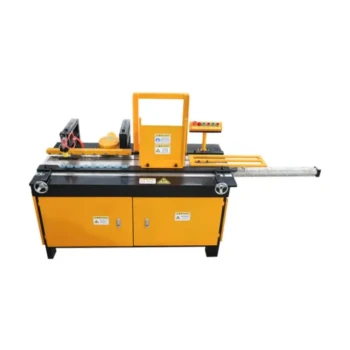
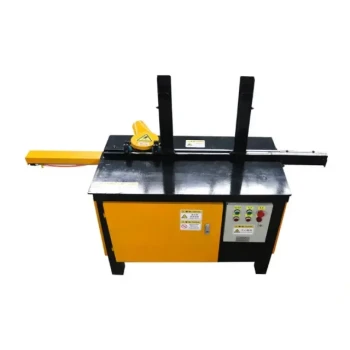
Standardized beehive manufacturing equipment improves productivity by utilizing industrial-grade precision to ensure every hive component is physically consistent and structurally stable. This uniformity allows apiaries to transition from manual processing to fully automated systems, ensuring compatibility with modern honey extractors and cleaning machinery while stabilizing production levels despite environmental variables.
The shift to standardized manufacturing transforms beekeeping from a variable, labor-intensive craft into a scalable industrial operation. By ensuring universal compatibility across equipment, apiaries can mechanize workflows, drastically reduce labor costs, and maintain stable yields even when facing biological challenges.
Enabling Industrial Automation
Integration with Extraction Machinery
The primary driver of productivity is mechanical compatibility. Standardized manufacturing ensures that hives meet precise specifications required by automated honey extractors and cleaning equipment.
Without these tight tolerances, automated machinery often jams or damages frames, forcing operators to revert to slow manual processing. Precision woodworking eliminates these bottlenecks, allowing for continuous, high-volume extraction.
Universal Component Interchangeability
In large-scale operations managing thousands of colonies, the ability to swap parts without hesitation is critical. Standardized components—such as bottom boards, supers, and frames—are universally compatible across different hive sites.
This interchangeability eliminates the need to sort equipment by size or "fit," streamlining maintenance and significantly reducing the time required for routine hive management.
Optimizing Logistics and Scale
Streamlined Migration and Transport
Commercial apiaries frequently migrate colonies to chase nectar flows or pollination contracts. Precision-manufactured hives feature consistent dimensions that allow for secure, stable stacking during transport.
This structural uniformity reduces the risk of hives shifting or breaking during transit, minimizing colony loss and simplifying the logistics of moving massive numbers of bees.
Reducing Construction and Labor Costs
Industrial hive-making machines utilize automated assembly processes that are significantly faster than manual construction. This rapid production capability reduces the per-unit cost of construction.
Furthermore, by standardizing the infrastructure, apiaries reduce the manual labor required for maintenance and repair, allowing fewer staff members to manage a larger number of colonies efficiently.
Stabilizing Biological Factors
Enhancing Overwintering Success
Productivity is heavily dependent on colony survival rates. High-precision manufacturing guarantees tighter sealing and superior structural durability compared to handmade hives.
This improved physical integrity helps maintain a stable internal temperature, significantly improving overwintering success rates and ensuring colonies emerge in spring ready for production.
Protecting Honey Quality
Standardized equipment provides a controlled environment that reduces stress on bees during the extraction process.
By minimizing physical disturbance and protecting the colony's biological activity, standardized facilities help preserve the natural enzyme levels and active ingredients of the honey, ensuring a higher-quality final product.
Understanding the Implementation Trade-offs
While the benefits of standardization are clear, transitioning to this model requires careful planning regarding capital and flexibility.
Initial Capital Intensity Moving from manual repair to industrial-grade standardized equipment often requires a significant upfront investment in new stock. Apiaries must weigh this immediate cost against the long-term savings in labor and increased yield.
Rigidity of Standards Standardization inherently limits customization. Once an apiary commits to a specific dimensional standard (e.g., Langstroth specifications), they are effectively locked into that ecosystem. Deviating later can create logistical chaos, making the initial choice of specifications a critical strategic decision.
Making the Right Choice for Your Goal
To maximize the benefits of standardized equipment, align your investment with your specific operational targets:
- If your primary focus is Rapid Scaling: Prioritize equipment with high-speed automated assembly capabilities to lower per-unit construction costs and expand colony count quickly.
- If your primary focus is Operational Efficiency: Focus on the interchangeability of components to ensure your frames and supers work seamlessly with automated extraction lines.
- If your primary focus is Yield Stability: Select high-precision gear with superior sealing and durability to improve overwintering survival rates and reduce replacement costs.
Standardized equipment is not just about wood and nails; it is the fundamental infrastructure required to turn a biological uncertainty into a predictable, profitable business asset.
Summary Table:
| Key Benefit Area | Impact of Standardization | Efficiency Gain |
|---|---|---|
| Automation | Seamless integration with high-speed honey extractors | High (reduces manual bottlenecks) |
| Logistics | Uniform dimensions for stable stacking and migration | Medium (minimizes transit losses) |
| Labor Costs | Rapid assembly and universal component interchangeability | High (fewer staff per 1,000 colonies) |
| Biological Yield | Precision sealing improves overwintering survival rates | High (stabilizes annual production) |
| Maintenance | Eliminates sorting by size; simplifies repair cycles | Medium (streamlines workflow) |
Scale Your Apiary with Industrial Precision
Transitioning to standardized manufacturing is the key to turning labor-intensive beekeeping into a scalable, profitable business. HONESTBEE specializes in empowering commercial apiaries and distributors with high-performance solutions.
We provide a comprehensive wholesale range, including:
- Advanced Machinery: Hive-making and honey-filling machines for industrial-grade precision.
- Full-Spectrum Equipment: Standardized beekeeping tools, hardware, and essential consumables.
- Retail-Ready Merchandise: Honey-themed cultural products to diversify your brand.
Ready to optimize your workflow and maximize your yields? Contact HONESTBEE today to discuss how our wholesale equipment can transform your operation.
References
- A.M. Ovdiienko, N.M. Korbych. Beekeeping of Ukraine: production and export. DOI: 10.32851/2226-0099.2020.116.2.18
This article is also based on technical information from HonestBee Knowledge Base .
Related Products
- High-Efficiency Pneumatic Bee Hive Making Machine for Rapid Box Assembly
- Mini Desktop Bee Hive Frame Forming Making Machine
- Beehive Handle and Frame Rest Cutting Machine: Your Specialized Hive Machine
- Automatic High-Speed Bee Hive Box Stapling Machine
- Professional Bee Frame Machine for Side Bar Shaping
People Also Ask
- How does the introduction of professional beehive-making machinery benefit sustainable beekeeping? Scale Your Apiary
- Why is specialized beehive-making machinery critical for low-defense breeding? Enhance Selection with Precision Tools
- How does the introduction of specialized beehive making machinery contribute to increasing the scale of regional beekeeping industries?
- What is the importance of specialized beehive making machinery in a circular bio-economy? Build Local Sustainability
- Why is specialized beehive-making machinery essential? Scale Your Apiary with Precision Industrial Standards