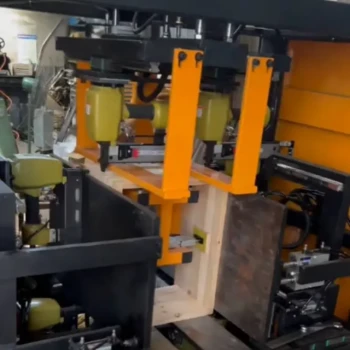
The design of standardized beehives (Stup) serves as the fundamental architecture for converting traditional Trigona beekeeping into a high-efficiency industrial operation. By replacing irregular traditional boxes with engineered breeding spaces, these hives allow for precise scientific management, including artificial swarming and rigorous health monitoring. Most critically, their structured internal design is built to interface seamlessly with modern electric honey extraction equipment, unlocking the potential for mass production.
Standardized hives act as a bridge between biological needs and industrial mechanics. They transform the apiary from a collection of wild colonies into a controlled production line, enabling higher yields through reduced disturbance and automated processing.
Enabling Scientific Colony Management
Optimizing the Breeding Environment
Standardized hives replace the unpredictability of rudimentary boxes with an optimal breeding space. This defined structure supports the biological needs of Trigona bees, allowing the colony to expand efficiently without physical constraints.
Precision Health Monitoring
The modular design facilitates scientific management by granting beekeepers easy access to the colony's internal state. Operators can monitor colony health precisely, identifying issues early without destroying the hive structure. This capability is essential for maintaining consistent production levels across large apiaries.
Facilitating Artificial Swarming
Unlike traditional methods that rely on natural processes, standardized designs allow for artificial swarming. Beekeepers can proactively split colonies to increase stock numbers. This controlled expansion is a key driver of industrial scalability.
Stability Through Microclimate Control
High-quality standardized hives create a stable microclimate, protecting the colony from external temperature fluctuations. By mitigating environmental stress, the hive ensures that the bees' energy is directed toward honey production rather than survival. This protection is also vital for maintaining high overwintering survival rates.
The Link to Industrial Extraction
Compatibility with Electric Equipment
The primary driver of efficiency in modern setups is the hive's compatibility with electric honey extraction equipment. The physical foundation of the hive is engineered to fit these machines. This moves harvesting from a manual, labor-intensive task to a streamlined, industrial-grade process.
Non-Destructive Harvesting
Standardized systems allow for the extraction of honey without destroying the colony's nest or killing the bees. This non-destructive collection ensures that the colony remains stable and productive immediately after harvest. It significantly reduces the recovery time required for the bees to resume nectar collection.
Enhancing Product Purity
When paired with professional extractors, standardized hives produce honey with higher purity and greater commercial value. The controlled environment minimizes contamination during the harvest. This is particularly important for producing high-value, unifloral honey products.
Understanding the Operational Trade-offs
Higher Initial Capital Expenditure
Standardized hives represent a significant primary capital expenditure compared to traditional boxes. Beekeepers must be prepared for higher upfront costs to acquire these engineered systems. However, this cost is often offset by the equipment's durability and the increased yield over time.
Requirement for Technical Expertise
Moving to standardized hives requires a shift from passive keeping to active management. The efficiency gains are only realized if the operator understands how to perform inspections, manage swarms, and operate extraction machinery. Without proper training, the advanced features of the hive may go underutilized.
Making the Right Choice for Your Apiary
The transition to standardized gear should be dictated by your specific production goals.
- If your primary focus is Industrial Scale: Prioritize hives explicitly designed for electric extraction compatibility to maximize throughput and minimize labor hours.
- If your primary focus is Colony Expansion: Choose designs that facilitate easy artificial swarming and splitting to rapidly increase your hive count.
- If your primary focus is Asset Longevity: Invest in high-specification materials that offer superior weather resistance to optimize your return on investment over the long term.
Standardized hives are not just containers; they are precision tools that enable the scientific industrialization of honey production.
Summary Table:
| Feature | Traditional Boxes | Standardized Hives (Stup) | Impact on Efficiency |
|---|---|---|---|
| Management | Passive/Reactive | Proactive/Scientific | Enables artificial swarming & health monitoring |
| Honey Harvest | Destructive/Manual | Non-destructive/Electric | Faster extraction with higher product purity |
| Environment | Unpredictable | Controlled Microclimate | Reduces colony stress and improves survival |
| Scalability | Low/Labor Intensive | High/Industrial Grade | Facilitates mass production and automation |
Scale Your Apiary with HONESTBEE Professional Solutions
Transitioning to industrial-scale beekeeping requires more than just bees—it requires precision engineering. HONESTBEE specializes in supporting commercial apiaries and distributors by providing the high-performance tools needed to maximize efficiency. From standardized hive-making machinery to advanced electric honey-filling lines, we offer a comprehensive wholesale portfolio of beekeeping hardware and consumables.
Partner with HONESTBEE to:
- Implement non-destructive, industrial honey extraction workflows.
- Scale your operations with durable, standardized hardware.
- Access a full spectrum of honey-themed cultural merchandise and equipment.
Ready to transform your honey production? Contact us today to explore our wholesale offerings!
References
- Yayuk Yuliana, Slamet Indarjo. Pkm Penerapan Teknologi Tepat Guna untuk Meningkatkan Pendapatan Masyarakat di Desa Batu Jong Jong. DOI: 10.33024/jkpm.v6i3.8529
This article is also based on technical information from HonestBee Knowledge Base .
Related Products
- Wholesales Dadant Size Wooden Bee Hives for Beekeeping
- Professional Insulated Plastic Bee Hives
- Automatic High-Speed Bee Hive Box Stapling Machine
- Stainless Steel Bee Hive Frame Wire for Beekeeping
- Modern Flat-Mount Hive Number Set for Beekeeping
People Also Ask
- What are the strategic benefits of installing beekeeping hives at an elevation of 1 to 6 meters? Protect Your Assets
- What are the key advantages of modern improved beekeeping hives? Scale Your Honey Yield and Production Efficiency
- What is the proper way to store unused bee hives? Expert Stacking Tips for Equipment Longevity
- What are the 2 types of bee hives? Langstroth vs. Top-Bar for Your Apiary
- How does the design of improved beekeeping hives contribute to maintaining honey quality and purity? Enhancing Purity