The inner cover regulates temperature primarily by creating a localized buffer zone known as "dead air" space. Positioned between the uppermost box of the hive and the telescoping outer cover, this component traps a layer of air that acts as natural insulation. This barrier prevents the external environment's extreme temperatures from transferring directly into the colony's living quarters.
The inner cover functions as a thermal break rather than a simple lid. By maintaining a stagnant air gap between the hive's interior and the outer roof, it shields the colony from solar radiation in summer and freezing contact surfaces in winter.
The Physics of the "Dead Air" Space
Acting as a Thermal Insulator
The primary mechanism at work here is the creation of a dead air space. In thermodynamics, still air is a poor conductor of heat, making it an excellent insulator.
By separating the hive's "attic" from the roof, the inner cover prevents rapid temperature equalization. This stability is crucial for the bees, allowing them to maintain their preferred cluster temperature with less energy expenditure.
Shielding Against Radiant Heat
During the summer, the outer cover—often topped with metal—absorbs significant solar radiation. Without an inner cover, this heat would radiate directly down into the honey supers or brood nest.
The inner cover blocks this radiant heat. The air gap acts as a buffer, ensuring the top of the hive does not become a heater that stresses the colony.
Preventing Winter Heat Loss
In colder months, the dynamic reverses. The inner cover retains the colony's rising warmth within the living space.
It prevents the warm internal air from coming into direct contact with the freezing outer cover. This preservation of metabolic heat helps the winter cluster survive without exhausting their honey stores too quickly.
Moisture and Temperature Correlation
The Condensation Barrier
Temperature regulation is intrinsically linked to moisture control. The supplementary references highlight that the inner cover prevents moisture-laden air from contacting cold surfaces.
When warm, humid air from the cluster hits a freezing surface, it condenses into liquid water. By keeping the "ceiling" of the hive (the inner cover) warmer than the outer roof via the air gap, it reduces the risk of cold water dripping back onto the bees.
Ventilation Features
Most inner covers feature a center hole and a notched rim. While the wood provides insulation, these openings allow for the regulated escape of excess heat and humidity.
This creates a passive ventilation system. As heat rises, it can exit through the notch or center hole, preventing the internal temperature from reaching dangerous levels during heatwaves.
Understanding the Trade-offs
The Limits of "Dead Air"
While the inner cover provides a baseline of insulation, it is often insufficient on its own during extreme winters. The "dead air" space can eventually cool down to the ambient temperature if not supplemented.
The Condensation Risk
If the inner cover becomes too cold, it will become the surface where condensation forms. In very cold climates, relying solely on the inner cover without adding supplemental insulation on top of it (inside the outer cover) can lead to moisture accumulation directly above the cluster.
Optimizing Hive Climate Management
To get the most out of your inner cover's temperature-regulating capabilities, adjust your configuration based on the season.
- If your primary focus is Summer Cooling: Ensure the notched rim is open or propped to facilitate maximum airflow through the upper entrance, allowing hot air to vent.
- If your primary focus is Winter Survival: Place rigid foam or quilt box insulation directly on top of the inner cover to keep it warm and prevent condensation from forming on the bees' ceiling.
The inner cover is not just a lid; it is a critical climate control tool that leverages simple physics to stabilize the colony's environment.
Summary Table:
| Feature | Function | Climate Benefit |
|---|---|---|
| Dead Air Space | Creates a stagnant insulation layer | Reduces heat transfer from solar radiation and external cold |
| Center Hole | Facilitates passive ventilation | Allows excess heat and humidity to escape the hive |
| Notched Rim | Provides an upper entrance/exit | Enhances airflow in summer; prevents CO2 buildup in winter |
| Thermal Break | Separates inner hive from metal roof | Prevents the outer cover from acting as a conductor of heat |
Maximize Your Apiary's Productivity with HONESTBEE
At HONESTBEE, we understand that climate stability is the backbone of a thriving colony. As a premier partner for commercial apiaries and distributors, we provide a comprehensive wholesale range of professional-grade beekeeping tools, machinery, and essential consumables.
Whether you need specialized hive-making equipment, high-precision honey-filling machines, or durable hardware designed for climate management, HONESTBEE delivers the quality and scale your business demands. Let us help you streamline your operations and protect your bees with industry-leading solutions.
Ready to elevate your beekeeping business? Contact us today to explore our wholesale offerings!
Related Products
- Inner Beehive Cover for Beekeeping Bee Hive Inner Cover
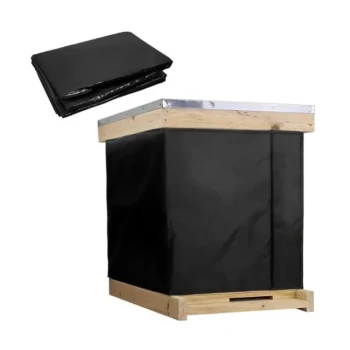
- Professional Insulated Winter Hive Wrap for Beekeeping
- Three-Layer Ventilated Beekeeper Suit with Structured Fencing Veil
- Telescopic Beehive Outer Cover Lid Roof with Galvanised Sheeting for Langstroth Hive and Beehive Outer Cover
- Professional Square Folding Wire Mesh Beekeeping Veil
People Also Ask
- What is the purpose of the inner cover in a beehive? A Key to Hive Health & Easy Management
- What is the function and placement of an inner cover in a beehive? Essential Hive Management Guide
- What is the purpose of the inner and outer covers in a beehive? Essential for Hive Health & Management
- What is a beehive's inner cover and how is it used? Essential Guide for Hive Insulation and Ventilation
- What are the functions of the inner and outer covers on a beehive? Essential Guide for Hive Protection and Management