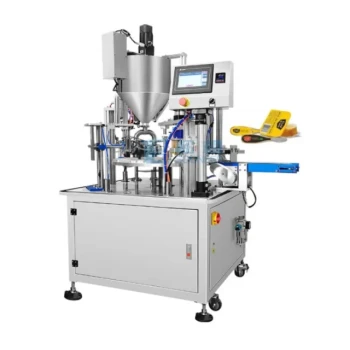
Integrating automated honey filling and processing equipment fundamentally shifts an apiary's role from raw production to retail manufacturing. This technology allows operations with surplus inventory to bypass marketing inefficiencies by converting raw honey into standardized, high-value commercial products. Consequently, the apiary establishes a reliable revenue stream that is distinct from and resilient to the fluctuations of pollination service contracts.
Core Takeaway: By mechanizing the transition from raw extraction to retail packaging, apiaries secure market-entry quality and capture premium pricing. This creates a sustainable financial model where profit is driven by verifiable product standards rather than just agricultural services.
Transforming the Revenue Structure
Creating a Stable Profit Center
Many apiaries rely heavily on seasonal pollination services, which can be volatile. Automated processing allows the apiary to monetize surplus honey effectively, turning it into a stable, year-round profit center. This diversification reduces financial risk and dependence on external service contracts.
Optimizing Market Value
Raw honey sold in bulk commands significantly lower prices than retail-ready units. By utilizing industrial filling and packaging, apiaries capture the "value-add" of the product lifecycle. This shift directly addresses marketing inefficiencies, allowing producers to compete in high-end retail markets rather than the commodities market.
Enhancing Product Quality and Safety
Preserving Nutritional Integrity
Unlike manual crushing or extraction, which can degrade quality, industrial machinery uses precise temperature control and constant-pressure filling. This technology prevents the loss of active nutrients and natural enzymes during the transition from hive to bottle. The result is a product that retains its natural flavor profile, justifying a higher price point.
Ensuring Hygiene and Compliance
Automated systems enable sterile bottling, minimizing the risk of secondary contamination associated with manual handling. This adherence to food safety standards is critical for entering commercial markets and maintaining organic certifications. Traceability features further support brand consistency and consumer trust.
Meeting Consumer Preferences
Refined processing equipment utilizes centrifugal extraction and filtration to create clarified, impurity-free honey. Data indicates that approximately 62.3% of consumers prefer the physical properties (transparency and fluidity) of processed honey over raw, unfiltered varietals. Meeting this sensory expectation is essential for broader market acceptance.
Operational Efficiency and Waste Reduction
Precision Filling and Weight Control
Professional filling machines integrate volumetric or weight sensors to ensure every unit meets exact net weight standards. This eliminates the "overfill" errors common in manual packing, which can amount to significant product loss over time. Consistent packaging also ensures compliance with retail weights and measures regulations.
Minimizing Material Waste
For high-value or premium honey varietals, spills and drips during manual bottling represent a direct financial loss. Automated systems maintain fluidity through temperature control and use anti-drip nozzles to maximize the yield from every batch. This efficiency reduces the material cost per unit, improving the overall margin.
Protecting Apiary Infrastructure
High-performance extractors allow for rapid harvest processing without destroying the honeycombs. By preserving the structural integrity of the combs, beekeepers reduce the energy bees must expend rebuilding wax. This increases the future productivity of the colony and maximizes the economic value of superior bee subspecies.
Understanding the Trade-offs
The Balance of Standardization vs. Perception
While automation improves consistency and hygiene, it moves the product toward a "commercial" standard. Producers must ensure that filtration processes do not strip the honey of the unique local characteristics that define "raw" artisan value if that is their specific niche. However, for the vast majority of the retail market, the benefits of clarity and shelf-stability outweigh the demand for unprocessed raw comb honey.
Making the Right Choice for Your Goal
To maximize the return on investment in processing equipment, align your choice with your primary business objective:
- If your primary focus is Mass Retail Expansion: Prioritize filtration and high-speed filling equipment to meet the consumer preference for clarified, standardized products (the 62.3% market share).
- If your primary focus is Premium/Organic Branding: Select machinery with advanced temperature controls and sterile bottling features to prove nutrient retention and hygiene compliance.
- If your primary focus is Operational Cost Control: Focus on precision volumetric fillers to eliminate overfilling and reduce product waste on high-value varietals.
Automation does not just speed up production; it legitimizes your product, turning a raw agricultural harvest into a certified consumer good.
Summary Table:
| Feature | Impact on Apiary Operations | Market Advantage |
|---|---|---|
| Automated Filling | Eliminates overfill errors and product waste | Consistent retail weight compliance |
| Temperature Control | Preserves enzymes and nutritional integrity | Justifies premium "High-Quality" pricing |
| Advanced Filtration | Produces clarified, impurity-free honey | Appeals to 62.3% of consumer preferences |
| Sterile Bottling | Minimizes secondary contamination risks | Meets food safety & organic standards |
| Comb Preservation | Reduces colony energy spent rebuilding wax | Increases future honey yield and productivity |
Elevate Your Apiary Operations with HONESTBEE
Transitioning from raw production to a commercial brand requires precision and reliability. HONESTBEE empowers commercial apiaries and distributors with a full spectrum of professional beekeeping tools and industrial machinery. Whether you need specialized hive-making machines to scale your infrastructure or precision honey-filling systems to maximize your retail margins, we provide the hardware and consumables necessary for your success.
Ready to optimize your production and capture premium market pricing?
Contact HONESTBEE Today for a Wholesale Consultation
References
- Chian Jones Ritten, M.A. Buddhika Patalee. Firm Efficiency and Returns-to-Scale in the Honey Bee Pollination Services Industry. DOI: 10.1093/jee/toy075
This article is also based on technical information from HonestBee Knowledge Base .
Related Products
- Fully Automatic Honey Filling Packaging Machine for Processing Line
- Automatic Honey Filling and Filtering Machine for Beekeeping Bottle Filling
- Precision Automated Packaging Turntable Honey Spoon Filling Sealing Packing Machine
- Precision Durable Efficient HONESTBEE Rotary Honey Filling Machine
- Semi Automatic Small Honey Bottle Filling Machine Honey Filler
People Also Ask
- Why are fully automatic honey filling and packaging lines essential? Boost Your Honey's Market Value and Quality
- What is a fully-automatic honey filler? Streamline Your Production with High-Precision Automation
- How do automated honey filling and packaging machines affect profitability? Boost Margins with HONESTBEE Technology
- How do automated honey filling and packaging machines contribute to the market value of honey products? Maximize Your ROI
- How do industrial-grade automated honey filling and packaging machines mitigate the risk of physical contamination?