The mesh size of filtration equipment acts as a selective barrier that directly dictates the accuracy of biological profiling. If the mesh is too fine, it does not distinguish between unwanted debris and critical biological markers, physically trapping large pollen grains along with impurities. This unintended interception fundamentally alters the pollen spectrum, rendering subsequent biological characterization inaccurate.
Core Takeaway Mesh size determines the balance between sample purity and data integrity. While finer meshes clarify the liquid, they risk stripping away the unique "pollen fingerprint" required to identify the honey’s botanical origin, leading to skewed or false analytical results.
The Impact on Pollen Spectrum Analysis
The primary challenge in honey characterization is maintaining the natural ratio of pollen grains found in the raw sample.
Alteration of the Pollen Spectrum
The pollen spectrum is the biological identity of the honey. It reveals the specific plants the bees visited.
When filtration equipment utilizes a mesh size that is too fine, it traps larger pollen grains. This changes the relative abundance of different pollen types in the final filtrate, creating a sample that no longer represents the original botanical source.
Risk of Misidentification
Data distortion leads to classification errors.
If a specific pollen type is disproportionately removed, analysts may fail to identify the dominant floral source. This can cause a high-quality unifloral honey (derived from a single plant species) to be incorrectly misidentified as a generic low-pollen sample or a multi-floral blend.
The Role of Filtration in Sample Preparation
While processing filtration can harm data integrity, controlled laboratory filtration is essential for preparing slides for microscopy.
Removing "Background Noise"
Raw honey contains wax debris, bee body fragments, and plant tissues that are biologically irrelevant to floral identification.
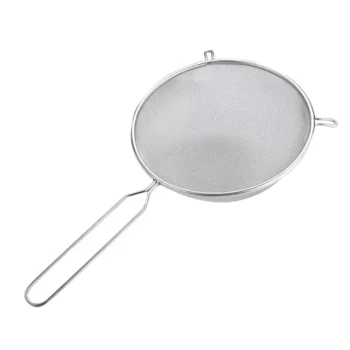
Using a properly sized fine-mesh metal sieve removes these large impurities. This purification step clears the "visual field" for the microscopist, preventing large contaminants from obscuring the pollen sediment and significantly improving microscopy efficiency.
Concentration of Target Substances
For specific analyses, such as the detection of microplastics or total sediment, filtration is used to capture solids rather than let them pass.
A nylon mesh with a specific pore size, such as 30 micrometers, acts as a primary barrier. It captures all solid residues—including pollen, beeswax, and foreign particles—effectively concentrating these substances so they can be detected and quantified during analysis.
Understanding the Trade-offs
Selecting a mesh size requires navigating a conflict between commercial presentation and scientific accuracy.
The Clarity vs. Data Conflict
Commercially, modern processing uses fine filtration to remove micro-impurities, which improves sensory quality and shelf life. However, commercial grade does not equal analytical grade.
The very process that creates a clear, shelf-stable product for the market often strips the product of the biological evidence required for certification and origin testing.
The "False Negative" Pitfall
The most critical trade-off is the risk of a false negative.
If a researcher assumes a sample has not been ultra-filtered, the absence of pollen will be interpreted as a biological characteristic of the honey (e.g., "this honey is naturally low in pollen"). In reality, the absence is an artifact of the mechanical process, leading to flawed scientific conclusions.
Making the Right Choice for Your Goal
To ensure accurate biological characterization, you must align the filtration method with your specific analytical objective.
- If your primary focus is Botanical Origin Identification (Melissopalynology): Avoid analyzing samples that have undergone ultra-fine commercial filtration, as the pollen spectrum will be distorted or destroyed.
- If your primary focus is Microscopy Clarity: Use a sieve that removes wax and bee parts but is coarse enough to allow all pollen grain sizes to pass through into the sediment.
- If your primary focus is Residue Analysis (e.g., Microplastics): Utilize a 30-micrometer mesh to deliberately trap and concentrate all solid particulates for quantification.
In biological characterization, the filter is not just a cleaning tool; it is a gatekeeper that determines whether your data is authentic or artificial.
Summary Table:
| Filtration Goal | Recommended Mesh/Approach | Impact on Biological Data |
|---|---|---|
| Botanical Origin (Melissopalynology) | Coarse Sieve / No Ultra-filtration | Preserves natural pollen spectrum for accurate plant identification. |
| Microscopy Preparation | Properly Sized Metal Sieve | Removes wax/debris; clears visual field without losing target sediment. |
| Residue Analysis (e.g. Microplastics) | ~30 Micrometer Mesh | Deliberately traps and concentrates solids for quantification. |
| Commercial Processing | Ultra-fine Mesh | Maximizes clarity/shelf-life but destroys the honey's biological fingerprint. |
Elevate Your Honey Production & Analysis with HONESTBEE
At HONESTBEE, we understand that the right equipment is the difference between a generic product and a certified, high-value honey. We cater to commercial apiaries and distributors worldwide with a comprehensive wholesale offering designed for industry professionals.
Whether you need precision honey-filling machines, specialized hive-making hardware, or high-quality honey filtration equipment that balances purity with biological integrity, we have the solution. Our portfolio extends to a full spectrum of beekeeping tools, machinery, and honey-themed cultural merchandise to support every facet of your business.
Ready to scale your operations with professional-grade equipment?
Contact HONESTBEE Today to explore our wholesale catalog and discover how our expertise can drive your apiary's success.
References
- Susana Linhares Haidamus, Wagner de Souza Tassinari. Floral Diversity in Different Types of Honey. DOI: 10.1590/1678-4324-2019180241
This article is also based on technical information from HonestBee Knowledge Base .
Related Products
- Electric Double Wall Honey Filtering Machine Purifier Equipment for Honey Processing Plant
- Professional Stainless Steel Honey Filtering Machine with Water Bath Heating for Beekeeping
- 0.5T Capacity Honey Dehumidifier Dryer with Vacuum Heating and Thickening Filtering Machine
- Honey Concentrating and Filtering Dehumidifier Machine 2T Capacity for Honey
- Professional Stainless Steel Honey Filter with Support Handle
People Also Ask
- What is the process of filtering honey? A Guide to Clean, Pure, and Market-Ready Honey
- What types of equipment are used in honey filtering? Build an Efficient System for Pure, Marketable Honey
- What is the overall importance of using the right equipment in honey filtering? Boost Quality & Marketability
- What steps are involved in maintaining honey filtering equipment? A Guide to Protecting Your Honey Quality
- Why is filtering important in honey processing, and what equipment is used? A Guide to Quality & Efficiency