While both varieties possess indefinite shelf lives, the primary distinction in their storage behavior is the rate of crystallization. Raw honey will naturally solidify and crystallize much faster due to the presence of pollen and enzymes, whereas processed honey is engineered through heat and filtration to remain liquid and smooth for extended periods.
While processed honey offers the convenience of a consistent liquid texture, this comes at the cost of nutritional density. Raw honey requires more active management to reverse crystallization, but it preserves the natural enzymes and antioxidants that processing destroys.
The Science of Stability and Texture
Why Raw Honey Crystallizes
Raw honey is minimally processed, typically strained only to remove large debris while kept at temperatures below 110°F.
Because it retains natural pollen and enzymes, there are more microscopic particles available to act as "seeds" for crystals to form.
This results in a natural hardening or clouding of the honey over time, which is a sign of purity rather than spoilage.
The Engineering of Processed Honey
Processed honey undergoes flash pasteurization at temperatures around 160°F and is filtered under pressure.
This process removes wild yeasts and virtually all pollen, effectively stripping away the particles that usually trigger crystallization.
The result is a product that maintains a clear, liquid consistency on the shelf for a significantly longer time than its raw counterpart.
Managing Storage and Usage
Restoring Raw Honey
When raw honey crystallizes, it has not gone bad; it has simply changed state.
You can easily return it to a liquid consistency by placing the jar in warm water and heating it gently.
To maintain the "raw" status and preserve beneficial compounds, ensure the temperature during warming does not exceed the natural threshold of approximately 110°F.
The Simplicity of Processed Honey
Processed honey requires virtually no maintenance to maintain its pourable texture.
Because the flash pasteurization kills wild yeasts, it is highly resistant to fermentation and textural changes.
This makes it a "set it and forget it" pantry staple, though it lacks the complex flavor profile of the raw variety.
Understanding the Trade-offs
Convenience vs. Nutrition
The heat and filtration that make processed honey convenient act as a double-edged sword.
While you gain a product that stays liquid, the high heat (160°F) degrades natural enzymes and antioxidants.
Raw honey demands more effort to keep liquid, but it rewards you with the full spectrum of original nutrients and flavor.
Flavor Profile Changes
The storage longevity of processed honey often results in a uniform, sweet flavor profile.
Raw honey, because it retains its original composition, offers distinct flavors based on the specific flowers the bees visited.
However, this complex flavor is part of the same biological package that leads to faster crystallization.
Making the Right Choice for Your Kitchen
If you understand the behavior of your ingredients, you can choose the right tool for the job.
- If your primary focus is nutritional benefits: Choose raw honey for its preserved enzymes and antioxidants, accepting that you may need to warm it occasionally.
- If your primary focus is convenience and aesthetics: Choose processed honey for a consistent, always-pourable syrup that remains clear on the shelf.
Ultimately, the best storage choice depends on whether you value the convenience of a liquid state or the integrity of natural nutrients.
Summary Table:
| Feature | Raw Honey | Processed Honey |
|---|---|---|
| Shelf Life | Indefinite (natural) | Indefinite (engineered) |
| Crystallization | Fast (due to pollen/enzymes) | Slow (pollen removed) |
| Processing Temp | Below 110°F | Approx. 160°F |
| Nutritional Value | High (enzymes & antioxidants preserved) | Low (heat degrades nutrients) |
| Consistency | Natural hardening/clouding | Clear and pourable |
| Maintenance | Requires gentle warming | Zero maintenance |
Elevate Your Beekeeping Business with HONESTBEE
Whether you are catering to health-conscious consumers seeking raw honey or providing bulk processed honey for industrial use, having the right equipment is vital. HONESTBEE specializes in supporting commercial apiaries and distributors with a full spectrum of professional tools.
Our Value to You:
- Precision Machinery: From honey-filling machines that handle various viscosities to hive-making equipment.
- Comprehensive Wholesale: A one-stop shop for beekeeping tools, machinery, and essential consumables.
- Global Distribution: Tailored solutions for large-scale operations and retailers.
Ready to scale your production or expand your product line? Contact us today to explore our wholesale offerings!
Related Products
- Economy Small Scale Honey Dryer Dehumidifier Thickening Machine
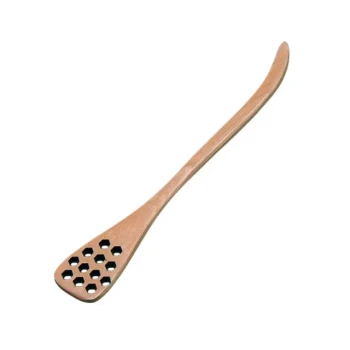
- Modern Honeycomb Pattern Wooden Honey Dipper for Stirring and Drizzling
- High Quality Honey Dehumidifier Dryer Thickening Machine for Beekeeping
- Professional Honey Uncapping Roller for Efficient Harvesting
- Honey Concentrating Vacuum Heating Thickening Machine Dehumidifier for Honey
People Also Ask
- What are the benefits of using a honey dryer for honey production? Boost Yield & Quality
- What are the features of the honey dryer? Achieve Premium Quality & Maximize Your Harvest
- What are the key features of the honey dryer? Essential Guide to Advanced Moisture Reduction Technology
- What is the primary construction material of the honey dryer? Durable AISI 304 Stainless Steel for Beekeepers
- How does the design of some honey dryers achieve high drying efficiency without a vacuum system? Boost Your Productivity