Standardized hive boxes and hardware create a baseline of technical consistency by subjecting every colony to identical physical conditions. By uniformly controlling variables such as internal volume, entrance dimensions, and thermal insulation, researchers can eliminate environmental noise, ensuring that observed variations in behavior—like robbing frequency or mortality rates—are attributed solely to biological factors rather than equipment discrepancies.
In large-scale experiments, physical inconsistency introduces statistical noise that masks true biological data. Standardization transforms the apiary into a controlled laboratory environment, making data regarding colony behavior and health both comparable and repeatable.
Eliminating Non-Biological Variables
Controlling the Physical Environment
To achieve accurate observations, all experimental colonies must experience the exact same physical constraints. Standardized hive boxes ensure uniformity in critical metrics, specifically hive entrance dimensions, internal volume, and thermal insulation properties.
Without this physical uniformity, a researcher cannot determine if a behavior is natural or a reaction to the immediate environment. For example, a colony in a poorly insulated box may behave differently than one in a well-insulated box solely due to temperature stress, not genetics.
Isolating Genetic and Behavioral Traits
The primary goal of standardization in this context is to isolate biological variables. When the hardware is identical, any difference in data—such as the distribution of deceased bees or the frequency of robbing events—can be confidently attributed to the bees themselves.
This is particularly vital when comparing different honeybee hybrids. It allows researchers to record natural behavioral patterns accurately, knowing that the physical "housing" is not influencing the results.
Ensuring Data Repeatability
Scientific validity hinges on the ability to replicate results. Technical consistency is the prerequisite for data repeatability. By removing equipment-based variables, standardized hardware ensures that if an experiment is repeated, the physical parameters remain constant, allowing for longitudinal studies and cross-location comparisons.
The Role of Precision in Large-Scale Operations
Maintaining Exact Bee Space
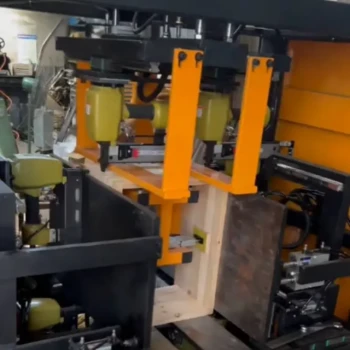
Specialized hive-making machinery is essential for manufacturing components with high-precision standardization. This machinery ensures the maintenance of "bee space"—the precise gap required for hive health and proper comb construction.
If manual manufacturing leads to variable bee spaces, colonies may bridge combs or propolize gaps differently. This alters the internal structure of the colony, introducing a variable that distorts observations regarding colony health and development.
Enabling Precise Monitoring
Standardized equipment provides a controlled and structured environment that facilitates human intervention. Uniform boxes allow for precise colony monitoring, supplementary feeding, and baiting protocols that are consistent across hundreds or thousands of hives.
This structural consistency serves as the physical foundation for managing bee labor distribution. It ensures that interventions are applied equally, preventing procedural bias from skewing the experimental data.
Understanding the Trade-offs
The Risk of Systemic Error
While standardization enhances accuracy, it also creates a risk of systemic replication of error. If the "standard" design has a flaw—such as poor ventilation or incorrect bee space—that flaw is replicated across every single colony in the experiment.
Technical Barriers vs. Economic Stability
Implementing high-precision standardization requires specialized machinery and professional equipment. While this lowers the technical barrier for daily operations and harvesting, it raises the initial infrastructure requirements. However, this investment is necessary to stabilize economic returns and ensure the industrialized workflow required for large-scale data collection.
Optimizing Your Apiary for Reliable Data
To derive meaningful insights from your apiary, you must match your equipment strategy to your specific experimental or production goals.
- If your primary focus is genetic research: Prioritize high-precision hive boxes to ensure that differences in robbing behavior or mortality are driven strictly by hybrid traits, not insulation variances.
- If your primary focus is large-scale scalability: Invest in specialized manufacturing machinery to enforce exact bee space, which is critical for replicating results across thousands of colonies.
- If your primary focus is operational efficiency: Utilize standardized workflows and collection tools to create a predictable environment for routine monitoring and labor management.
True experimental accuracy is achieved only when the physical environment is rendered invisible, allowing the biology of the colony to become the sole focus of observation.
Summary Table:
| Standardization Factor | Impact on Data Accuracy | Benefit to Researcher |
|---|---|---|
| Uniform Internal Volume | Eliminates space-related behavioral bias | Ensures comparable colony growth data |
| Precise Bee Space | Prevents irregular comb/propolizing | Maintains structural consistency for monitoring |
| Thermal Consistency | Removes temperature-induced stress variables | Isolates genetic traits and health markers |
| Technical Repeatability | Ensures identical physical constraints | Enables longitudinal and cross-site studies |
Elevate Your Apiary Research with HONESTBEE Precision
For commercial apiaries and distributors, the foundation of data accuracy lies in high-precision hardware. HONESTBEE specializes in providing the comprehensive infrastructure required for industrialized beekeeping. From hive-making and honey-filling machinery that ensures exact technical standards to a full spectrum of specialized beekeeping tools and equipment, we empower our partners to achieve unmatched consistency.
Whether you are scaling your operation or conducting critical genetic research, our wholesale offerings and industry consumables are designed to eliminate systemic error and stabilize your economic returns.
Ready to standardize your success? Contact HONESTBEE today to explore how our specialized machinery and equipment can transform your apiary into a controlled, high-performance environment.
References
- A. Sherif, Alyaa A. Gazzy. OBSERVATION ON THE ROBBING BEHAVIOR IN TWO HONEYBEE HYBRIDS (CARNIOLAN AND ITALIAN) IN KAFR EL SHEIKH GOVERNORATE. DOI: 10.21608/mjapam.2017.127018
This article is also based on technical information from HonestBee Knowledge Base .
Related Products
- Automatic High-Speed Bee Hive Box Stapling Machine
- High-Efficiency Pneumatic Bee Hive Making Machine for Rapid Box Assembly
- Precision Stainless Steel Frame Cleaner for Hive Grooves and Corners
- Langstroth Honey Bee Box Hive Boxes for Different Depths
- HONESTBEE Classic Pry Bar Hive Tool with High Visibility Finish for Beekeeping
People Also Ask
- How is the Bee Box machine adjusted for different box sizes? Maximize Your Woodworking Versatility and Precision
- How is the Bee Box machine operated? Optimize Your Commercial Hive Production with Scalable Staffing Solutions
- How was the Bee Box machine designed? Industrial Engineering for High-Volume Beekeeping Production
- What is the production capacity of the Bee Box machine? Boost Output up to 1,000 Boxes Daily
- What are the power requirements and control system for the Bee Box machine? Optimize Your Apiary Equipment Production