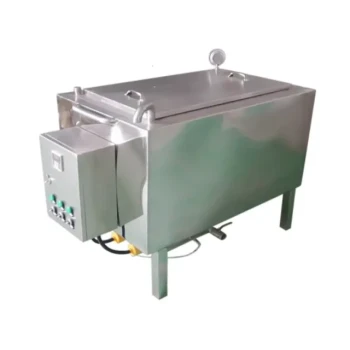
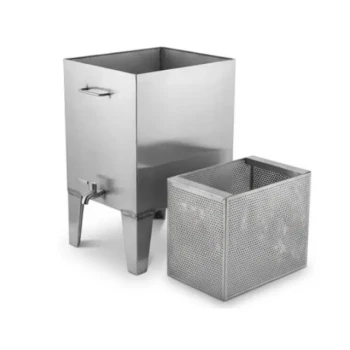
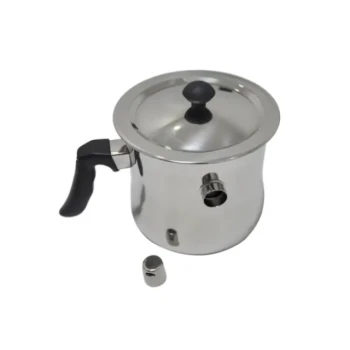
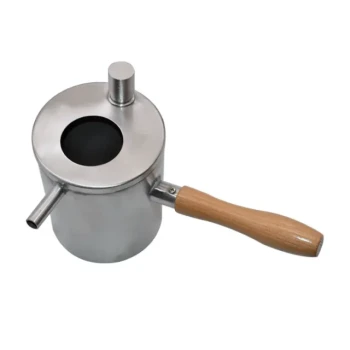
Water acts as a critical thermal buffer. When rendering beeswax, filling a boiler or pan with clean water creates an environment of indirect heat conduction. This liquid medium ensures the wax melts uniformly without coming into direct contact with the high-temperature surface of the metal vessel.
By utilizing water as a heat transfer medium, you effectively cap the processing temperature. This prevents scorching and discoloration, ensuring the wax retains its natural aroma and physical characteristics.
The Mechanics of Indirect Heat
The Problem with Direct Contact
When beeswax is placed directly into a dry pan, it contacts metal surfaces that often exceed the safe melting point of the wax.
This direct conduction creates localized "hot spots."
In these areas, the wax can rapidly degrade before the rest of the block has even softened.
Water as a Moderator
Water acts as an intermediary, absorbing heat from the heat source and transferring it gently to the wax.
Because water boils at a specific temperature (100°C / 212°F at sea level), it naturally limits the maximum heat the wax is exposed to.
This creates a safe temperature range that is sufficient to melt the wax but generally too low to burn it.
Ensuring Uniformity
A water bath circulates heat more evenly than a solid metal pan.
This allows the beeswax to melt at a consistent rate throughout the vessel.
Uniform melting is essential for separating the wax from the comb or debris without overheating specific portions of the batch.
Preserving Wax Quality
Preventing Discoloration
High temperatures chemically alter beeswax, causing it to darken significantly.
By using water to prevent scorching, you preserve the wax's desired light, golden hue.
Retaining Natural Aroma
The characteristic scent of beeswax is composed of volatile compounds that can easily burn off.
Indirect heating preserves these delicate aromatics.
This ensures the final product retains the distinct, pleasant smell associated with high-quality beeswax.
Post-Melt Purification
Filtering for Purity
Once the wax is gently melted, the process often requires removing debris.
You can improve purity by passing the liquid wax through a polyester strainer cloth or a similar semi-heat resistant filter.
Advanced Cleaning Methods
For a more thorough clean, the wax can be wrapped in fresh cheesecloth and re-melted.
Alternatively, passing the wax through a coffee filter can remove very fine debris.
This creates a cleaner batch suitable for high-end applications like cosmetics or candles.
Common Pitfalls to Avoid
Complexity in Filtration
While coffee filters offer superior clarity, they restrict flow significantly.
If the wax cools too much during this slow filtration, it will clog the paper.
Material Compatibility
Not all filters can withstand the heat of melted wax.
Ensure you use materials, such as specific polyester meshes or cheesecloth, that are heat-resistant to avoid contaminating the batch with melted synthetic fibers.
Making the Right Choice for Your Goal
To ensure the best results from your rendering process, consider your specific end-use requirements.
- If your primary focus is Aroma and Color: Rely heavily on the water bath method to maintain a low, steady temperature that prevents scorching.
- If your primary focus is Cosmetic Purity: Combine gentle water-based heating with a fine filtration step, such as using coffee filters, to remove microscopic debris.
Gentle thermal management is the single most important factor in producing professional-grade beeswax.
Summary Table:
| Feature | Benefit of Water-Based Heating | Impact on Beeswax Quality |
|---|---|---|
| Temperature Control | Limits heat to 100°C (212°F) | Prevents scorching and chemical degradation |
| Heat Distribution | Eliminates metal-to-wax "hot spots" | Ensures uniform melting and texture |
| Color Preservation | Prevents high-temperature darkening | Maintains a bright, natural golden hue |
| Aroma Retention | Protects volatile scented compounds | Retains the characteristic pleasant scent |
| Purification Ease | Facilitates debris separation | Higher purity for cosmetics and candles |
Elevate Your Beeswax Production with HONESTBEE
Producing professional-grade beeswax requires the right tools to match your expertise. HONESTBEE specializes in supporting commercial apiaries and distributors with high-performance beekeeping machinery and essential consumables. From specialized hive-making equipment and honey-filling machines to heat-resistant filtration tools, we provide the comprehensive wholesale solutions you need to scale your operations efficiently.
Ready to upgrade your apiary’s output? Our team is dedicated to providing specialized hardware and cultural merchandise that adds value to your brand. Contact us today to discuss our wholesale offerings and discover how we can streamline your beeswax rendering and honey processing workflow.
References
- Lalisa Biyena. Pre-Extension Demonstration of Crude Beeswax Extraction Technology in Ilu Gelan District, West Shewa Zone, Oromia Regional State, Ethiopia. DOI: 10.11648/j.wjfst.20240804.12
This article is also based on technical information from HonestBee Knowledge Base .
Related Products
- Beeswax Machine Press Embosser Wax Foundation Mold Printer Bee Hive Equipment Making Sheet
- Fully Automatic Beeswax Embossing Machine Foundation Mill
- Electric Flatting and Embossing Machine with Tray for Beekeeping
- Manual Beeswax Flat Sheet Machine for Beeswax Processing
- Electric Beeswax Flat Sheet Machine with Operating Tray for Wax Processing
People Also Ask
- What equipment is needed to make beeswax foundation? A Guide to DIY Wax Sheet Production
- What miscellaneous equipment is needed for making foundation? A Guide to the Essential Tools
- What miscellaneous equipment is useful when making beeswax foundation? Essential Support Tools for Beekeepers
- What specific equipment is required for making beeswax foundation? Essential Tools for High-Quality Production
- What is the recommended temperature for melting beeswax to make foundation sheets? Master the 70°C-80°C Ideal Range