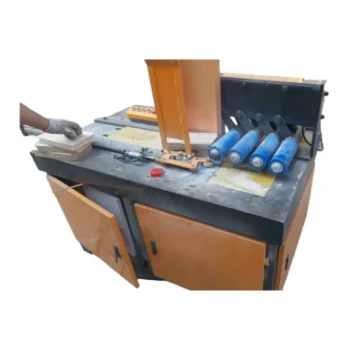
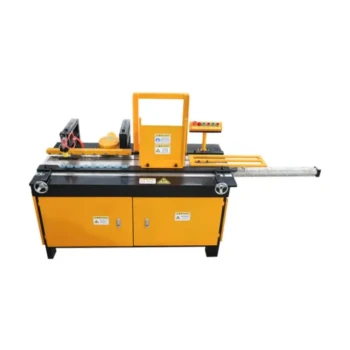
Non-wired foundation turns cut comb honey packaging into a direct, repeatable production flow. Instead of assembling and managing individual section frames, beekeepers use full super frames fitted with thin, unwired beeswax foundation. Once the comb is drawn, filled, and capped, a mechanical comb cutter slices uniform pieces directly from the frame, which can then be placed immediately into fitted plastic containers for retail distribution.
The key advantage is fewer handling steps: full-frame production simplifies hive preparation, while mechanical cutting improves consistency, speed, and packaging readiness.
How Non-Wired Foundation Simplifies Production
It eliminates internal wire support
Non-wired foundation provides a clean sheet of beeswax for the bees without embedded support wires. This is essential for cut comb because the finished honeycomb can be sliced without encountering wire during the cutting process.
By contrast, wired foundation is designed primarily to reinforce comb for extraction and repeated handling. Those wires would interfere with producing clean, saleable comb sections.
It supports full-frame honey production
Beekeepers can use standard full super frames rather than specialized modular section frames. The bees build one continuous sheet of comb across the frame, creating a larger production surface for harvesting.
This simplifies frame preparation, super management, and inventory requirements. Distributors and resellers also benefit because the same basic frame format can support broader beekeeping operations.
It gives bees a consistent building template
Thin foundation guides the bees toward straight, regular comb with predominantly worker-sized cells. More uniform comb is easier to place into a cutter and produces more predictable retail portions.
The foundation also reduces the amount of wax the bees need to produce from scratch, helping them direct more effort toward comb building, nectar collection, and honey storage.
How the Mechanical Comb Cutter Improves Packaging
It creates uniform portions
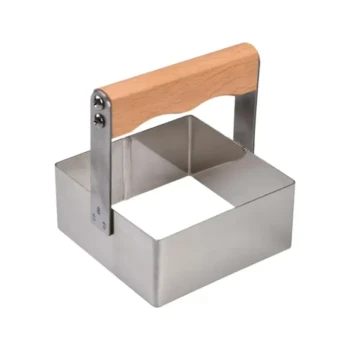
A mechanical comb cutter can slice the capped comb into repeatable sections. Consistent dimensions make it easier to match each piece with a fitted plastic container.
Uniformity improves shelf presentation and helps sellers standardize packaging, labeling, case quantities, and customer pricing.
It reduces manual cutting labor
Without a mechanical cutter, workers must measure and cut each section individually. That creates more handling, slower throughput, and greater variation between packages.
Mechanical cutting converts this into a more controlled operation: position the frame, make the cuts, transfer the sections, and close the containers.
It shortens the path from harvest to sale
Cut comb honey does not need to be extracted, filtered, and returned to a separate container as liquid honey. The natural comb and honey remain together, so the process moves directly from capped frame to finished package.
This reduces equipment requirements and helps small and large operators produce a premium product with fewer processing stages.
Why the Process Works Well for B2B Supply
It supports predictable order fulfillment
Standardized comb sections make production easier to plan around distributor and wholesale requirements. Operators can estimate the number of retail-ready units produced from each harvested frame more consistently.
That predictability supports faster quoting, more reliable case packing, and smoother replenishment for resellers.
It simplifies product sourcing
A practical cut comb operation requires compatible thin non-wired foundation, suitable full super frames, a mechanical cutter, draining or handling equipment, and fitted plastic containers.
Suppliers that can provide this broader equipment and packaging combination offer a more useful one-stop sourcing solution than vendors selling individual components separately.
It improves presentation for retail customers
Clear fitted containers protect the comb while displaying the honey and natural wax. When the cut dimensions are consistent, the finished product appears more uniform and premium on the shelf.
For wholesalers and resellers, this can reduce repacking work and make the product easier to merchandise across multiple retail accounts.
Understanding the Trade-offs
Non-wired foundation is less mechanically reinforced
The absence of wire makes cutting possible, but it also means the comb is more vulnerable to bending, breakage, and heat-related damage. Frames should be handled carefully, especially during transport and harvesting.
Operators need suitable support, gentle handling procedures, and timely processing after the comb is fully capped.
The foundation must remain thin and compatible
Foundation that is too thick or unsuitable for cut comb can produce sections that are difficult to cut cleanly or that do not fit the intended containers. Product specifications should be matched before placing large supply orders.
This is an important point for distributors: foundation, cutter dimensions, and container sizes should be treated as one compatible system.
Cutting accuracy affects packaging efficiency
A cutter that produces inconsistent dimensions can create gaps, damaged edges, or poor container fit. Those problems increase trimming, waste, and labor during packing.
Mechanical cutting improves throughput only when the frame setup, blade condition, foundation quality, and container dimensions are properly coordinated.
It is not the same as liquid honey extraction
Cut comb production is a separate workflow from conventional honey extraction. It requires cutting and packaging equipment rather than relying only on extractors and uncapping machinery.
Businesses should select equipment based on the intended product format instead of assuming that standard extraction infrastructure will meet all cut comb requirements.
How to Apply This to Your Operation
The best setup depends on whether your priority is labor reduction, product consistency, or supply-chain responsiveness.
- If your primary focus is reducing labor: Use full super frames with thin non-wired foundation and a mechanical cutter to replace modular section-frame assembly and extensive manual cutting.
- If your primary focus is uniform retail packaging: Match the cutter dimensions precisely to fitted plastic comb containers so each section transfers directly into a consistent package.
- If your primary focus is wholesale growth: Standardize frame, foundation, cutting, and container specifications to improve production planning, case packing, and repeat ordering.
- If your primary focus is one-stop sourcing: Select a supplier capable of providing compatible foundation, frames, cutters, containers, and responsive order support as a coordinated product package.
With the right compatible equipment, non-wired foundation and mechanical cutting create a faster, cleaner, and more scalable route from capped honeycomb to retail-ready cut comb honey.
Summary Table:
| Aspect | Traditional Methods | Non-Wired Foundation + Mechanical Cutter |
|---|---|---|
| Frame handling | Individual section frames | Standard full super frames |
| Cutting precision | Manual measurement and cutting | Uniform automated cuts |
| Production speed | Slow, labor-intensive | Fast and repeatable |
| Packaging consistency | Inconsistent sizes | Consistent retail portions |
| Equipment complexity | Modular frames and manual tools | Simplified, compatible system |
Ready to streamline your cut comb honey production? HONESTBEE provides the complete solution for beekeepers, wholesalers, and distributors. From non-wired foundation and frames to mechanical cutters and packaging containers, we offer a one-stop shop with premium trading services, fast delivery, and expert support. Optimize your operation for consistency and speed—contact HONESTBEE today for a tailored quote on our full range of beekeeping equipment. Get in touch with us now!
Related Products
- Heavy Duty Stainless Steel Honeycomb Cutter
- Professional Rolling Wax Cutter with Ergonomic Handle
- Professional Bent Tine Honey Uncapping Fork with Ergonomic Grip
- Professional Honey Uncapping Fork Tool with Customizable Tine Options
- Professional Customizable Honey Uncapping Fork with Adjustable Tine Options
People Also Ask
- How is a comb cutter used to produce cut comb honey? Master the Art of Precision Harvesting
- Why is the comb-cutting technique preferred for Apis cerana queen rearing? Boost Success with Natural Bee Biology
- What is the cut comb honey method? A Guide to Pure, Artisanal Honey Production
- How is the cut comb method used to harvest honey? Master the Art of Premium Unprocessed Honey Production
- What is cut comb honey, and how is it prepared? Experience Honey in Its Purest Form