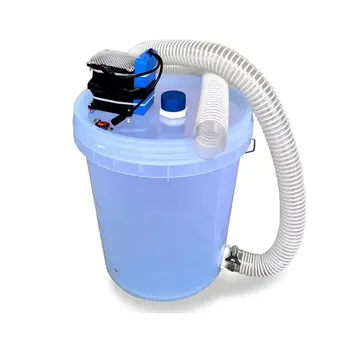
Vacuum low-temperature concentration equipment creates stability by targeting the primary catalyst of spoilage: excess moisture. Unlike standard honey, stingless bee honey has high water content that leads to rapid fermentation; this equipment removes that moisture under vacuum pressure, allowing evaporation to occur at low temperatures. This process arrests fermentation and standardizes texture without destroying the heat-sensitive enzymes and antioxidants that give the honey its value.
By decoupling moisture reduction from high heat, this technology transforms a naturally unstable, fermentation-prone product into a consistent, shelf-stable commodity while retaining its premium bioactive profile.
The Core Challenge: Moisture vs. Bioactivity
The Fermentation Risk
Stingless bee honey naturally contains significantly higher moisture levels than common honey.
If left unprocessed, this excess water creates an ideal environment for yeast activity. This leads to unintended fermentation, causing the honey to sour and spoil rapidly after harvest.
The Heat Sensitivity Problem
To stop fermentation, one must reduce moisture, but traditional heating methods are destructive.
High temperatures denature the specific proteins, vitamins, and active enzymes that consumers pay a premium for. Standard boiling destroys the honey's nutritional integrity.
How Vacuum Concentration Ensures Consistency
Lowering the Boiling Point
Vacuum concentration equipment alters the physical environment of the honey.
By creating a vacuum, the equipment lowers the atmospheric pressure surrounding the honey. This allows water to evaporate at temperatures much lower than the standard boiling point (100°C), often well below the threshold that causes thermal damage.
Preserving the Nutritional Profile
The primary benefit of this low-temperature approach is the retention of bioactivity.
Because the process remains cool, sensitive components like active enzymes and antioxidants remain intact. The final product retains the health benefits associated with raw stingless bee honey, validating its premium market positioning.
Standardizing Sensory Attributes
Uncontrolled fermentation leads to wild fluctuations in product quality.
By inhibiting spoilage bacteria through precise moisture control, the equipment ensures that every batch maintains a consistent color and taste. It eliminates the "off-flavors" associated with early-stage spoilage.
Understanding the Scope and Limitations
Concentration vs. Filtration
It is critical to distinguish between moisture control and physical purity.
While concentration stabilizes the chemistry, it does not remove physical contaminants. As noted in supplementary data, a separate filtration process is required to remove wax fragments, propolis residue, and pollen grains to achieve visual clarity and smooth texture.
The Role of Raw Material Quality
Concentration preserves the existing quality; it cannot improve a poor source.
Testing data suggests that flavor profiles are heavily dependent on the vegetation environment (e.g., coconut vs. mango forage). Concentration ensures this flavor doesn't degrade, but it cannot fix flavor deficits caused by poor foraging environments.
Making the Right Choice for Your Goal
To maximize the value of your stingless bee honey production, align your processing strategy with your market objectives:
- If your primary focus is Mass Market Stability: Prioritize the moisture reduction capabilities of the equipment to inhibit fermentation and ensure a uniform, non-spoiling product for retail shelves.
- If your primary focus is Premium Health Markets: Emphasize the low-temperature control features of the equipment to scientifically validate the retention of active enzymes and vitamins.
Mastering this technology allows you to deliver a product that is both biologically active and commercially reliable.
Summary Table:
| Feature | Traditional Heating | Vacuum Low-Temperature Concentration |
|---|---|---|
| Boiling Point | High (100°C+) | Low (Preserves Bioactivity) |
| Moisture Control | Inconsistent | Precise & Standardized |
| Enzyme Retention | Denatured/Destroyed | Fully Intact |
| Shelf Stability | Variable | High (Inhibits Fermentation) |
| Flavor Profile | Risk of Caramelization | Consistent & Natural |
Elevate Your Honey Production with HONESTBEE
Are you struggling with the rapid fermentation of stingless bee honey or seeking to standardize your product for the global market? HONESTBEE specializes in empowering commercial apiaries and distributors with professional-grade solutions.
We provide a comprehensive wholesale offering of beekeeping tools and advanced machinery, including vacuum low-temperature concentration equipment, honey-filling machines, and specialized hardware. By partnering with us, you gain access to the technology needed to preserve the premium bioactive profile of your honey while ensuring shelf-stable consistency.
Ready to scale your apiary operations and deliver superior honey quality? Contact us today to explore our full equipment catalog!
References
- I Gede Mangku, Mia Fresnido. The Cultivation of Local Bees in Beekeeper Group “Sarining Trigona Pertiwi” in Bongkasa Pertiwi Village, Badung Regency. DOI: 10.4108/eai.7-9-2021.2317761
This article is also based on technical information from HonestBee Knowledge Base .
Related Products
- Honey Concentrating Vacuum Heating Thickening Machine Dehumidifier for Honey
- Honey Concentrating and Filtering Dehumidifier Machine 2T Capacity for Honey
- Professional Stainless Steel Honey Filtering Machine with Water Bath Heating for Beekeeping
- 0.5T Capacity Honey Dehumidifier Dryer with Vacuum Heating and Thickening Filtering Machine
- High Quality Honey Dehumidifier Dryer Thickening Machine for Beekeeping
People Also Ask
- What are the advantages of using a honey concentrator machine in apiculture? Boost Quality & Shelf Life
- What should be observed during the feeding process of the honey concentrator? Master Honey Processing Efficiency
- What are the benefits of a honey concentrator? Elevate Your Honey Quality and Market Value
- What are the main functions of the honey concentrating equipment? Essential Machinery for Commercial Quality
- What electrical safety precaution is necessary when operating the honey concentrating equipment? Essential Grounding Tips