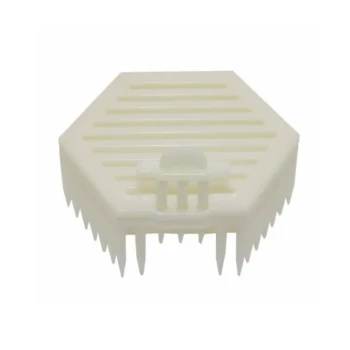
The bamboo queen cage functions as a biological anchor used to secure a newly captured honeybee swarm. By temporarily confining the queen within this porous enclosure and placing it inside a new hive for a period of three to five days, beekeepers utilize her naturally emitted pheromones to attract worker bees and compel them to accept the new environment.
Core Takeaway The queen cage does not merely trap the queen; it leverages the colony's survival instinct to remain with their matriarch. By physically securing the queen, you effectively veto the swarm's ability to "abscond" or fly away, forcing the colony to undergo a critical adaptation period in their new home.
The Mechanics of Stabilization
Leveraging Queen Pheromones
The primary function of the bamboo cage is to facilitate chemical communication while restricting movement. The porous nature of the bamboo allows the queen’s pheromones to permeate the hive freely.
Because worker bees have a biological instinct to congregate around their queen, these pheromones signal the colony to gather and settle. As long as the queen is detected within the hive, the workers will naturally enter and remain in the designated box.
Preventing Colony Absconding
Newly captured swarms are highly volatile and prone to absconding—abandoning the new hive to seek a different location.
By caging the queen, you remove the colony's ability to leave as a cohesive unit. The workers will not fly off without her, effectively locking the swarm into the new location during the crucial first few days.
The Adaptation Process
The Critical Time Window
The primary reference indicates that the queen should be confined for an adaptation period of three to five days.
This duration is specific and intentional. It provides enough time for the colony to "identify" with the new environment and start comb construction or resource gathering, marking the hive as their permanent residence.
Establishing the New Hive
During this confinement, the swarm transitions from a migratory state to a stationary one.
The presence of the queen in the cage acts as a constant signal that the hive is safe and occupied. This stabilizes the workforce, allowing them to focus on biological adaptation to the new box rather than scouting for alternative nesting sites.
Understanding the Trade-offs
Necessity of Release
While the cage is essential for capture, it is a temporary tool. The queen cannot lay eggs or fully function while confined.
Leaving the queen caged beyond the recommended three to five day window can hinder colony growth. The goal is to enforce stability only long enough to break the swarm's impulse to migrate.
Dependency on Pheromones
The success of this method relies entirely on the queen's health and pheromone strength.
If the queen is weak or the cage is constructed of non-porous material that blocks scent, the workers may not cluster effectively, leading to a failed capture. The bamboo material is specifically chosen to ensure maximum olfactory exposure.
Making the Right Choice for Your Goal
When introducing a swarm, your approach to releasing the queen depends on the colony's behavior.
- If your primary focus is preventing swarm loss: Keep the queen confined for the full three to five days to ensure the workers have fully committed to the location before release.
- If your primary focus is rapid colony expansion: Release the queen immediately after the three-day mark, provided the workers are bringing in pollen (a sign they have accepted the hive).
By controlling the queen's movement, you convert a flighty swarm into a stable, productive apiary asset.
Summary Table:
| Feature | Function & Impact |
|---|---|
| Material | Porous Bamboo: Maximizes pheromone dispersal to attract worker bees. |
| Stabilization Time | 3 to 5 Days: Critical window for the swarm to adapt to the new hive. |
| Core Mechanism | Biological Anchor: Uses the colony's instinct to stay with the queen. |
| Key Benefit | Prevents Absconding: Restricts the queen's movement to stop the swarm from leaving. |
| Primary Goal | Transition: Moves the colony from a migratory state to a stationary, productive state. |
Secure Your Apiary Success with HONESTBEE
At HONESTBEE, we understand that every swarm is a valuable asset to your business. Whether you are a commercial apiary or a distributor, we provide the professional-grade tools you need to manage your colonies effectively. From high-quality bamboo queen cages and specialized beekeeping hardware to advanced honey-filling machines and honey-themed cultural merchandise, our comprehensive wholesale portfolio covers the full spectrum of industry needs.
Don't risk losing your next swarm—partner with a supplier that offers durability, expertise, and a complete range of essential consumables. Let us help you scale your operations and provide the best equipment to your customers.
Ready to elevate your beekeeping business? Contact HONESTBEE today for wholesale solutions and expert support!
References
- Workneh Abebe. Identification and documentation of indigenous knowledge of beekeeping practices in selected districts of Ethiopia. DOI: 10.5897/jaerd.9000047
This article is also based on technical information from HonestBee Knowledge Base .
Related Products
- Professional Bamboo Queen Isolation Cage
- Professional Queen Bee Introduction and Transport Cage
- Classic Wooden and Mesh California Queen Cage
- Professional Queen Cage with Sliding Gate and Feeder Plug
- Professional Multi-Functional Queen Bee Cage
People Also Ask
- Why are specialized queen bee cages used for the banking of mated queen bees? Maximize Commercial Apiary Storage Efficiency
- What is the mechanism of action for using temporary queen bee cages? Master Successful Queen Introduction
- How does the side ventilation design of a queen bee cage impact the safety of the queen during long-distance transport?
- What should you do if the queen is still in the cage and the worker bees have not accepted her? Protect Your Colony from Queen Rejection
- What technical precaution must be taken regarding the mesh or grill side of a queen bee cage? Ensure Queen Survival