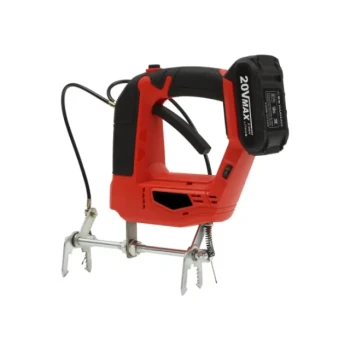
A bee blower serves as a non-invasive clearing tool used during the initial harvesting phase to physically remove bees from the honeycomb. Instead of relying on chemical repellents or smoke, the device generates a high-velocity stream of air that gently but effectively forces the colony away from the nest, granting the beekeeper immediate access to the honeycombs.
The primary value of using a blower lies in maintaining the sensory integrity of your harvest. By substituting air pressure for smoke, you eliminate the risk of tainting the honey's flavor while minimizing the stress reactions often triggered by traditional smoking methods.
The Operational Role of the Blower
Clearing the Supers
The blower is utilized at the very beginning of the extraction workflow, specifically when you are ready to remove frames from the hive.
Before the frames can be uncapped or spun in a centrifuge, the supers (boxes containing the honey) must be cleared of bees. The blower directs a focused current of air between the frames, pushing the bees out of the box and back toward the hive entrance or the ground.
Temporary Displacement
The goal is not permanent removal but temporary displacement.
The airflow encourages the bees to vacate the area for a short duration. This provides the beekeeper a window of opportunity to remove the heavy honey supers and transport them to the extraction facility without carrying "hitchhiking" bees along.
Optimizing Quality vs. Traditional Methods
Avoiding Smoke Contamination
While smokers are a traditional tool in beekeeping, the primary reference advises against using them during the harvest phase.
Smoke works by masking pheromones, but it is particulate matter. Heavy use of smoke during harvest can penetrate the wax cappings and damage the quality of the honey, potentially leaving a smoky or ash-like aftertaste in the final product.
Reducing Colony Stress
The primary reference highlights that smoke can cause nervousness among the bees.
While smoke triggers a survival response (eating honey to prepare for fire), a blower simply simulates a strong wind. This physical method avoids the chemical panic response associated with smoke, keeping the colony's temperament more manageable during the disruption.
Trade-offs and Considerations
Specialized Use Case
It is important to understand that the blower is solely a harvesting tool, not a processing tool.
Once the bees are cleared and the frames are moved indoors, the blower's job is done. The subsequent steps involve uncapping the wax seals and placing the frames into a centrifugal extractor or a press to separate the liquid honey from the comb.
Equipment Requirements
Using a blower requires an external power source or a gas engine, making it heavier and more complex than a simple smoker.
However, for beekeepers prioritizing the purity of the honey over the convenience of a lightweight smoker, the equipment trade-off is considered necessary to preserve the flavor profile.
Making the Right Choice for Your Goal
To ensure you are applying the correct method for your specific constraints, consider the following:
- If your primary focus is honey purity: Rely on the blower to clear supers, as this completely eliminates the risk of smoke particles altering the flavor profile of your harvest.
- If your primary focus is colony management: Use the blower to reduce "nervousness" in the hive, preventing the chemical stress response triggered by heavy smoking.
Mastering the use of the blower ensures that the honey arriving at your extractor is as pure as the moment the bees capped it.
Summary Table:
| Feature | Bee Blower Method | Traditional Smoker Method |
|---|---|---|
| Primary Mechanism | High-velocity air stream | Particulate smoke/chemical masking |
| Flavor Impact | Zero risk of contamination | Potential for smoky or ash-like aftertaste |
| Colony Reaction | Simulates wind; low stress | Triggers survival/feeding panic response |
| Ideal Use Case | Large-scale harvesting & super clearing | Routine hive inspections & management |
| Equipment Needs | Power source or gas engine | Handheld fuel-burning canister |
Elevate Your Honey Production with HONESTBEE
Maximize the purity of your harvest and the efficiency of your apiary operations with professional-grade equipment. HONESTBEE specializes in supporting commercial apiaries and distributors with a complete wholesale catalog. From high-velocity bee blowers and automated honey-filling machines to durable hive-making hardware and essential industry consumables, we provide the tools you need to scale your business.
Ready to upgrade your workflow? Contact us today to explore our wholesale solutions and see how our comprehensive range of beekeeping machinery and cultural merchandise can add value to your brand.
Related Products
- Heavy Duty Manual Bee Smoker Blower for Beekeeping
- Plastic Handle Single Row Artificial Fiber Bee Brush
- Professional Replacement Bee Smoker Bellows for Beekeeping Equipment
- Wooden Bee Brush with Double-Row Horsehair Bristles
- Heavy-Duty Bee Smoker with Durable Plastic Bellows for Beekeeping
People Also Ask
- What are bee smokers made out of? Choose the Right Material for Your Apiary
- What are the advantages of a manual bee smoker? Enhance Hive Safety with Controlled Cool Smoke Technology
- What is the primary function of a manual bee smoker? Master Hive Control for Safe Inspections
- What is the proper technique for applying smoke to a beehive? Master Calm and Effective Hive Management
- What is the purpose of using a bee smoker for Small Hive Beetle inspections? Master Chemical Control & Hive Safety