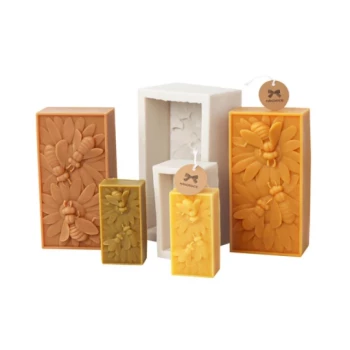
Beeswax is harvested as a natural byproduct of the honey extraction process and must undergo a specific purification technique called rendering to be useful. Beekeepers collect raw wax from hives, melt it in water to separate debris, and filter it to produce clean, solid blocks for industrial or craft applications.
The core principle of processing beeswax relies on density separation: by melting raw wax in hot water, heavy impurities settle to the bottom while pure wax floats to the top, forming a clean cake upon cooling.
The Collection and Rendering Workflow
Processing beeswax transforms it from a sticky, debris-filled byproduct into a stable material. This process focuses on removing honey residue, bee parts, and other hive debris without damaging the wax structure.
Equipment Selection
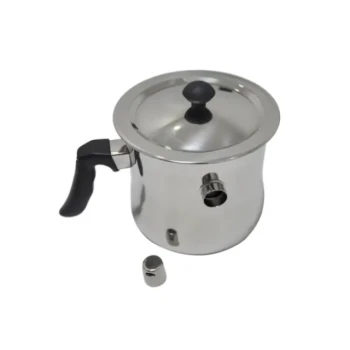
To begin rendering, beekeepers place the raw wax into a sturdy pot.
It is critical to use enamel, aluminum, or stainless steel containers. These materials are non-reactive and prevent the wax from discoloring during the heating process.
The Water Separation Method
The raw wax is not melted alone; it is combined with clean rainwater.
The recommended ratio is two parts water to one part wax. The water acts as a washing agent and a buffer against direct heat.
Heating and Initial Filtration
The mixture is heated until all the wax has completely melted.
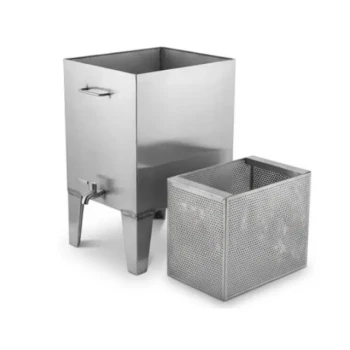
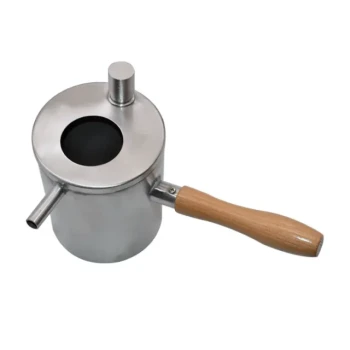
Once molten, the liquid is poured through a rough sieve into a bucket. This step catches larger physical contaminants before the settling process begins.
Cooling and Stratification
The filtered mixture must be left undisturbed to cool for at least 12 hours.
During this time, physics does the work. The wax, being lighter than water, rises to the surface, while dirt and heavy sediments sink to the bottom.
Final Cleaning
As the mixture cools, the wax hardens into a solid "cake" on the surface of the water.
Beekeepers remove this cake and scrape the layer of debris that has accumulated on the bottom of the wax block. For higher quality, this entire melting and settling process can be repeated.
Understanding the Trade-offs and Safety
Processing beeswax involves handling flammable materials at high temperatures. Understanding the limitations of your heat source is vital for safety and product quality.
Fire Hazards
Hot wax is highly flammable.
Never leave melting wax unattended. Beekeepers must exercise extreme caution during the initial melting phase to prevent the mixture from boiling over or igniting.
Temperature Control
Wax should be kept molten, not boiling.
Overheating can darken the wax or alter its chemical properties. When melting clean wax for final crafting (like candle making), direct heat should be avoided entirely.
The Necessity of Indirect Heat
For the final crafting stage, use a double boiler.
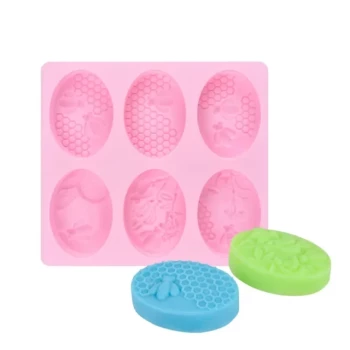
This involves placing a smaller pan inside a larger pan of hot water. This ensures the wax melts evenly without scorching, which is essential for detailed work like molding.
Making the Right Choice for Your Goal
Whether you are processing raw hive scrapings or preparing a finished product, the method determines the quality.
- If your primary focus is purification (Rendering): Use the water-boiling method with a 2:1 water-to-wax ratio to separate dirt effectively through density.
- If your primary focus is crafting (Molding): Use a double boiler to gently melt pre-cleaned wax blocks to prevent burning and ensure a smooth pour.
Success in beeswax processing comes from patience during the cooling phase and strict temperature control during the melting phase.
Summary Table:
| Process Stage | Action | Equipment Needed | Purpose |
|---|---|---|---|
| Collection | Gathering raw wax/cappings | Scrapers, Hives | Obtain raw material byproduct |
| Melting | Heating in water (2:1 ratio) | Stainless/Enamel pot | Separate wax from heavy debris |
| Filtration | Pouring through sieve | Rough sieve, Bucket | Remove large physical contaminants |
| Settling | Cooling for 12+ hours | Cooling container | Stratify pure wax via density |
| Refining | Scraping the wax cake | Scraper, Double boiler | Achieve high-purity finish for crafting |
Elevate Your Apiary Operations with HONESTBEE
Processing high-quality beeswax requires precision, but having the right tools makes all the difference. HONESTBEE specializes in supporting commercial apiaries and distributors with a full spectrum of professional-grade beekeeping equipment.
Whether you need specialized machinery for hive-making, advanced honey-filling solutions, or high-capacity processing tools, we provide the industrial-strength hardware and consumables your business demands. Our expertise ensures you can scale production efficiently while maintaining the highest product standards.
Ready to upgrade your wholesale supply chain? Contact our experts today to discover how HONESTBEE can streamline your production and enhance your market offering.
Related Products
- Beeswax Machine Press Embosser Wax Foundation Mold Printer Bee Hive Equipment Making Sheet
- Beeswax Foundation Sheets Beehive Foundation for Wholesale
- Colorful Silicone Beeswax Foundation Mold Mould for Beekeeping
- Economy Manual Beeswax Embossing Mill Wax Foundation Machine Roller
- Electric Beeswax Flat Sheet Machine with Operating Tray for Wax Processing
People Also Ask
- What equipment is needed to make beeswax foundation? A Guide to DIY Wax Sheet Production
- What miscellaneous equipment is needed for making foundation? A Guide to the Essential Tools
- What miscellaneous equipment is useful when making beeswax foundation? Essential Support Tools for Beekeepers
- What specific equipment is required for making beeswax foundation? Essential Tools for High-Quality Production
- What is the recommended temperature for melting beeswax to make foundation sheets? Master the 70°C-80°C Ideal Range