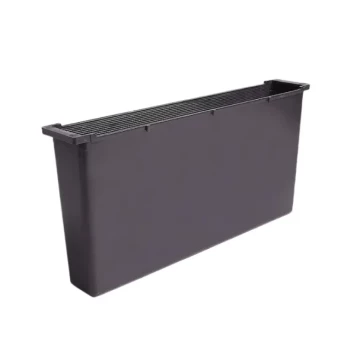
In an emergency feeding situation, dry sugar is administered by providing it supplementally on top of the hive's inner cover or placing it directly onto the frames using a sheet of newspaper as a barrier. This method ensures the carbohydrate source is physically close to the bee cluster, allowing them to access feed without breaking their winter cluster or navigating away from the heat source.
Core Takeaway: Dry sugar feeding is a survival mechanic, not a standard feeding strategy. It allows you to introduce essential carbohydrates directly above the cluster in cold weather without introducing dangerous excess moisture that liquid syrups would add to the hive environment.
Primary Application Methods
The Inner Cover Method
One of the standard ways to administer dry sugar is to place it on top of the inner cover.
You simply pour the dry sugar onto the cover, ensuring it surrounds the central opening. This allows the bees to come up through the hole and access the sugar without leaving the thermodynamic protection of the hive.
The Newspaper Technique
Alternatively, you can place the sugar directly on top of the frames.
To do this, lay a single sheet of newspaper over the top bars of the frames where the bees are clustered. Pour the dry sugar onto the newspaper; the bees will chew through the paper to access the sugar, or moisture from the cluster will eventually dissolve the paper.
The Physics of Dry Feeding
Utilizing Metabolic Moisture
Bees cannot consume dry solids directly; they require moisture to dissolve the crystals.
In a winter cluster, the bees release metabolic moisture (breath) as they consume honey and generate heat. This rising moisture condenses on the dry sugar placed above them, turning it into a consumable syrup-like consistency automatically.
Controlling Hive Humidity
Using dry sugar is safer in freezing temperatures than liquid syrup.
Liquid feed adds significant humidity to the hive, which can condense on the inner cover and drip back onto the bees, potentially freezing them. Dry sugar absorbs this ambient moisture, acting as a desiccant that feeds the bees while simultaneously managing humidity levels.
Understanding the Trade-offs
Loose Sugar vs. Sugar Bricks
While loose dry sugar is effective for immediate emergencies, sugar bricks offer a more stable alternative.
Sugar bricks are created by mixing white sugar with a small amount of water, molding it, and drying it into a solid block. Like loose sugar, these are placed directly above the bee cluster to provide energy with minimal moisture content.
Emergency Use Only
It is critical to recognize that this is an emergency measure.
Dry sugar provides the raw calories needed to prevent starvation, but it lacks the pollen and nutrients required for brood rearing. It is a stop-gap solution to keep the adult population alive until weather conditions allow for foraging or liquid feeding.
Making the Right Choice for Your Goal
When deciding how to administer emergency feed, consider the severity of the situation and the resources available.
- If your primary focus is immediate speed: Use the Newspaper Method with loose sugar. It requires no preparation time and places food immediately in contact with the cluster.
- If your primary focus is handling convenience: Use Sugar Bricks. They are easier to insert and remove during inspections and minimize the risk of spilling loose granules into the hive.
Success depends on placement; regardless of the form, the sugar must be located directly above the cluster to be accessible in the cold.
Summary Table:
| Method | Placement | Best For | Key Advantage |
|---|---|---|---|
| Inner Cover Method | On top of inner cover around the hole | General winter backup | Easy to check without exposing the cluster |
| Newspaper Technique | Directly on top of frames with paper barrier | Urgent survival situations | Immediate proximity to the bee cluster |
| Sugar Bricks | Above frames or on inner cover | Stable, long-term winter feed | Less mess and easier to handle during inspections |
Secure Your Apiary's Success with HONESTBEE
At HONESTBEE, we understand that emergency feeding is just one part of a successful beekeeping operation. As a premier partner for commercial apiaries and distributors, we provide a comprehensive wholesale range of professional-grade beekeeping tools, hive-making machinery, and essential industry consumables.
Whether you need precision honey-filling machines to scale your production or high-quality hardware to protect your colonies, our expert team is here to support your growth. Empower your business with reliable equipment and specialized solutions—contact us today to discuss our wholesale offerings.
Related Products
- HONESTBEE Round Hive Top Bee Feeder for Syrup
- HONESTBEE Entrance Bee Feeder Efficient Hive Front Liquid Feeding Solution for Beekeeping
- Rapid Bee Feeder White Plastic 2L Round Top Feeder for 8 or 10-Frame Bee Hives
- HONESTBEE Professional Hive Top Bee Feeder Feeding Solution
- HONESTBEE Professional Entrance Bee Feeder Hive Nutrition Solution
People Also Ask
- What can the round hive top feeder be used for? A Guide to Efficient, Safe Bee Feeding
- What is the capacity of the round hive top feeder for syrup and pollen? A Guide to Targeted Apiary Support
- What types of hive boxes is the round hive top feeder compatible with? Universal Fit for 8 & 10-Frame Langstroth Hives
- What types of feed can be used with the round hive top feeder? Versatile Feeding for Optimal Apiary Health
- What are the different types of top feeders for bees? Choosing the Best Feeder for Your Apiary