Honey filtration is a gravity-driven purification process that occurs immediately after extraction. Once honey pools at the bottom of the extractor, it is drained through a spigot or gate valve and passed directly through a sieve or strainer. This physical barrier captures impurities, specifically wax cappings and bee parts, allowing clean honey to flow into a dedicated bottling bucket.
The Core Objective Filtration is not about chemically altering the honey; it is purely a mechanical step to remove physical debris. By passing the honey through a mesh barrier, you separate the wax and organic matter from the liquid gold, preparing it for clean storage and bottling.
The Mechanical Process
Draining the Extractor
As the extractor spins, honey is forced out of the frames and drips down the interior walls. It accumulates at the very bottom of the drum.
To begin filtration, you open the gate valve located at the base of the extractor.
The Sieving Stage
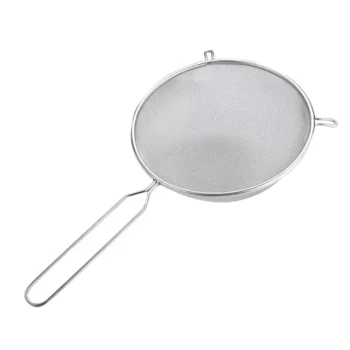
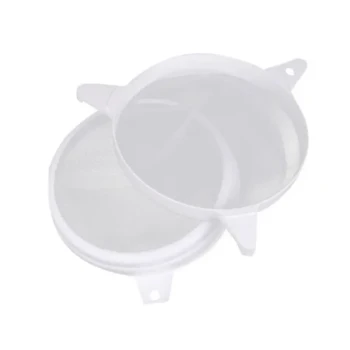
As the honey flows out of the valve, it pours directly into a filtration device. The primary reference identifies this as a honey sieve.
The sieve acts as a physical catch-all. Its mesh is sized to allow the viscous honey to pass through while trapping larger solid particles.
Targeted Impurities
The primary goal is to remove wax cappings—the bits of beeswax that were sliced off the frames to expose the honey.
Filtration also removes other organic debris, such as bee parts, that may have fallen into the extractor during the spinning process.
Collection for Bottling
Once the honey passes through the sieve, it enters a collection vessel, typically described as a "honey bucket."
This bucket is usually equipped with its own spigot or latch. This design feature is critical, as it allows for a seamless transition from the collection phase to filling jars.
Advanced Filtration Options
Variable Material Choices
While a standard honey sieve is common, supplementary methods allow for different levels of filtration.
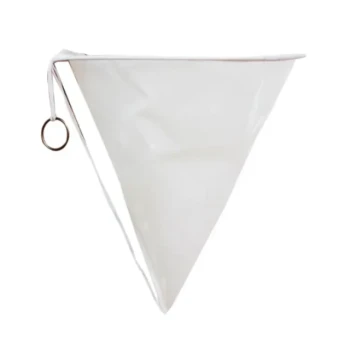
For general straining, a paint strainer can be used effectively to catch wax and debris.
Fine Filtration
For a cleaner end product, very clean calico cloth can be utilized. This tightly woven fabric captures much smaller particles than a standard metal mesh, resulting in a "finer" filtration.
The "Crush-and-Strain" Alternative
If a centrifugal extractor is not available, the filtration process changes slightly.
In this method, the entire wax comb is broken apart. The mixture of broken wax and honey is then poured through a strainer to separate the liquid from the solids manually.
Handling the Wax Byproducts
Recovering Honey from Cappings
The wax cappings removed during filtration often still hold a significant amount of honey.
To minimize waste, these "wet" cappings should be squeezed through a strainer or calico cloth. This recovers the trapped honey, leaving behind "dry" wax.
Processing the Leftovers
The remaining mixture of wax and impurities can be processed rather than discarded.
One method involves washing the mixture in cold water to dissolve the honey residue. Alternatively, the mixture can be melted in a double boiler; upon cooling, the wax floats to the top, impurities settle in the middle, and honey sinks to the bottom.
Understanding the Trade-offs
Speed vs. Purity
Using a standard honey sieve is relatively fast, as the mesh is open enough to allow thick honey to flow quickly.
Using calico results in a cleaner product but significantly slows the process. The tighter weave creates resistance, requiring more time for gravity to pull the thick honey through the fabric.
Equipment Requirements
Using an extractor with a spigot and sieve is the most efficient method for volume.
The crush-and-strain method requires less equipment (no extractor needed) but is more labor-intensive and destroys the comb, meaning bees must rebuild it the following season.
Making the Right Choice for Your Goal
Select your filtration method based on the volume of honey you have and the clarity you desire.
- If your primary focus is efficiency: Use a standard metal honey sieve under the extractor valve to quickly remove large wax particles and bee parts without bottling up flow.
- If your primary focus is high clarity: Use a layer of clean calico cloth to perform a fine filtration, accepting that the gravity-draining process will take significantly longer.
- If your primary focus is yield: Ensure you squeeze the "wet" wax cappings through a strainer separately to capture every last drop of honey before processing the wax.
Filtration is the final critical step that transforms raw hive output into a professional-looking product ready for the jar.
Summary Table:
| Filtration Method | Equipment Needed | Clarity Level | Flow Speed |
|---|---|---|---|
| Standard Sieve | Metal honey sieve & bucket | High (removes wax/bees) | Fast |
| Fine Filtration | Clean calico cloth | Very High (fine particles) | Slow |
| Crush-and-Strain | Strainer & manual tool | High | Moderate |
| Cappings Recovery | Calico or press | Maximum Yield | Variable |
Elevate Your Honey Production with HONESTBEE
Maximize your apiary's efficiency and product quality with professional-grade solutions from HONESTBEE. As a premier partner for commercial apiaries and distributors, we provide everything from high-capacity honey-filling machines and extractors to essential consumables and honey-themed merchandise.
Whether you are scaling up your wholesale operations or seeking the latest beekeeping hardware, our comprehensive portfolio is designed to meet the rigorous demands of the industry. Contact us today to discover how our specialized machinery and tools can streamline your harvest and grow your business!
Related Products
- Professional Stainless Steel Honey Filtering Machine with Water Bath Heating for Beekeeping
- Professional Stainless Steel Honey Filter with Support Handle
- Professional Honey Filter with Tripod Support Stand
- Electric Double Wall Honey Filtering Machine Purifier Equipment for Honey Processing Plant
- Professional Cone-Shaped Honey Filter with Reinforced Steel Ring
People Also Ask
- Why do people filter honey? For Clarity, Stability, and Consumer Appeal
- Is it necessary to filter honey after extraction? A Guide to Straining vs. Raw Honey
- What is the best way to filter honey? A Guide to Quality, Clarity, and Raw Preservation
- Why is filtering honey an important step in honey processing? Ensure Purity, Clarity & Marketability
- What are the benefits of using honey filters? Achieve Purity, Efficiency, and Market Appeal