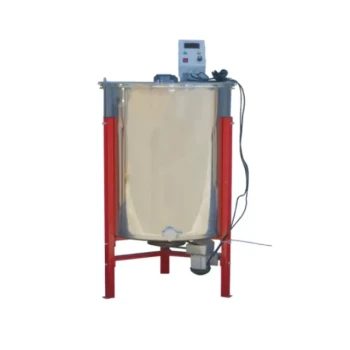
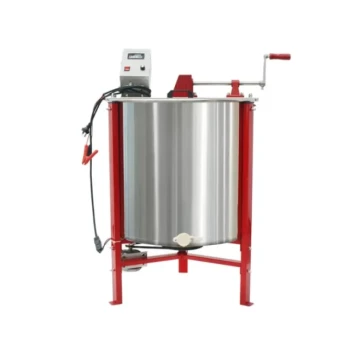
The optimal intervention timing is determined by identifying a specific window 3 to 5 days before the honeycomb cells are completely sealed, provided the moisture content has already dropped below 20%. This precise timing ensures the honey has reached the necessary physical viscosity for effective pumping and the correct monosaccharide-to-sucrose ratio required for chemical maturity.
By extracting just prior to full sealing, commercial apiaries can maximize equipment turnover rates and optimize collection cycles without compromising the physicochemical standards required for industrial grading.
The Science of Intervention Timing
Monitoring Moisture Content
The definitive metric for starting the extraction process is moisture levels. Regardless of the visual state of the comb, the moisture content must be confirmed to be below 20%.
This threshold ensures the honey is chemically stable and meets the rigorous physical requirements for commercial pumping equipment.
The 3-to-5 Day Window
Operational efficiency is highest when extraction occurs 3 to 5 days before the cells are fully sealed.
Waiting for full sealing is unnecessary if the moisture content is correct. Intervening during this pre-seal window allows for faster cycle rotation in a commercial setting.
Chemical Maturity Standards
Timing is not just about water content; it is about sugar composition.
At this specific intervention point, the ratio of monosaccharides to sucrose has reached maturity. This ensures the final product meets industrial physicochemical standards necessary for the market.
Operational Impact on Equipment
Optimizing Equipment Turnover
Adhering to this timing strategy allows facility managers to improve equipment turnover rates.
By processing honey as soon as it is chemically ready—rather than waiting for visual completion (full sealing)—processing machinery can be utilized more frequently within a harvest season.
Efficiency in Extraction and Pumping
Commercial equipment, such as centrifugal extractors and automated filling machines, operates best when honey viscosity is consistent.
Extracting at this optimal maturity point facilitates smoother centrifugal separation and mess-free flow through precision-machined honey gates.
Reducing Material Loss
Proper timing minimizes waste during the pumping and filtration stages.
When honey is harvested at the correct physical consistency, it flows efficiently through multi-micron filtration systems (typically 200 to 600 microns), reducing material loss and allowing for more accurate unit product cost accounting.
Understanding the Trade-offs
The Risk of Premature Extraction
While faster turnover is desirable, extracting earlier than the 3-to-5 day window carries significant risk.
If the moisture content has not yet dropped below 20%, the honey will fail to meet international hygiene and quality standards, regardless of equipment quality.
Balancing Volume vs. Quality
There is often a tension between increasing production volume and maintaining premium quality.
Strict adherence to the moisture metric is non-negotiable for producers entering premium retail markets. Rushing the process to maximize equipment usage without verifying chemical maturity will negatively impact the product's final market price.
Making the Right Choice for Your Goal
To apply this to your commercial operation, assess your primary business objectives:
- If your primary focus is Production Speed: Target the 5-day mark before sealing to maximize collection cycles, but never bypass the moisture check.
- If your primary focus is Export Quality: Prioritize the monosaccharide-to-sucrose ratio maturity to ensure the product meets strict international physicochemical standards.
- If your primary focus is Cost Efficiency: Utilize this timing to reduce labor costs and material loss, ensuring your unit cost accounting remains accurate.
Mastering this intervention window is the key to transforming raw harvest potential into a calibrated, high-margin commercial asset.
Summary Table:
| Metric | Optimal Target | Impact on Commercial Operations |
|---|---|---|
| Moisture Content | Below 20% | Ensures chemical stability and efficient pumping viscosity. |
| Timing Window | 3 to 5 days before sealing | Maximizes equipment turnover rates and collection cycles. |
| Sugar Composition | Mature monosaccharide ratio | Meets industrial grading and international export standards. |
| Filtration Range | 200 - 600 microns | Minimizes material loss during high-speed processing. |
Scale Your Apiary with HONESTBEE Precision Equipment
At HONESTBEE, we empower commercial apiaries and distributors with the high-performance tools needed to master the harvest window. From specialized hive-making machines to precision honey-filling and centrifugal extraction lines, our comprehensive wholesale portfolio is designed for maximum turnover and minimal waste.
Whether you are upgrading your industrial machinery or sourcing essential industry consumables, our experts are ready to help you optimize your unit product cost accounting. Contact us today to discover how our tailored equipment solutions can transform your honey production into a high-margin commercial asset.
References
- I. F. Bezpalyi. Biotechnology of families’ strength influence on the processes of sucrose inversion, dehydration and accumulation of monosaccharides. DOI: 10.32718/ujvas4-2.03
This article is also based on technical information from HonestBee Knowledge Base .
Related Products
- 8-Frame Electric Self-Reversing Honey Extractor Spinner for Commercial Honey Extraction Equipment
- 32 Frame Commercial Electric Honey Extractor for Beekeeping and Honey Production
- 40 Frame Commercial Electric Honey Extractor for Beekeeping
- 24 Frame Honey Extractor Commercial Radial Honey Frame Extraction Machine
- Commercial Electric 12 Frame Honey Extractor Spinner Motorized Honey Extractor
People Also Ask
- What is the primary function of a DC motor in a self-reversing honey extractor? Master Precision Honey Extraction
- How is honey extracted commercially? Maximize Your Apiary's Efficiency and Honey Yield
- Who are commercial honey extractors designed for? Scaling Your Industrial Beekeeping Success
- What are commercial honey extractors used for? Boost Your Apiary's Efficiency & Profitability
- What is a commercial honey extractor? The Essential High-Volume Solution for Large Apiaries