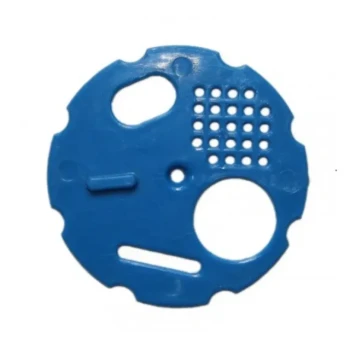
To properly narrow the hive entrance, place the entrance reducer directly on the landing board so that it fully covers the hive opening. Crucially, the specific notch or entry point intended for the bees must be facing down against the bottom board.
A correctly positioned entrance reducer creates a defensible bottleneck. By forcing traffic through a small, ground-level opening, you empower the colony to manage its security and internal climate effectively.
The Mechanics of Hive Defense
Positioning for Control
The physical orientation of the reducer is the most critical factor in its success. You must place the device on the landing board with the cut-out notch facing the floor of the hive.
This creates a tunnel-like effect that restricts access to the interior. If the notch is placed facing upward, it fails to create the intended bottleneck at the landing board level and may confuse returning foragers.
Empowering Guard Bees
The primary functional goal of narrowing the entrance is to limit the surface area that requires guarding.
When the opening is reduced to a small gap, the colony's guard bees can monitor incoming traffic with much greater efficiency. This allows them to identify and reject intruders, such as robber bees from other colonies or predators like wasps, before they breach the hive.
Protection for New Colonies
This mechanical advantage is particularly vital for new or weak colonies that are establishing themselves.
A smaller population lacks the workforce to defend a wide-open entrance. Narrowing the gap artificially balances the odds, giving a developing colony the security of a much larger hive.
Environmental and Situational Functions
Climate Regulation
Beyond defense, the reducer plays a significant role in temperature management. In cold climates, placing the reducer with the opening down minimizes the volume of cold air entering the hive.
It acts as a physical barrier against drafts and prevents snow accumulation from blocking the hive's ventilation or entering the living space.
Sealing for Transport and Treatment
The reducer is a versatile tool for hive management beyond just narrowing the entrance.
When you need to relocate a hive or apply specific chemical treatments, the reducer can be rotated or adjusted to temporarily seal the entrance entirely. This keeps the bees contained safely during transit or ensures the efficacy of treatments that require a closed system.
Understanding the Trade-offs
Congestion Risks
While a narrow entrance is excellent for defense and warmth, it restricts the flow of traffic.
In a booming colony with a high population of foragers, a reducer set to the smallest opening can create a "bottleneck" of bees trying to enter and exit. This congestion can slow down nectar collection and pollen gathering during peak flows.
Ventilation Constraints
Reducing the entrance size inherently reduces airflow.
While this is the desired effect during winter to prevent drafts, it can lead to overheating or moisture buildup in the height of summer. You must balance the need for security against the colony's need for ventilation.
Making the Right Choice for Your Goal
The position of your entrance reducer should change based on the immediate needs of your colony.
- If your primary focus is Colony Defense: Position the reducer with the smallest notch facing down to give guard bees maximum control against robbers.
- If your primary focus is Winterizing: Ensure the reducer is placed to block prevailing winds and snow, minimizing drafts while maintaining a small exit for cleansing flights.
- If your primary focus is Relocation: Utilize the solid face of the reducer (or a specific setting) to temporarily seal the hive, ensuring no bees escape during the move.
Always observe your bees at the entrance; if they are queuing up in large numbers, the opening may be too narrow for their current activity level.
Summary Table:
| Setting | Primary Purpose | Orientation | Pros | Cons |
|---|---|---|---|---|
| Small Notch | Defense & Wintering | Facing Down | Maximum security; prevents drafts and snow. | Potential traffic congestion. |
| Large Notch | Spring/Autumn Flow | Facing Down | Balanced airflow; easier for foragers. | Less defensible than small notch. |
| Solid/Closed | Transport & Treatment | Fully Blocking | Complete containment; treatment efficacy. | No ventilation; risk of overheating. |
Elevate Your Beekeeping Operations with HONESTBEE
At HONESTBEE, we specialize in empowering commercial apiaries and distributors with premium-grade equipment designed for efficiency and scale. Whether you are managing thousands of colonies or supplying the next generation of beekeepers, our comprehensive wholesale portfolio has you covered.
Why partner with us?
- Industrial Machinery: From advanced hive-making equipment to precision honey-filling machines.
- Full-Spectrum Supplies: A complete range of beekeeping tools, hardware, and essential consumables.
- Cultural Merchandise: Unique honey-themed products to diversify your retail offering.
Ready to scale your business with a reliable global partner? Contact HONESTBEE today to discuss our wholesale opportunities and tailored equipment solutions.
Related Products
- Steel Round Disc Entrance Reducer for Flexzion Bee Hive Nuc Box Gate
- Beehive Entrance Reducer Guardian Metal Hive Entrance for Bees
- Professional Hive Front Entrance Bee Feeder
- HONESTBEE Entrance Bee Feeder Efficient Hive Front Liquid Feeding Solution for Beekeeping
- HONESTBEE Entrance Bee Feeder Professional Hive Nutrition Solution for Beekeeping
People Also Ask
- What is the purpose of an entrance reducer for a beehive? Strengthen Colony Defense and Prevent Robbery
- Why are entrance reducers used to counter hornet infestations? Protect Your Hive with Strategic Choke Points
- Why is it critical to maintain a smaller entrance for a newly established bee hive? Boost Colony Growth and Security
- Under what conditions should a beekeeper adjust the size of a beehive entrance? Seasonal & Defense Management Tips
- What is the function of an entrance reducer on a beehive? Strengthen Colony Defense and Climate Control