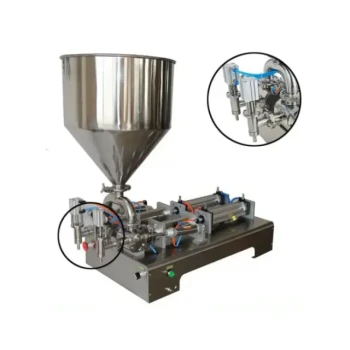
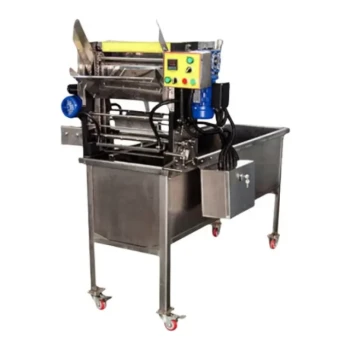
Automated honey-filling machines fundamentally transform the commercial viability of urban beekeeping by converting raw agricultural yields into standardized, scalable retail products. These systems ensure precise measurement and rigorous hygiene, allowing operations to transition from hobbyist endeavors to professional businesses capable of meeting consumer demand for local ecological goods.
The core value of automation lies in market access: it shifts the business model from selling low-margin bulk raw materials to delivering high-value, branded consumer goods that meet strict retail and safety standards.
The Mechanism of Commercial Scaling
Bridging the Gap to Professionalism
The primary barrier to growth for urban beekeepers is often the bottleneck of manual packaging. Automated machines remove this limitation, enabling operations to scale from hobbyist levels to professional commercial distribution. This capacity increase is essential for supporting regional economic growth and satisfying the larger volume demands of local markets.
Enabling High-Volume Distribution
To enter large-scale retail markets or international trade channels, a producer must guarantee supply stability. Industrial-grade machines facilitate high-speed packaging and high-yield processing, ensuring that the production line can keep pace with commercial distribution contracts.
Enhancing Brand Value and Trust
Precision and Weight Consistency
Commercial value relies heavily on consumer trust. Automated systems provide precise volumetric filling, ensuring that every unit contains the exact net weight advertised. This technical assurance is critical for regulatory compliance and for building a reputation for reliability in the marketplace.
Standardization of Appearance
Manual filling often results in messy or inconsistent presentation. Automation synchronizes filling with hygienic sealing, ensuring a consistent appearance for every bottle. This uniformity is a prerequisite for brand building, allowing bee products to sit competitively on shelves alongside established major brands.
Operational Efficiency and Margin Protection
Reducing Labor and Material Loss
By mechanizing the dosage control, operations significantly reduce labor costs associated with manual packing. Furthermore, high-precision equipment reduces product loss during dispensing—a critical factor when dealing with high-value goods like honey and royal jelly.
Handling Technical Complexities
Honey is a difficult substance to package due to its viscosity. Industrial machines are specifically engineered to handle high-viscosity, dehydrated, and filtered honey. They maintain precise flow rates where manual methods would struggle, ensuring efficient processing without sacrificing speed.
Hygiene and Regulatory Compliance
Eliminating Contamination Risks
For urban bee products to be sold in high-end markets (including pharmaceutical or cosmetic sectors), hygiene is non-negotiable. Automated machines isolate secondary pollution by minimizing human contact during the bottling process.
Meeting International Standards
Automation allows producers to comply with international food safety and quality standards. This capability is essential for positioning products not just as local crafts, but as export-grade commodities that meet the rigorous requirements of global distribution systems.
Understanding the Operational Trade-offs
The Necessity of Pre-Processing
While these machines add value, they often require the raw product to be dehydrated and filtered to function optimally. This means automation is not a standalone solution; it requires an upstream investment in processing equipment to prepare the honey for industrial filling.
Volume Dependence
The references highlight that these machines are designed for "industrial-grade" and "high-yield" scenarios. For very small, micro-batch beekeepers, the efficiency gains may not justify the capital investment unless the goal is specifically to scale production significantly beyond current levels.
Making the Right Choice for Your Goal
To maximize the commercial return on an automated filling machine, align your investment with your specific business objective:
- If your primary focus is Retail Brand Building: Prioritize automation to ensure the aesthetic consistency and precise net weight required to compete on supermarket shelves.
- If your primary focus is Export and Safety: Leverage automation to guarantee the rigorous hygiene standards and regulatory compliance needed for international markets.
- If your primary focus is Profit Margins: Use automation to reduce labor overhead and minimize the waste of high-value raw materials during dispensing.
Ultimately, automated filling is the definitive step that transitions honey from a raw agricultural ingredient into a high-value commercial asset.
Summary Table:
| Feature | Commercial Benefit | Impact on Value |
|---|---|---|
| Precise Filling | Weight consistency & regulatory compliance | Increases consumer trust & brand reliability |
| High-Speed Output | Scalable distribution & stable supply | Enables entry into large-scale retail markets |
| Hygienic Isolation | Reduced contamination & food safety | Meets international standards for export |
| Waste Reduction | Minimized product loss & lower labor costs | Protects profit margins on high-value honey |
| Uniform Packaging | Professional shelf appearance | Enhances brand prestige & competitiveness |
Transform Your Apiary into a Professional Brand with HONESTBEE
Ready to scale your production and capture premium market value? HONESTBEE empowers commercial apiaries and distributors with the industrial-grade tools needed to succeed. From high-precision honey-filling machines and hive-making hardware to a full spectrum of beekeeping consumables and honey-themed merchandise, we provide the end-to-end solutions your business requires.
Why partner with HONESTBEE?
- Wholesale Excellence: Comprehensive equipment portfolios for large-scale operations.
- Technical Superiority: Machines designed for high-viscosity products and rigorous hygiene.
- Global Reach: Quality standards that prepare your products for international trade.
Take the next step toward professionalizing your honey production. Contact us today to explore our wholesale offerings and see how our expertise can drive your growth.
References
- Monika Egerer, Ingo Kowarik. Confronting the Modern Gordian Knot of Urban Beekeeping. DOI: 10.1016/j.tree.2020.07.012
This article is also based on technical information from HonestBee Knowledge Base .
Related Products
- Fully Automatic Honey Filling Packaging Machine for Processing Line
- Precision Durable Efficient HONESTBEE Rotary Honey Filling Machine
- Automatic Honey Filling and Filtering Machine for Beekeeping Bottle Filling
- Precision Automated Packaging Turntable Honey Spoon Filling Sealing Packing Machine
- Automatic Single-Dose Snap & Squeeze Honey Sachets Packing Machine
People Also Ask
- Why are fully automatic honey filling and packaging lines essential? Boost Your Honey's Market Value and Quality
- What is a fully-automatic honey filler? Streamline Your Production with High-Precision Automation
- How do automated honey filling and packaging machines affect profitability? Boost Margins with HONESTBEE Technology
- How do automated honey filling and packaging machines contribute to the market value of honey products? Maximize Your ROI
- How do industrial-grade automated honey filling and packaging machines mitigate the risk of physical contamination?