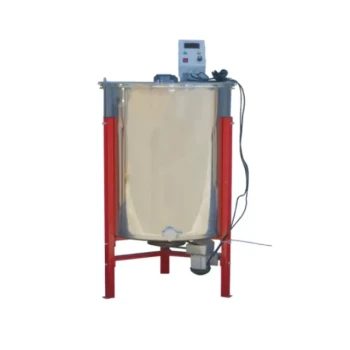
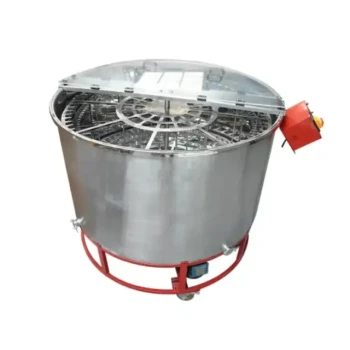
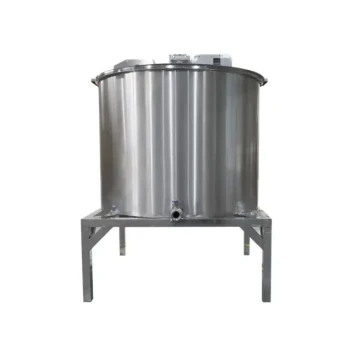
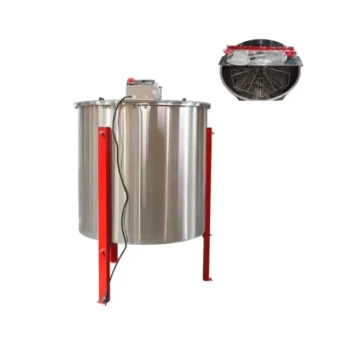
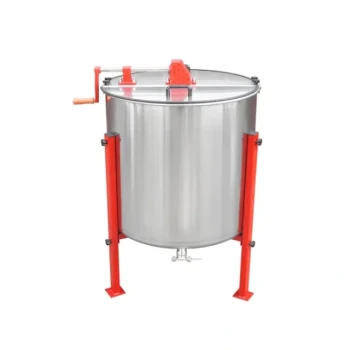
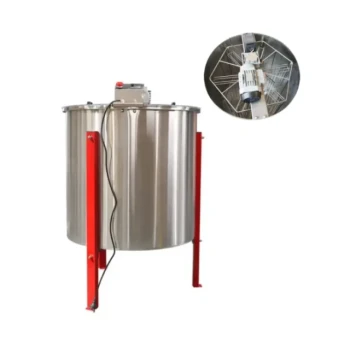
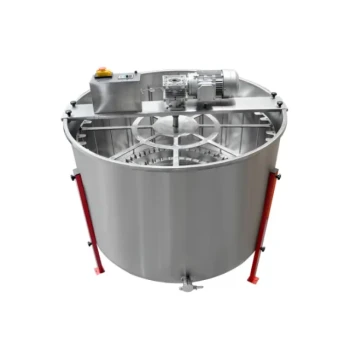
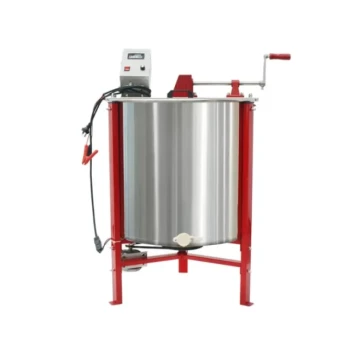
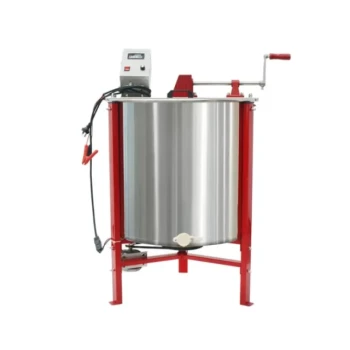
Industrial centrifugal honey extractors rely on high-speed rotation to generate centrifugal force, expelling honey from the comb without physical crushing. This mechanical process preserves the structural integrity of the honeycomb, allowing the intact combs to be immediately returned to the hive for reuse. By preventing damage to the comb, these machines significantly reduce the energy bees must expend on rebuilding, thereby directly enhancing both production efficiency and product purity.
The core advantage of centrifugal extraction is the preservation of the honeycomb structure. By eliminating the need for bees to rebuild wax combs, you convert biological energy directly into higher honey yields and faster production turnover.
Mechanics of Quality Preservation
Eliminating Wax Contamination
The primary differentiator of centrifugal extraction is its ability to separate liquid honey without destroying the solid comb. Traditional pressing methods crush the comb, inevitably mixing beeswax and debris into the final product.
By using high-precision centrifugal force, industrial extractors draw the honey out while leaving the wax structure untouched. This ensures a standardized, high-purity product that is free from the wax contamination associated with older extraction techniques.
Maintaining Comb Integrity
The machine utilizes high-speed rotation to apply force evenly across the honeycomb. This controlled force is strong enough to eject the viscous honey but precise enough to avoid fracturing the delicate wax walls of the cells.
Keeping the honeycomb intact is the foundation of modern, standardized honey production. It transforms the comb from a single-use consumable into a reusable asset for the apiary.
The Logic of Production Efficiency
Reducing Biological Energy Costs
Honey production is biologically expensive; bees consume significant resources to secrete wax and build combs. When extractors destroy the comb, bees must divert energy from foraging to reconstruction.
Centrifugal extractors allow beekeepers to return empty, intact combs to the hive immediately. This removes the burden of reconstruction, allowing the colony to focus its energy entirely on honey collection.
Increasing Turnover Rates
Because the colony does not need to rebuild its infrastructure, the time required for the hive to become productive again is drastically shortened.
This cycle accelerates the overall production turnover rate. The result is a more efficient operation where the "downtime" for the bee colony is minimized, leading to higher aggregate yields over the season.
Understanding the Trade-offs
The Pitfall of Traditional Pressing
While simpler methods exist, they create a specific bottleneck in production: reconstruction time. Beekeepers relying on destructive pressing methods must account for the lag time required for colony reconstruction.
Standardization Requirements
Adopting centrifugal extraction represents a shift toward standardized production. Unlike manual pressing, which can handle irregular inputs, centrifugal machines operate best as part of a systematic workflow designed to maximize the reuse of combs. The efficiency gains are realized only when the workflow prioritizes the immediate return of intact combs to the hive.
Making the Right Choice for Your Operation
To maximize the benefits of industrial extraction, align your equipment choice with your production goals.
- If your primary focus is Product Purity: Utilize centrifugal extraction to eliminate the wax contamination and debris common in pressing methods.
- If your primary focus is Volume and Yield: Prioritize the immediate return of intact combs to the hive to minimize colony reconstruction time and maximize honey accumulation.
By preserving the comb, you preserve the energy of the hive, creating a cycle of higher efficiency and superior quality.
Summary Table:
| Feature | Centrifugal Extraction | Traditional Pressing | Impact on Efficiency/Quality |
|---|---|---|---|
| Comb Integrity | Preserved (Reusable) | Destroyed (Single-use) | Bees save energy on rebuilding, increasing honey collection time. |
| Honey Purity | High (No wax debris) | Lower (Contains wax/sediment) | Minimizes filtration needs and maintains premium quality standards. |
| Production Speed | Fast Turnover | Slow Recovery | Accelerated hive rotation leads to higher aggregate seasonal yields. |
| Worker Bee Load | Focus on Foraging | Focus on Reconstruction | Directs biological energy toward production rather than infrastructure. |
Maximize Your Apiary’s Potential with HONESTBEE
At HONESTBEE, we specialize in empowering commercial apiaries and distributors with high-performance beekeeping solutions. Our industrial centrifugal honey extractors are engineered to protect your combs and skyrocket your production turnover.
Whether you need precision honey-filling machines, robust hive-making machinery, or a complete range of wholesale beekeeping tools and consumables, we provide the hardware and expertise to scale your business.
Ready to elevate your honey production and product purity?
Contact our specialists today to explore our wholesale offerings
References
- Mariia Fedorіak, V. Jos. RESULTS OF HONEY BEE COLONY LOSSES MONITORING IN UKRAINE IN THE CONDITIONS OF WAR AFTER THE WINTER OF 2022-2023. DOI: 10.31861/biosystems2024.01.084
This article is also based on technical information from HonestBee Knowledge Base .
Related Products
- electric honey extractor honey centrifuge 3 frame honey extractor stainless steel honey frame extractor
- Manual Hand Crank 4 Frame Honey Extractor Centrifuge for Beekeeping
- Professional 4 Frame Self Reversing Electric Honey Extractor for Beekeeping
- HONESTBEE 72 Frame Industrial Electric Honey Extractor for Beekeeping
- 24 Frame Honey Extractor Commercial Radial Honey Frame Extraction Machine
People Also Ask
- What are the characteristics of electric honey extractors? Boost Your Apiary Efficiency with Automated Technology
- What are the disadvantages of using an electric honey extractor? Weighing Cost, Power, and Comb Safety
- What are the advantages of an electric honey extractor? Boost Efficiency and Scale Your Honey Production
- What are the technical advantages of electric honey extractors? Maximize Yield and Protect Your Bee Colony
- How does an electric honey extractor affect the quality of honey? Preserve Flavor & Purity with Precision Extraction