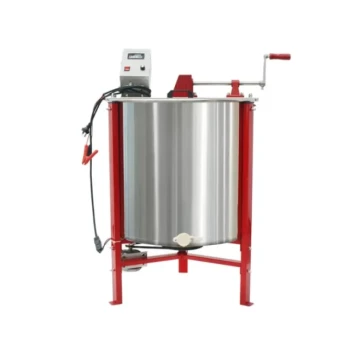
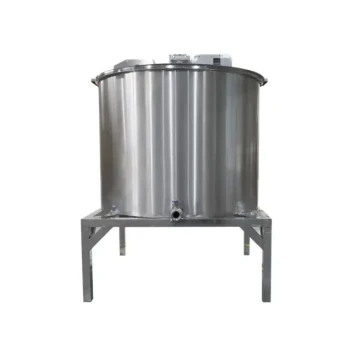
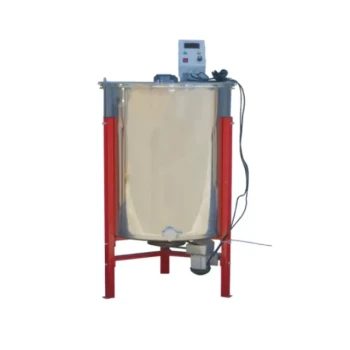
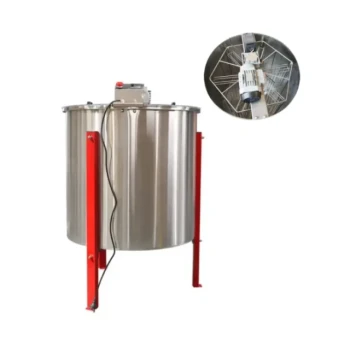
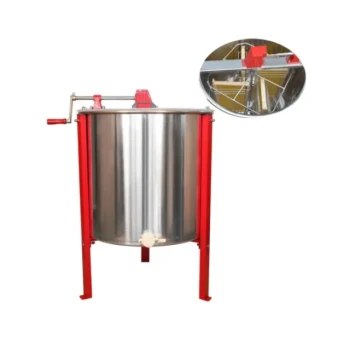
Modern honey extraction machines improve economic efficiency primarily through high-precision centrifugal technology that separates honey without damaging the honeycomb. By preserving the structural integrity of the combs, these machines allow apiarists to return the combs to the hive for immediate reuse. This eliminates the time and energy bees would otherwise spend rebuilding wax, directly converting that biological energy into increased honey production and allowing for more frequent harvests within a single flowering period.
Core Takeaway The economic advantage of modern extraction lies in converting biological energy into profit. By mechanically preserving the honeycomb, you allow the colony to skip the resource-intensive "construction phase" and remain in the "production phase," significantly shortening the production cycle while simultaneously reducing physical product loss.
Maximizing Biological Efficiency via Comb Preservation
The most profound impact of modern extraction technology is not just mechanical speed, but how it optimizes the biological output of the bee colony.
The Value of Structural Integrity
Traditional or manual methods often damage the delicate wax structure of the honeycomb. High-precision centrifugal technology spins the frames to extract honey using physical force rather than crushing or squeezing. This leaves the underlying honeycomb structure intact and ready for immediate reuse.
Redirecting Colony Energy
Bees consume a significant amount of honey and energy to secrete wax and build combs. When extraction machines preserve the comb, the colony does not need to rebuild its nest. The energy that would have been wasted on construction is redirected toward foraging and nectar processing.
Increasing Harvest Frequency
Because the bees are returning to a "move-in ready" hive, they can fill the cells much faster. This efficiency shortens the overall extraction cycle. Consequently, producers can achieve multiple harvests within a single flowering period, dramatically increasing the total yield per season without adding more hives.
Scaling Operations through Automation
While biological efficiency drives volume, mechanical automation drives cost reduction and scalability.
Reducing Labor Dependencies
Modern systems integrate extraction, filtration, and precision bottling into automated lines. This moves the process away from manual labor, allowing a single operator to manage volumes that previously required a team. This significantly lowers the unit production cost per kilogram of honey.
Minimizing Product Loss
Manual handling inevitably leads to spillage and waste. Industrial-grade machines utilize closed-loop systems and precise metering to ensure nearly 100% of the harvested honey makes it into the bottle. Reducing waste at the extraction and filling stages directly improves the profit margin.
Elevating Product Value and Market Access
Economic efficiency is also defined by the value of the final product and the markets it can access.
Meeting Export Hygiene Standards
To enter high-value international markets, honey must be processed in sterile environments. Automated extraction and filling machines minimize human contact, ensuring the product meets stringent international hygiene standards. This capability bridges the gap between local apiary output and lucrative global exports.
Preserving Sensory Quality
Speed is essential for quality. Modern centrifugal extractors and multi-stage filtration systems separate honey rapidly. This speed, combined with non-thermal processing, maximizes the preservation of the honey’s nutritional content and natural flavor profile. Higher quality retention supports premium branding and higher price points.
Understanding the Trade-offs
Investing in advanced machinery improves efficiency, but it introduces new operational considerations that must be managed.
Capital Expenditure vs. Volume
The upfront cost of industrial-grade automation is significant. For small-scale operations, the return on investment (ROI) may take years to realize. These systems are most economically efficient when the volume of honey production is high enough to lower the per-unit cost of the equipment.
Maintenance and Technical Skill
Transitioning from manual to automated systems shifts the skill requirement. While you need fewer manual laborers, you increase the need for technical maintenance. Downtime due to mechanical failure in a fully automated line can halt production entirely, unlike manual processes which are more resilient to individual interruptions.
Making the Right Choice for Your Goal
To maximize economic efficiency, align your equipment choice with your specific production scale and market targets.
- If your primary focus is maximizing yield per hive: Invest in high-quality centrifugal extractors that prioritize honeycomb preservation to shorten the bees' production cycle.
- If your primary focus is reducing overhead costs: Focus on automated filling and capping machines to reduce manual labor hours and ensure consistent dosing.
- If your primary focus is export market entry: Prioritize integrated processing lines that offer sterile, hands-free filtration and bottling to meet international compliance standards.
True economic efficiency in apiculture comes from balancing the biological needs of the colony with the mechanical precision of the processing line.
Summary Table:
| Feature | Economic Benefit | Impact on Production |
|---|---|---|
| Centrifugal Extraction | Preserves honeycomb integrity | Allows for immediate reuse by bees, increasing harvest frequency |
| Automated Processing | Reduces manual labor costs | Lower unit production cost and higher scalability |
| Closed-Loop Systems | Minimizes product waste | Near 100% harvest recovery for improved profit margins |
| Hygienic Filtration | Meets global export standards | Access to premium international markets and higher price points |
| Non-Thermal Speed | Preserves nutritional quality | Supports premium branding and superior product value |
Scale Your Apiculture Business with HONESTBEE
At HONESTBEE, we empower commercial apiaries and distributors with the high-precision tools needed to dominate the market. Our comprehensive wholesale catalog includes everything from centrifugal honey extractors that preserve your combs to advanced honey-filling machines and specialized hardware.
Whether you are looking to automate your production line or source industry-essential consumables, our portfolio is designed to maximize your biological efficiency and lower overhead costs. Let us help you turn biological energy into significant profit.
Contact HONESTBEE Today to Optimize Your Hive-to-Bottle Process
References
- A. A. Abd EL- Moneim. An economic analysis of honeybee farms in Sohag governorate. DOI: 10.21608/ajar.2022.277865
This article is also based on technical information from HonestBee Knowledge Base .
Related Products
- Stainless Steel Manual 8 Frame Radial Honey Extractor Machine for Beehives
- HONESTBEE 72 Frame Industrial Electric Honey Extractor for Beekeeping
- HONESTBEE 6 Frame Three Use Electric Honey Extractor for Beekeeping
- 32 Frame Commercial Electric Honey Extractor for Beekeeping and Honey Production
- Commercial Electric 12 Frame Honey Extractor Spinner Motorized Honey Extractor
People Also Ask
- What types of beehive frames are compatible with honey extractor machines? Find the Perfect Match for Your Apiary
- Which type of honey extractor is generally more durable? Focus on Material & Build Quality for Longevity
- What are the key features and benefits of a stainless steel honey extractor? Upgrade to Professional Purity
- What is a manual honey extractor? The Essential Guide to Cost-Effective Beekeeping for Beginners
- Why are manual extractors popular among beginner beekeepers? A Guide to Starting Simple & Saving Money