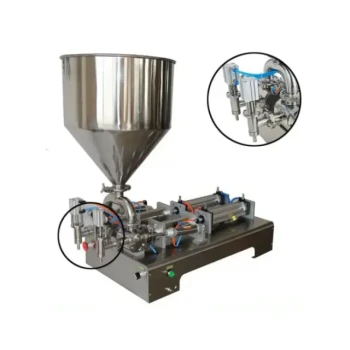
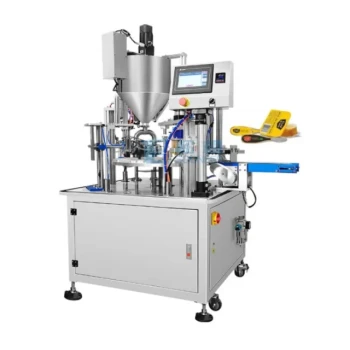
Specialized honey packaging and bottling machines drive economic efficiency primarily by drastically reducing manual labor costs and maximizing production throughput. By automating the filling process with precise dosing, large-scale apiaries can significantly minimize product waste and ensure the consistency required for retail markets. This operational shift allows producers to bypass supply chain intermediaries, capturing higher profit margins by selling finished goods directly to consumers.
Core Insight: True economic efficiency in modern apiaries is not just about speed; it is about vertical integration and value preservation. Specialized bottling hardware transforms an apiary from a bulk raw material supplier into a manufacturer of premium consumer goods, allowing for the capitalization of unique bio-active properties that would otherwise be lost in bulk processing.
Operational Cost Reduction and Throughput
Minimizing Labor and Product Loss
The most immediate impact of industrial filling machines is the reduction of variable costs. By automating the bottling line, apiaries significantly lower the manual labor hours required per unit of honey produced. Furthermore, high-precision metering eliminates the "overfill" and spillage common in manual operations, ensuring that virtually every drop of harvested honey is monetized.
Scaling for Retail Consistency
To enter the retail market, products must meet strict consistency standards. Automated labeling and filling systems ensure that large production volumes maintain a professional appearance and precise volume control. This standardization provides the physical infrastructure necessary to handle high-density production without improved labor costs scaling linearly.
Market Expansion and Revenue Capture
Bypassing Intermediaries
The economic "step-change" for large apiaries often comes from changing their position in the supply chain. With the capacity to package goods at scale, beekeepers can avoid selling bulk honey to packers at wholesale rates. Instead, they can access retail channels directly, retaining the markup that usually goes to third-party bottlers.
Diversifying Revenue Streams
Advanced machinery allows apiaries to monetize distinct nectar sources that might otherwise be blended into generic batches. For operations involved in commercial pollination, this means processing byproducts—such as pumpkin honey—into high-value consumer goods. This synergy ensures the apiary captures the full financial value of the pollination process, rather than relying solely on service fees.
Value Retention and Premium Pricing
Preserving Bio-Active Compounds
For high-end markets, economic efficiency is defined by the price per ounce. Specialized filling machines are designed to minimize exposure to ambient air during dispensing. For premium varieties like oak honey, this prevents the oxidation of sensitive phenolic compounds and antioxidants. Preserving these antimicrobial properties allows the product to be sold as medicinal-grade honey, which commands a significantly higher market price.
Managing High-Risk Varieties
Certain high-value varieties, such as stingless bee honey, have high moisture content and are prone to fermentation. Specialized equipment that integrates dehumidification and high-integrity sealing extends the shelf life of these fragile products. By preventing spoilage, this machinery renders a difficult-to-handle product commercially viable, unlocking a niche market for high-value health supplements.
Strategic Decision Making
Data-Driven Yield Analysis
Modern automated filling machines do more than package; they measure. By providing precise data on the actual honey yield per colony or batch, these machines serve as a diagnostic tool. This data helps operators assess the economic impact of environmental stressors and monitor stock performance, translating field results into quantifiable economic parameters for better business forecasting.
Understanding the Trade-offs
While the benefits are clear, specialized machinery introduces new complexities.
- Capital Intensity: The shift from bulk sales to bottling requires a significant upfront capital expenditure (CAPEX), shifting the business model from low-asset/high-labor to high-asset/low-labor.
- Maintenance Dependencies: Industrial-grade machines require specialized maintenance. Downtime in a bottling line can create immediate bottlenecks that do not exist in manual operations.
- Specificity vs. Flexibility: A machine optimized for standard honey jars may not easily adapt to the specialized containers required for premium or medicinal variants (e.g., stingless bee honey) without additional tooling or distinct production lines.
Making the Right Choice for Your Goal
Select your machinery based on the specific margin-expansion strategy of your apiary:
- If your primary focus is Volume and Cost Reduction: Prioritize high-throughput machines with automated labeling to minimize labor and maximize speed for generic retail markets.
- If your primary focus is Premium/Medicinal Markets: Prioritize machines with air-exposure minimization and high-precision sealing to preserve antioxidants and bio-active compounds.
- If your primary focus is Niche/Exotic Varieties: Prioritize equipment with moisture control and temperature regulation to prevent fermentation in high-moisture honeys (like stingless bee honey).
Investing in the right packaging infrastructure is not merely an operational upgrade; it is the strategic pivot that allows an apiary to capture the full value of its harvest.
Summary Table:
| Economic Driver | Impact of Automation | Strategic Benefit |
|---|---|---|
| Labor Costs | Drastic reduction in manual hours | Lowers per-unit variable costs |
| Product Waste | Precision dosing & anti-spill tech | Maximizes monetization of every drop |
| Market Position | Direct-to-retail packaging capability | Bypasses intermediaries for higher margins |
| Product Value | Preservation of bio-active compounds | Supports premium/medicinal grade pricing |
| Data Insights | Precise yield measurement per batch | Improved business forecasting & diagnostics |
Scale Your Apiary's Profitability with HONESTBEE
Transitioning from bulk supply to premium retail manufacturing requires more than just honey—it requires the right industrial infrastructure. HONESTBEE specializes in empowering commercial apiaries and distributors with the high-precision machinery needed to capture maximum market value.
Our comprehensive wholesale portfolio includes:
- Advanced Honey-Filling & Packaging Machines: Minimize oxidation and preserve the medicinal properties of your harvest.
- Automated Hive-Making Equipment: Scale your operations with durable, standardized hardware.
- Professional Beekeeping Tools & Consumables: A full spectrum of supplies to maintain high-density production.
Whether you are looking to reduce operational overhead or diversify into high-value niche markets, HONESTBEE provides the specialized tools and expertise to ensure your economic efficiency.
Contact our specialists today to optimize your production line!
References
- Piotr Semkiw. Polish Beekeeping Twenty Years After Joining the European Union. DOI: 10.2478/jas-2025-0004
This article is also based on technical information from HonestBee Knowledge Base .
Related Products
- Fully Automatic Honey Filling Packaging Machine for Processing Line
- Pneumatic Double Nozzle Honey Filling Bottling Packaging Machine
- Economy Small Honey Filling Machine Honey Bottle Filler Packaging Machine
- Double Nozzle Small Honey Filling Machine Honey Sachet Packing Packaging Equipment
- Automatic Single-Dose Snap & Squeeze Honey Sachets Packing Machine
People Also Ask
- Why are fully automatic honey filling and packaging lines essential? Boost Your Honey's Market Value and Quality
- What is a fully-automatic honey filler? Streamline Your Production with High-Precision Automation
- How do automated honey filling and packaging machines affect profitability? Boost Margins with HONESTBEE Technology
- How do automated honey filling and packaging machines contribute to the market value of honey products? Maximize Your ROI
- How do industrial-grade automated honey filling and packaging machines mitigate the risk of physical contamination?