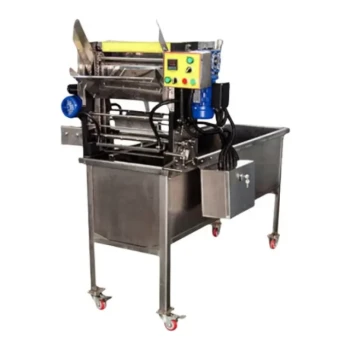
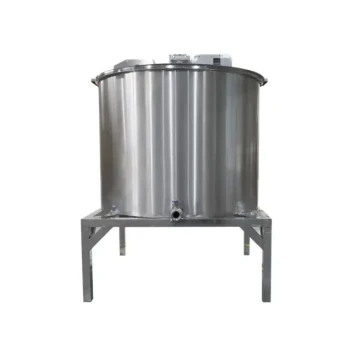
Automated honey processing provides the technical assurance necessary to elevate honey from a local agricultural commodity to a certified, high-end retail product. By replacing manual handling with precise process control, automation secures the consistency and hygiene required to compete in premium markets.
Core Insight: While manual collection often limits producers to informal markets due to inconsistency and contamination risks, automated systems provide the physical stability and sterility required to obtain health certifications. This technological shift is the gateway to entering formal supply chains, supermarkets, and international trade.
Elevating Quality and Safety Standards
To understand product competitiveness, you must first look at the integrity of the product itself. Automation fundamentally changes how the honey is handled, directly impacting its commercial grade.
Eliminating Secondary Contamination
Manual extraction involves significant human contact and exposure to open air, which invites bacteria and foreign particles.
Automated systems, particularly closed-loop filling lines, create a sterile environment. This drastically reduces the risk of secondary contamination, ensuring the final product meets strict food safety hygiene requirements.
Preserving Bioactivity and Flavor
Traditional manual crushing or squeezing can introduce excess oxygen, leading to oxidation that degrades honey's natural enzymes.
Industrial centrifugal extractors use precise force to separate honey without heat or excessive aeration. This shortens environmental exposure time, preserving the natural floral aromas and nutritional bioactivity that premium buyers demand.
Preventing Fermentation and Spoilage
Manual processing often lacks the speed to process large harvests before ambient moisture affects the honey.
Mechanized processes significantly reduce moisture absorption and impurity content. By stabilizing the product quickly, automation prevents fermentation, thereby extending the shelf life and maintaining a higher commercial grade over time.
Unlocking Market Access
Competitiveness is defined by where you are allowed to sell. Automation serves as a prerequisite for entering higher-tier distribution channels.
Achieving Certification Compliance
High-value markets require proof of quality, such as organic certifications or Protected Designation of Origin (PDO) status.
Automated machines provide the traceable, consistent process control necessary to pass these audits. Without the technical assurance of a mechanized system, obtaining these health and quality certifications is exceptionally difficult.
Standardization for Retail
Supermarkets and export markets reject products with inconsistent fill levels or variable packaging quality.
Automated filling machines deliver precise volumetric control and professional packaging. This ensures every jar looks identical and contains the exact stated amount, a baseline requirement for building a reputable brand in formal retail channels.
Operational Efficiency and Yield
Beyond the quality of the honey, competitiveness is also about the economics of production.
Protecting the Wax Foundation
Manual harvesting often involves crushing the comb, which destroys the wax structure and forces bees to rebuild it, lowering future yields.
Centrifugal extractors separate honey without damaging the wax foundation. This allows the comb to be reused, significantly increasing future harvest efficiency.
Enhancing By-Product Value
A competitive operation maximizes every asset, including beeswax and propolis.
Professional separation equipment maintains the structural integrity and purity of beeswax. This results in high-quality raw wax suitable for value-added secondary products like creams and soaps, diversifying your economic output.
Understanding the Trade-offs
While automation offers clear competitive advantages, it introduces new challenges that must be managed.
Initial Capital and ROI
Automation requires a significant upfront financial investment. For small-scale apiaries with limited distribution channels, the cost of machinery may outweigh the gains in efficiency and consistency.
Maintenance and Technical Skill
Mechanized systems require specialized maintenance and technical operation. Unlike manual methods, downtime in an automated line can halt production entirely, requiring a reliance on technical support and spare parts availability.
Making the Right Choice for Your Goal
Automation is not merely a convenience; it is a strategic tool for market positioning.
- If your primary focus is entering high-end retail markets: Invest in automated filling and processing lines to ensure the hygiene and standardization required for health certifications and supermarket shelf placement.
- If your primary focus is preserving artisanal quality: Utilize centrifugal extractors to protect floral aromas and bioactivity, allowing you to market your product as premium or "raw" with extended shelf life.
- If your primary focus is maximizing economic yield: Implement professional separation equipment to recover high-purity beeswax for secondary revenue streams while protecting your combs for future harvests.
Ultimately, automation transitions your operation from simple production to professional manufacturing, securing the consistency needed to build a trusted global brand.
Summary Table:
| Feature | Manual Collection | Automated Processing | Competitive Advantage |
|---|---|---|---|
| Hygiene Control | High risk of human contact | Closed-loop sterile systems | Meets strict food safety standards |
| Bioactivity | Risk of oxidation/degradation | Gentle centrifugal extraction | Preserves enzymes and floral aromas |
| Consistency | Variable fill and quality | Precise volumetric control | Professional branding and retail-ready |
| Resource Use | Comb often destroyed | Reusable wax foundations | Higher future yields and byproduct value |
| Shelf Life | Prone to fermentation | Low moisture & impurity | Stable commercial grade for export |
Transform Your Apiary into a High-End Brand with HONESTBEE
Are you ready to transition from local production to international retail? HONESTBEE empowers commercial apiaries and distributors with the technical assurance needed to dominate the honey market. We offer a comprehensive suite of professional beekeeping tools, from high-precision honey-filling machines to industrial-grade hive-making equipment and essential consumables.
By choosing HONESTBEE, you gain a partner dedicated to your growth, ensuring your products meet the highest standards of hygiene and standardization. Contact our experts today to discover how our wholesale machinery solutions can maximize your yield and secure your place in the global supply chain.
References
- Eduardo Clemente Alves, Celso Augusto Rimoli. Innovation in Small Business Networks: A Case Study in the Beekeeping Sector. DOI: 10.2139/ssrn.4065490
This article is also based on technical information from HonestBee Knowledge Base .
Related Products
- Fully Automatic Honey Filling Packaging Machine for Processing Line
- Automatic Honey Filling and Filtering Machine for Beekeeping Bottle Filling
- Automatic Single-Dose Snap & Squeeze Honey Sachets Packing Machine
- Semi Automatic Small Honey Bottle Filling Machine Honey Filler
- Precision Durable Efficient HONESTBEE Rotary Honey Filling Machine
People Also Ask
- Why are fully automatic honey filling and packaging lines essential? Boost Your Honey's Market Value and Quality
- What is a fully-automatic honey filler? Streamline Your Production with High-Precision Automation
- How do automated honey filling and packaging machines affect profitability? Boost Margins with HONESTBEE Technology
- How do automated honey filling and packaging machines contribute to the market value of honey products? Maximize Your ROI
- How do industrial-grade automated honey filling and packaging machines mitigate the risk of physical contamination?