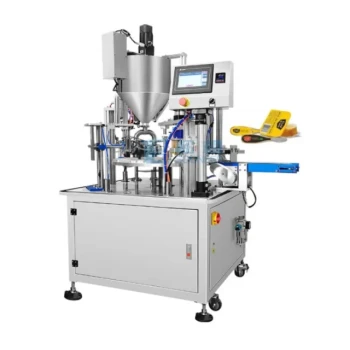
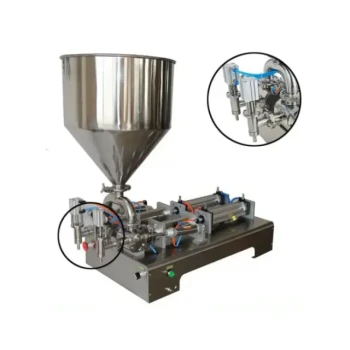
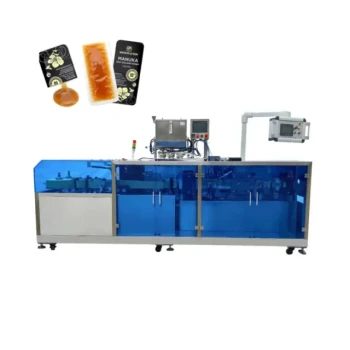
Industrial honey-filling machines provide the critical speed and precision required to manage large-volume production efficiently. For producers in high-output regions, these automated systems are the defining factor in increasing throughput while ensuring every unit meets strict commercial weight and hygiene standards. This technology bridges the gap between raw high-yield harvests and competitive, market-ready distribution.
Core Insight: In regions with massive honey yields, the bottleneck is rarely production but processing. Industrial filling machines eliminate this bottleneck by synchronizing high-velocity packaging with laboratory-grade precision, converting raw volume into consistent commercial inventory without the inconsistencies of manual labor.
Elevating Operational Efficiency
To succeed in high-output landscapes, producers must process raw materials rapidly during peak harvest seasons. Industrial automation is the only hardware capable of matching this biological pace.
Accelerating Post-Harvest Processing
High-yield honey subspecies produce volumes that manual filling cannot sustain. Industrial machines automate the conversion of raw honey into finished products, drastically increasing throughput. This ensures that the massive influx of honey during harvest is packaged immediately, stabilizing quality before storage.
Transitioning to Commercial Scale
For operations moving from small-scale beekeeping to modern commercial enterprises, these machines are essential hardware. They allow producers to standardize operations, enabling them to meet the demands of large-scale market supply chains that require reliable, high-volume delivery.
Precision and Cost Control
Profit margins in commercial honey production are often dictated by waste management and consistency. Automated systems offer distinct advantages over manual dispensing.
Minimizing Product Waste
High-precision dosage control is a standout feature of industrial fillers. By ensuring accurate weight control for every unit, producers virtually eliminate the "overfill" waste common in manual packing. This preservation of high-value inventory directly improves the bottom line.
Ensuring Uniform Consistency
Automated filling guarantees that every jar or bottle is identical in volume and appearance. This consistency is crucial for inventory tracking and meeting the expectations of retailers who require uniform product specifications.
Quality Assurance and Hygiene
In the food, pharmaceutical, and cosmetic sectors, hygiene is not just a preference; it is a regulatory requirement.
Reducing Contamination Risks
Manual handling is the primary vector for contamination in food processing. Industrial machines utilize hygienic sealing technologies and automated dispensing to remove human contact from the equation. This significantly reduces the risk of secondary contamination, ensuring the product remains safe and stable.
Meeting Regulatory Compliance
For suppliers catering to strict industries like pharmaceuticals or exports, compliance is mandatory. Automated equipment ensures that the filling and sealing process adheres to rigorous food safety standards. This capability allows producers to certify their products for traceability and hygiene, opening doors to premium markets.
Understanding the Trade-offs
While the advantages are clear, integrating industrial automation requires a strategic approach to implementation.
Capital Investment vs. Volume Necessity
These machines represent a significant capital expenditure. They are purpose-built for high-yield scenarios; for low-volume or artisanal producers, the ROI may not justify the initial cost. They provide the most value only when the volume of raw honey is sufficient to keep the machine running continuously.
Maintenance and Technical Requirements
Transitioning to automated hardware introduces a need for technical maintenance. Unlike manual processing, downtime on an industrial machine can halt the entire production line. Producers must be prepared to manage the maintenance schedules required to keep high-precision equipment functioning at peak accuracy.
Making the Right Choice for Your Goal
Selecting the right equipment depends on your specific operational targets within the commercial landscape.
- If your primary focus is Volume and Throughput: Prioritize machines with the highest automation speeds to prevent bottlenecks during peak harvest seasons.
- If your primary focus is Premium Quality or Pharma: Select equipment with advanced hygienic sealing and high-precision dosage controls to ensure regulatory compliance.
- If your primary focus is Brand Competitiveness: Focus on machines that offer consistent, professional-grade filling to enhance shelf appeal and brand credibility.
Invest in automation not just to work faster, but to secure the consistency and safety that defines a modern commercial brand.
Summary Table:
| Feature | Industrial Filling Advantages | Impact on Commercial ROI |
|---|---|---|
| Processing Speed | High-velocity automated throughput | Eliminates harvest bottlenecks and stabilizes quality |
| Filling Accuracy | High-precision dosage control | Minimizes product waste and prevents costly overfilling |
| Hygiene Standards | Automated dispensing & hygienic sealing | Reduces contamination risks and ensures regulatory compliance |
| Consistency | Uniform volume and professional finish | Enhances brand credibility and meets retail requirements |
Scaling Your Honey Production? Partner with HONESTBEE for Professional Solutions
Transitioning from raw harvest to market-ready inventory requires more than just volume—it requires precision. At HONESTBEE, we specialize in empowering commercial apiaries and distributors with the robust machinery needed to dominate high-output regions.
Our comprehensive wholesale offering includes:
- Advanced Honey-Filling Machines: Engineered for high-speed accuracy and strict hygiene standards.
- Commercial-Grade Equipment: From specialized hive-making hardware to full-scale processing lines.
- Industry Consumables: A complete spectrum of beekeeping tools and honey-themed cultural merchandise.
Ready to eliminate production bottlenecks and secure your brand's consistency? Contact us today to explore our wholesale machinery and equipment and let us help you build a more efficient, competitive commercial enterprise.
References
- Małgorzata Bieńkowska, Robert Maciorowski. The Buzz Changes within Time: Native Apis mellifera mellifera Honeybee Subspecies Less and Less Popular among Polish Beekeepers Since 1980. DOI: 10.3390/agriculture11070652
This article is also based on technical information from HonestBee Knowledge Base .
Related Products
- Commercial Rotary Honey Filling Machine for Production
- Precision Durable Efficient HONESTBEE Rotary Honey Filling Machine
- Fully Automatic Honey Filling Packaging Machine for Processing Line
- Economy Small Honey Filling Machine Honey Bottle Filler Packaging Machine
- Precision Automated Packaging Turntable Honey Spoon Filling Sealing Packing Machine
People Also Ask
- What role do commercial honey filling machines play in honey distribution? Scaling Efficiency and Quality Control
- What technical support do commercial-grade filling machines provide? Convert Honey NTFPs into Marketable Commodities
- What is the significance of specialized honey filling equipment? Scaling from Beekeeping to Commercial Success
- Why is professional honey filling machinery critical for honey production? Scale Your Apiary's Profit & Efficiency
- Why is high-capacity honey filling machinery necessary for Giant Honey Bees? Solve the Apis dorsata Volume Crisis