Industrial honey processing systems fundamentally outperform manual methods by utilizing multi-stage precision filtration, controlled heat treatment, and centrifugal extraction to ensure consistency and stability. While manual processing relies on crushing and straining, industrial systems mechanically separate honey to maximize purity, extend shelf life, and guarantee compliance with rigorous international trade standards.
Core Takeaway The transition to industrial processing is not merely about speed; it is about product stabilization and standardization. These systems inhibit crystallization and fermentation, transforming variable raw honey into a consistent, export-ready commodity without destroying the production infrastructure (the honeycombs).
Achieving Export-Grade Stability
Precision Filtration
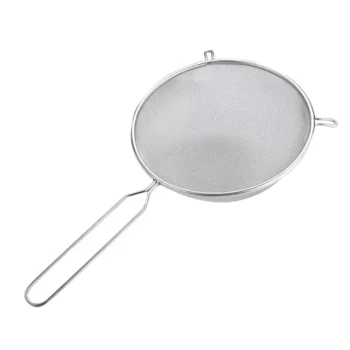
Manual straining is often insufficient for commercial standards. Industrial systems employ multi-stage precision filtration to remove particulate impurities such as pollen, larvae fragments, and soil.
This rigorous filtration is the technical foundation for meeting international regulatory requirements regarding physical purity and clarity.
Controlled Heat Treatment
Raw honey is prone to fermentation and rapid crystallization. Industrial processing uses controlled heat treatment to eliminate yeast and inhibit the crystallization process.
By neutralizing yeast, producers significantly reduce the risk of spoilage, thereby extending the product's shelf life and commercial viability in global markets.
Standardization of Properties
To export on a large scale, honey must meet specific physicochemical properties. Industrial systems allow producers to control moisture content and consistency, ensuring the final product meets the strict sensory and chemical criteria demanded by international trade.
Operational Efficiency and Hive Health
Centrifugal Extraction vs. Crushing
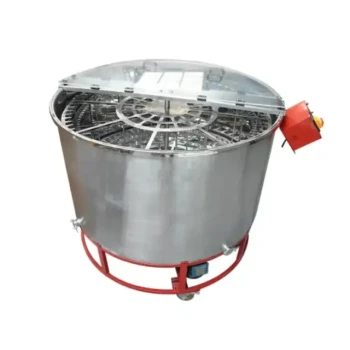
Traditional manual methods often involve crushing the honeycomb to squeeze out liquids. In contrast, industrial centrifugal extractors use high-speed rotation to separate honey from the comb.
This method is strictly mechanical and occurs within a closed chamber, protecting the honey from oxidation and preserving natural floral aromas.
Preserving the Production Infrastructure
The most significant efficiency gain of industrial extraction is the preservation of the honeycomb structure. Because the wax frames are not destroyed during extraction, they can be returned to the hive for reuse.
This allows the colony to bypass the energy-intensive process of secreting new wax. Instead of building infrastructure, the bees can focus their energy on foraging, significantly increasing overall honey production efficiency.
Preventing Contamination
Manual crushing often mixes honey with crushed larvae, pollen, and wax debris. Centrifugal force extracts the liquid without disturbing the solid contaminants.
This results in higher initial clarity and purity, reducing the load on downstream filtration systems.
Economic Upside of Byproducts
High-Quality Beeswax Recovery
While the primary goal is honey, industrial systems facilitate the separation of pure, high-quality raw beeswax.
Because the wax is not matted with honey and debris as it is in manual crushing, it retains structural integrity. This allows producers to sell premium wax for value-added secondary products, such as creams and soaps, diversifying the operation's revenue stream.
Understanding the Trade-offs
Thermal Impact on Bio-Activity
While controlled heat is necessary for shelf stability and yeast elimination, it introduces a delicate trade-off. Excessive heating can degrade physiological active components, such as enzymes and antioxidants.
High-quality professional equipment mitigates this by allowing precise temperature control, but operators must balance the need for liquidity against the preservation of bio-active properties.
Complexity vs. Simplicity
Industrial systems introduce mechanical complexity. Unlike manual methods, they require maintenance of motors, closed chambers, and filtration units. The benefit of efficiency comes with the responsibility of technical upkeep to ensure the machinery does not introduce new contaminants like lubricants.
Making the Right Choice for Your Goal
To select the correct processing approach, you must define your end-market strategy.
- If your primary focus is International Export: You must utilize industrial filtration and heat treatment to eliminate yeast, stabilize crystallization, and meet strict regulatory standards for shelf life.
- If your primary focus is Production Volume: Prioritize centrifugal extraction to preserve honeycombs, allowing your bees to focus energy on nectar gathering rather than wax rebuilding.
- If your primary focus is "Raw" or Boutique Sales: Use professional cold-extraction equipment that avoids heat, maximizing enzyme retention while still utilizing centrifugation for cleanliness.
Industrial processing bridges the gap between a local agricultural activity and a scalable global business.
Summary Table:
| Feature | Manual Processing | Industrial Processing Systems |
|---|---|---|
| Extraction Method | Crushing/Squeezing (Destroys Comb) | Centrifugal (Preserves Comb) |
| Purity Level | Variable/High Impurities | High (Multi-stage Precision Filtration) |
| Shelf Life | Short (Prone to Fermentation) | Long (Controlled Heat Treatment) |
| Market Suitability | Local/Small Scale | International Export/Wholesale |
| Beeswax Quality | Mixed with Debris | Pure/High-Value Recovery |
| Bee Productivity | Low (Bees must rebuild wax) | High (Bees reuse existing frames) |
Elevate your apiary's productivity with HONESTBEE’s professional-grade equipment. As a leading supplier to commercial apiaries and distributors, we provide everything from honey-filling machines and centrifugal extractors to essential beekeeping consumables. Let us help you achieve export-grade quality and maximize your yield—Contact us today for wholesale solutions!
References
- Formation of an Export Strategy for the Development of Beekeeping Industry in Ukraine. DOI: 10.15414/isd2018.aeu.07
This article is also based on technical information from HonestBee Knowledge Base .
Related Products
- Electric Double Wall Honey Filtering Machine Purifier Equipment for Honey Processing Plant
- Honey Concentrating and Filtering Dehumidifier Machine 2T Capacity for Honey
- 0.5T Capacity Honey Dehumidifier Dryer with Vacuum Heating and Thickening Filtering Machine
- Professional Honey Filter with Tripod Support Stand
- Professional Stainless Steel Honey Filtering Machine with Water Bath Heating for Beekeeping
People Also Ask
- What is the process of filtering honey? A Guide to Clean, Pure, and Market-Ready Honey
- What types of equipment are used in honey filtering? Build an Efficient System for Pure, Marketable Honey
- What is the overall importance of using the right equipment in honey filtering? Boost Quality & Marketability
- How should honey filtering equipment be properly maintained? Extend Equipment Life & Protect Honey Purity
- What are the benefits of drying honey filtering equipment after use? Protect Your Honey Quality & Equipment Investment