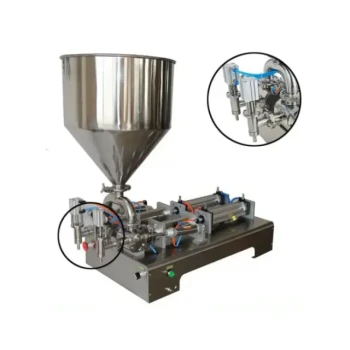
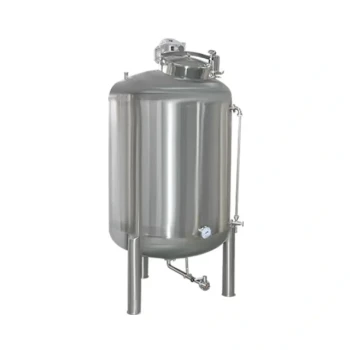
Industrial honey filling and bottling equipment offers a decisive advantage over manual methods by automating the critical stages of dosing and sealing. This transition significantly increases production speed while delivering precise quantitative dosing to eliminate product waste and variance. Furthermore, it ensures a sterile, airtight packaging process that extends shelf life and meets strict retail hygiene standards.
By shifting from manual to industrial processing, producers replace human inconsistency with high-precision volumetric control and closed-system hygiene. This not only maximizes throughput and uniformity but crucially protects the honey’s pharmacological stability by minimizing environmental exposure.
Elevating Operational Precision and Efficiency
High-Precision Volumetric Control
Manual bottling often leads to inconsistency, resulting in either underfilled jars (consumer complaints) or overfilled jars (profit loss). Industrial machines utilize high-precision volumetric filling to ensure exact weight consistency for every container.
This precise quantitative dosing minimizes material loss caused by human error or inaccurate measurements. It ensures that the net weight of the final retail product is uniform across the entire batch.
Accelerated Throughput and Reduced Labor
Automated equipment dramatically reduces the time required to transfer honey from bulk storage tanks to retail packaging. This high-efficiency workflow removes the bottleneck of manual pouring.
By streamlining this transfer, producers can significantly lower labor costs while increasing processing capacity. This allows operations to scale from processing raw goods to delivering branded, retail-ready products without a proportional increase in staff.
Waste Reduction via Anti-Drip Systems
Manual transfer is prone to spills and drips, which creates a sticky work environment and wastes product. Industrial-grade machines feature vacuum anti-drip systems designed to cut the flow cleanly after every fill.
This feature maintains a clean production line and prevents honey from fouling the bottle threads or exterior. It ensures the packaging remains aesthetically pleasing and ready for labeling immediately after sealing.
Ensuring Hygiene and Biological Integrity
Closed-Loop Hygiene
One of the most significant risks in manual bottling is "secondary contamination," where the honey is exposed to dust, debris, or human contact. Industrial machines operate within a closed-piping architecture.
This design effectively isolates the honey from external environmental pollution. By maintaining a closed environment, the equipment guarantees high hygiene standards throughout the critical filling process.
Preserving Pharmacological Stability
Honey contains oxygen-sensitive bioactive substances, including inhibines, phenolic antioxidants, and vitamins. Prolonged exposure to air during manual bottling can degrade these compounds.
Industrial filling minimizes the honey's exposure to air and contaminants. This preservation is crucial for maintaining the product's pharmacological stability and health benefits from the apiary to the end market.
Regulatory Compliance and Shelf Life
Automated sealing ensures an airtight closure that manual capping often cannot replicate. This secure sealing is vital for extending the shelf life of the honey.
Furthermore, the standardized process ensures the production environment meets international food safety regulations. This compliance is often a prerequisite for exporting honey or entering major retail supply chains.
Understanding the Trade-offs
Maintenance and Cleaning Rigidity
While closed systems offer superior hygiene, they introduce complexity regarding cleaning. Unlike manual tools, industrial piping requires strict cleaning-in-place (CIP) protocols to prevent crystallization or cross-contamination between batches.
Initial Capital and Technical Skill
Transitioning to industrial equipment requires a significant upfront investment compared to low-cost manual tools. It also demands a shift in workforce skills, requiring operators who can manage calibration and technical troubleshooting rather than just manual labor.
Making the Right Choice for Your Goal
To determine if industrial equipment is the right step for your operation, consider your primary objectives:
- If your primary focus is Scalability and Volume: Prioritize equipment with high-speed volumetric filling to minimize labor costs and eliminate weight variance across large batches.
- If your primary focus is Product Purity and Export: Focus on machines with closed-piping architectures and vacuum systems to preserve bioactive compounds and meet international hygiene standards.
True industrialization is not just about moving faster; it is about securing the biological value of your product through precision engineering.
Summary Table:
| Feature | Manual Bottling | Industrial Equipment |
|---|---|---|
| Dosing Accuracy | High variance/human error | High-precision volumetric control |
| Production Speed | Slow, labor-intensive | High-speed automated throughput |
| Hygiene Level | Risk of secondary contamination | Closed-loop sterile architecture |
| Product Loss | Frequent spills and overfills | Vacuum anti-drip systems |
| Regulatory Path | Challenging for export/retail | Meets international food standards |
| Shelf Life | Variable seal quality | Guaranteed airtight sealing |
Scale Your Honey Production with HONESTBEE
Transitioning from manual labor to industrial precision is the key to unlocking global market potential. HONESTBEE specializes in empowering commercial apiaries and distributors with high-performance beekeeping tools and machinery.
Our comprehensive wholesale offering includes high-precision honey-filling machines, hive-making equipment, and essential industry consumables designed to maximize your ROI. Whether you are looking to enhance your brand's pharmacological stability or scale your bottling operations to meet retail demand, we provide the hardware and technical expertise you need.
Ready to automate your success? Contact us today to discuss our wholesale equipment solutions and how we can add value to your supply chain.
References
- Themis Jesus Silva, Rafael Navas. Apicultura como atividade de desenvolvimento e conservação do bioma Caatinga. DOI: 10.14393/rct153816
This article is also based on technical information from HonestBee Knowledge Base .
Related Products
- Double Nozzle Small Honey Filling Machine Honey Sachet Packing Packaging Equipment
- Precision Durable Efficient HONESTBEE Rotary Honey Filling Machine
- Fully Automatic Honey Filling Packaging Machine for Processing Line
- Automatic Honey Filling and Filtering Machine for Beekeeping Bottle Filling
- Economy Small Honey Filling Machine Honey Bottle Filler Packaging Machine
People Also Ask
- What value do retail packaging equipment and filling technologies provide in the honey distribution process? Maximize ROI
- How does industrial honey-filling machinery support Robinia pseudoacacia stands? Maximize Your Acacia Honey Yield
- How does high-precision honey filling equipment protect honey's biological activity? Safeguard Purity & Premium Value
- What role does precision filling equipment play in cost control? Maximize Honey Profits & Market Growth
- Why is high-precision honey filling equipment necessary? Secure the medicinal value and ROI of stingless bee honey.