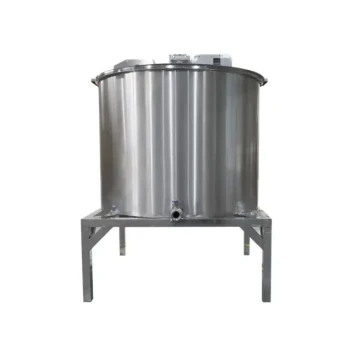
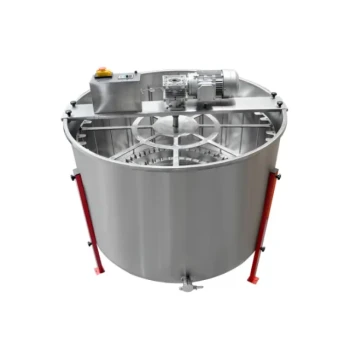
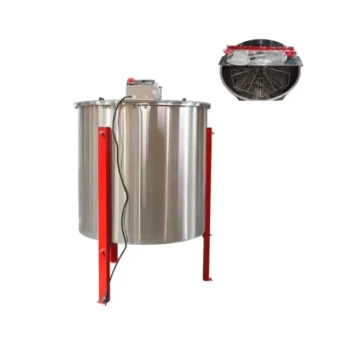
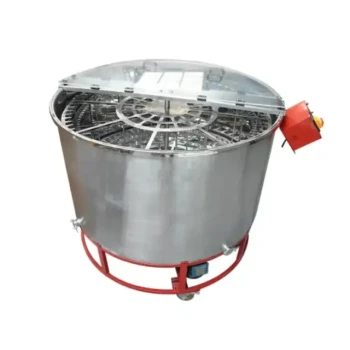
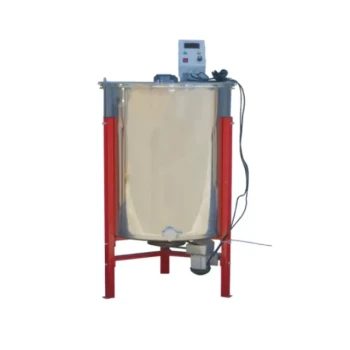
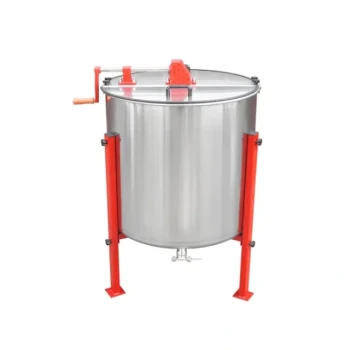
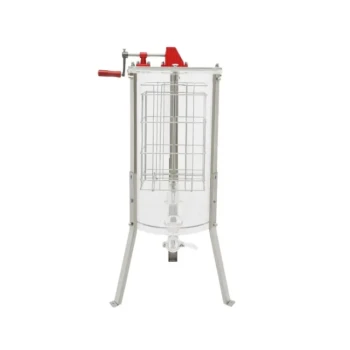
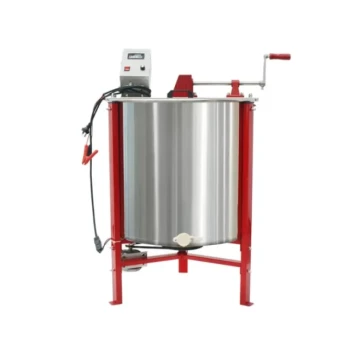
Commercial honey extractors are specialized industrial machines engineered specifically for high-volume honey production. These are heavy-duty, electric units—typically featuring a horizontal design—that are intended for large-scale operations managing 200 or more colonies.
Commercial extractors serve as the central hardware for industrial beekeeping, prioritizing high-speed output and operational efficiency. They are designed to mechanize the production line, ensuring the consistency and hygiene required for bringing honey products to the mass market.
Defining the Commercial Standard
Heavy-Duty Construction
Unlike equipment designed for hobbyists, commercial extractors are built to withstand the rigors of continuous, industrial use.
They are robust, electric machines capable of processing large volumes of frames without overheating or mechanical failure.
The Horizontal Advantage
A defining feature of many commercial-grade extractors is their orientation.
The primary reference notes that these machines are typically horizontal. This design choice often facilitates higher frame capacity and more efficient loading strategies compared to vertical counterparts.
The Scale of Operation
The 200-Colony Threshold
The specific scale intended for this machinery is the industrial sector.
References indicate these units are ideal for beekeeping companies managing a minimum of 200 colonies. Below this scale, the capacity of the machine generally exceeds the operational requirements of the apiary.
Maximizing Output
The primary objective of deploying this equipment is maximizing production value.
For operations with hundreds of hives, manual or small-scale extraction is a bottleneck. Commercial extractors remove this constraint, allowing for rapid processing during critical harvest windows.
The Role in Commercialization
Ensuring High Hygiene Standards
Beyond speed, these machines are essential for maintaining food safety protocols.
Mechanized operations reduce manual handling. This ensures high hygiene standards are met consistently, which is a requirement for commercial market entry.
Integration with Processing Lines
Commercial extractors are rarely used in isolation.
They function as the core of a broader hardware ecosystem that often includes filling machines and centrifugal separators. This integration ensures consistent filling accuracy and streamlines the workflow from hive to jar.
Understanding the Trade-offs
Investment vs. Utilization
The efficiency of a commercial extractor is only realized when there is sufficient volume to process.
For operations under the 200-colony mark, the high capital cost and footprint of a horizontal, heavy-duty machine may not yield a positive return on investment.
Operational Complexity
These are industrial tools that require a dedicated power supply and significant floor space.
Transitioning to this level of machinery moves a beekeeper from agricultural management into industrial facility management, requiring a shift in operational focus.
Making the Right Choice for Your Goal
If you are evaluating whether to upgrade to a commercial extractor, consider your current colony count and future growth targets.
- If your primary focus is rapid expansion: Invest in commercial equipment once you approach the 200-colony mark to prevent processing bottlenecks.
- If your primary focus is product consistency: Utilize this machinery to ensure the hygiene and filling accuracy required for retail distribution.
- If your primary focus is small-scale efficiency: Recognize that heavy-duty horizontal machines are likely over-engineered for operations with fewer than 200 hives.
Scale your machinery to match your hive count to ensure profitability and operational fluidity.
Summary Table:
| Feature | Commercial Specification | Operational Benefit |
|---|---|---|
| Recommended Scale | 200+ Hives/Colonies | Prevents extraction bottlenecks and maximizes ROI |
| Machine Design | Heavy-duty, Horizontal, Electric | High frame capacity and industrial durability |
| Core Objective | High-volume Mechanization | Ensures hygiene and consistency for retail markets |
| Workflow Integration | Compatible with Filling Machines | Streamlines the process from harvest to bottling |
Scale Your Industrial Production with HONESTBEE
Are you a commercial apiary or distributor looking to optimize your output? HONESTBEE offers a comprehensive wholesale range of premium beekeeping tools and industrial machinery. From heavy-duty honey-filling machines and hive-making hardware to essential industry consumables and honey-themed cultural merchandise, we provide the full spectrum of equipment needed to manage 200+ colonies efficiently.
Contact our expert team today to discover how our tailored equipment solutions can enhance your production consistency and business growth.
Related Products
- 32 Frame Commercial Electric Honey Extractor for Beekeeping and Honey Production
- Commercial Electric 12 Frame Honey Extractor Spinner Motorized Honey Extractor
- 40 Frame Commercial Electric Honey Extractor for Beekeeping
- 24 Frame Honey Extractor Commercial Radial Honey Frame Extraction Machine
- 8-Frame Electric Self-Reversing Honey Extractor Spinner for Commercial Honey Extraction Equipment
People Also Ask
- What are commercial honey extractors used for? Boost Your Apiary's Efficiency & Profitability
- What is a commercial honey extractor? The Essential High-Volume Solution for Large Apiaries
- Who are commercial honey extractors designed for? Scaling Your Industrial Beekeeping Success
- How is honey extracted commercially? Maximize Your Apiary's Efficiency and Honey Yield
- What defines a commercial honey extractor? High-Efficiency Industrial Solutions for Large-Scale Beekeeping Operations