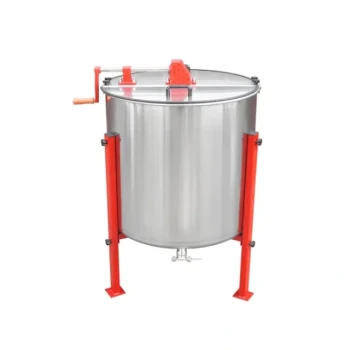
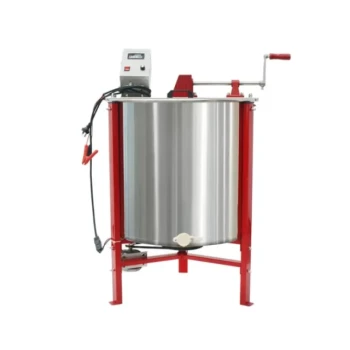
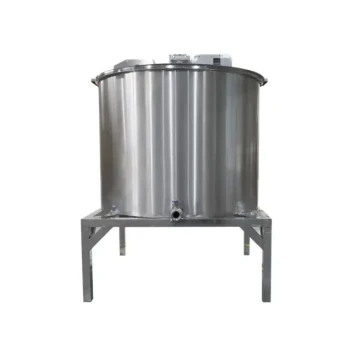
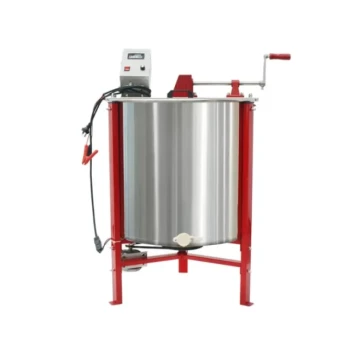
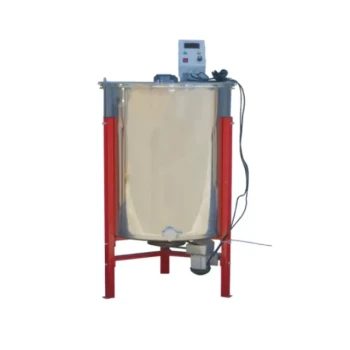
Manual honey extractors offer a practical balance of affordability and control for the developing apiarist. They provide a low-cost entry point and allow for precise handling of delicate combs, but they demand significantly more physical labor and time compared to electric alternatives.
The manual extractor is the ideal tool for beginners and hobbyists managing a small number of hives. While it trades speed for physical effort, it offers the beekeeper total independence from power sources and an intimate, tactile connection to the harvest.
Why Choose Manual Extraction?
Cost-Effective Entry Point
For beginners, the primary barrier to entry is often equipment cost. Manual extractors are significantly more affordable than electric models. This makes them the logical choice for those just starting out or managing a tight budget.
Precision and Comb Preservation
A distinct technical advantage is the granular control the operator has over the process. Because you power the crank, you can instantly adjust the speed and direction of the spin. This prevents the "blowouts" often caused by motor-driven machines, ensuring delicate wax combs remain intact for reuse.
True Portability and Independence
Manual units function independently of electricity. This offers unmatched flexibility, allowing you to extract honey directly in the field, in a remote shed, or in areas with unreliable power. Setup is simple, typically requiring nothing more than attaching legs and a crank.
Tactile Connection to the Craft
Beyond mechanics, manual extraction offers a tactile experience. Being physically involved in the spinning fosters a deeper connection to the process, allowing the beekeeper to feel the weight and release of the honey in real-time.
Understanding the Trade-offs
The Labor Requirement
The most significant disadvantage is the continuous physical effort required. Operating a hand crank—whether side-mounted or top-mounted—can become physically exhausting. This fatigue is a major limiting factor for beekeepers who cannot sustain repetitive physical motion.
Time and Scale Limitations
Manual extraction is inherently slower. The process consumes more time per frame, making these machines unsuitable for large-scale production. As your apiary grows, the time spent cranking can become a bottleneck, turning a rewarding hobby into a tedious chore.
Limited Capacity
Manual extractors generally feature a lower frame capacity compared to commercial electric models. You can only process a few frames at a time, which further compounds the time inefficiency if you are managing a high volume of hives.
Making the Right Choice for Your Goal
Before investing, assess your current hive count and your physical willingness to perform manual labor.
- If your primary focus is budget or learning: Choose a manual extractor to keep startup costs low while you master the mechanics of extraction without risking your combs.
- If your primary focus is remote beekeeping: The manual extractor is your only viable option for harvesting in locations without access to a power grid.
- If your primary focus is scaling up production: Be aware that a manual unit will eventually become a productivity bottleneck as your hive count increases.
Select the tool that respects both your budget and your physical endurance.
Summary Table:
| Feature | Manual Honey Extractor | Best For |
|---|---|---|
| Cost | Budget-friendly; low initial investment | Hobbyists & Beginners |
| Power Source | Human labor; no electricity required | Remote locations/Field use |
| Comb Safety | High control; reduces risk of blowouts | Delicate or new combs |
| Labor Level | High; requires physical cranking | Small-scale operations |
| Efficiency | Slower; limited frame capacity | Under 5-10 hives |
Elevate Your Honey Harvest with HONESTBEE
Whether you are a growing commercial apiary or a distributor looking to supply the best in the industry, HONESTBEE provides the professional-grade tools you need to succeed. From precision manual extractors for delicate harvests to industrial honey-filling machines and specialized hive-making equipment, our comprehensive wholesale portfolio is designed to scale with your business.
Why partner with HONESTBEE?
- Complete Solutions: We supply the full spectrum of beekeeping machinery and essential consumables.
- Industry Expertise: We cater specifically to the needs of large-scale beekeepers and global distributors.
- Diverse Portfolio: From heavy hardware to honey-themed cultural merchandise, we are your one-stop shop.
Ready to optimize your production and offer your customers premium beekeeping equipment? Contact us today to explore our wholesale catalog and expert services!
Related Products
- Stainless Steel 3 Frame Manual Honey Extractor Spinner for Bee Honey Extraction
- HONESTBEE 3-Frame Manual Acrylic Honey Extractor
- HONESTBEE 4 Frame Manual Self Reversing Honey Extractor for Beekeeping
- Stainless Steel Manual 8 Frame Radial Honey Extractor Machine for Beehives
- 2 Frame Stainless Steel Manual Honey Spinner Extractor for Beekeeping
People Also Ask
- Which type of honey extractor is generally more durable? Focus on Material & Build Quality for Longevity
- What are the disadvantages of a manual honey extractor? Overcome Efficiency Bottlenecks in Your Apiary
- What is a manual honey extractor? The Essential Guide to Cost-Effective Beekeeping for Beginners
- Why are manual extractors popular among beginner beekeepers? A Guide to Starting Simple & Saving Money
- What are the primary advantages of utilizing a manual honey extractor? Cost-Effective & Gentle Harvesting