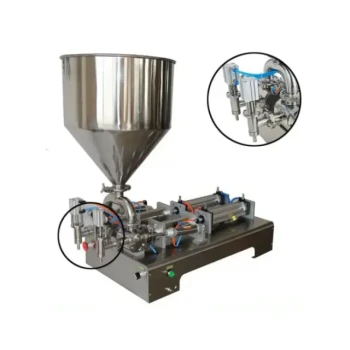
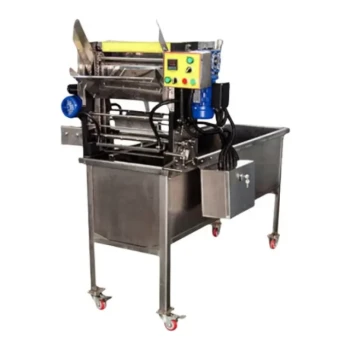
Automatic honey filling machines primarily improve market competitiveness by utilizing high-precision quantitative filling technology to ensure consistent net weight and reduce material loss. By automating the process, producers significantly lower labor costs and eliminate the risk of secondary contamination, allowing local brands to maintain a competitive cost structure even when facing low-priced imported alternatives.
Core Takeaway While manual filling creates variability and waste, automatic machines transform honey production into a standardized, scalable operation. The transition to automation is less about speed and more about achieving the consistency, hygiene, and cost efficiency required to compete with imports and enter high-value retail markets.
The Economic Impact of Precision
Eliminating Overfill and Material Loss
Manual filling inevitably leads to weight deviations. To avoid under-filling penalties, manual operators often overfill jars, leading to significant cumulative product loss.
High-precision quantitative filling technology strictly controls the dosage in every bottle. By ensuring the net weight matches the label specifications exactly, producers stop giving away free product and maximize the yield from every harvest.
Reducing Operational Costs
The primary reference highlights that automation allows beekeeping cooperatives to survive against low-priced imported honey.
By replacing manual labor with automated systems, producers drastically reduce the cost per unit. This improved cost structure provides the financial flexibility to either lower shelf prices or invest more in marketing and distribution.
Elevating Product Quality and Hygiene
Preventing Secondary Contamination
Honey is a food product sensitive to its environment. Manual handling increases the risk of introducing bacteria or foreign particles.
Automatic machines operate in a closed or controlled environment, effectively preventing secondary contamination. This ensures that the final product remains pure, hygienic, and safe for consumption.
Enhancing Shelf Life and Freshness
Advanced filling machines often incorporate vacuum sealing and airtight capping functions.
By minimizing air contact and preventing atmospheric moisture from entering the jar, these systems inhibit oxidation and fermentation. This technical control preserves the honey’s natural characteristics and prevents spoilage, ensuring the customer receives a fresh, high-quality product.
Building Brand Value and Market Access
Professional Visual Consistency
Consumers associate irregular fill levels and sticky jars with amateur production.
Automated equipment utilizes no-drip filling nozzles and consistent liquid level controls to ensure every jar looks identical on the shelf. This "industrial-grade" consistency improves the sensory quality of the packaging, signaling to the consumer that this is a professional, trustworthy brand.
Unlocking Formal Retail Channels
Supermarkets and international distributors have strict requirements for standardization and hygiene that manual operations rarely meet.
Automation transforms raw honey into standardized commercial commodities. This compliance allows producers to move their products from local farmer's markets into formal retail channels, exhibitions, and high-end grocery stores.
Justifying Premium Pricing
Accurate, professional labeling allows producers to highlight geographic origin and nutritional content clearly.
When the packaging looks professional and the labeling is precise, producers can leverage the "origin story" (e.g., mountain or forest honey) to justify a higher price point. Automation provides the polished presentation necessary to build brand trust.
Understanding the Trade-offs
Initial Capital versus Long-Term Savings
While the operational savings are clear, the initial investment in industrial-grade machinery is significant. Producers must calculate their break-even point based on their current production volume.
Maintenance and Technical Skill
Transitioning to automation shifts the labor requirement from manual filling to machine operation and maintenance.
Producers must be prepared to train staff or hire technicians capable of calibrating weighing systems and maintaining pneumatic components. Neglecting maintenance can lead to downtime that negates the efficiency gains.
Making the Right Choice for Your Goal
To maximize the return on investment, align your equipment choice with your specific business strategy:
- If your primary focus is Price Competitiveness: Prioritize high-speed machines with precise metering to minimize raw material loss and labor costs, enabling you to undercut import prices.
- If your primary focus is Brand Premium: Prioritize machines with advanced hygiene features (vacuum sealing) and high-precision labeling to ensure a flawless, export-quality presentation.
Ultimately, automation is the bridge that allows honey producers to evolve from selling a raw agricultural ingredient to marketing a high-value consumer good.
Summary Table:
| Feature | Manual Filling | Automatic Filling | Business Impact |
|---|---|---|---|
| Precision | High variance/Overfill | High-precision quantitative | Maximizes yield & reduces waste |
| Hygiene | Risk of contamination | Closed system/No-drip | Ensures food safety & compliance |
| Consistency | Irregular fill levels | Uniform professional look | Builds consumer brand trust |
| Operational Cost | High labor dependency | High-speed efficiency | Lowers unit cost for competition |
| Market Access | Local markets only | Retail & Export ready | Unlocks high-value sales channels |
Elevate Your Honey Production with HONESTBEE
Transitioning from manual processes to automation is the key to scaling your apiary and dominating the retail market. HONESTBEE specializes in empowering commercial apiaries and distributors with professional-grade solutions.
We provide a comprehensive wholesale range of:
- Advanced Machinery: High-precision honey-filling and hive-making machines.
- Essential Tools: A full spectrum of beekeeping hardware and equipment.
- Industry Consumables: Everything you need to maintain a productive and hygienic operation.
Our equipment ensures your honey meets the highest standards of consistency and hygiene, allowing you to compete globally and justify premium pricing. Ready to transform your production? Contact us today for a custom consultation and wholesale pricing!
References
- Silvia Novelli, Chiara Ferracini. An Easy Mixed-Method Analysis Tool to Support Rural Development Strategy Decision-Making for Beekeeping. DOI: 10.3390/land10070675
This article is also based on technical information from HonestBee Knowledge Base .
Related Products
- Automatic Honey Filling and Filtering Machine for Beekeeping Bottle Filling
- Fully Automatic Honey Filling Packaging Machine for Processing Line
- Semi Automatic Small Honey Bottle Filling Machine Honey Filler
- Automatic Single-Dose Snap & Squeeze Honey Sachets Packing Machine
- Precision Durable Efficient HONESTBEE Rotary Honey Filling Machine
People Also Ask
- What process advantages do professional honey filtering and filling machines provide? Optimize Your Organic Honey Output
- How do honey filling and filtering machines increase product value? Turn Raw Honey into Premium Export-Grade Goods
- How do honey filtration and filling machinery contribute to industrialization? Scale Your Commercial Honey Production
- What specific issues do industrial filtration and automated filling machinery address? Ensure Honey Quality & Compliance
- How does the use of professional honey filtration and filling machinery facilitate international honey exports?