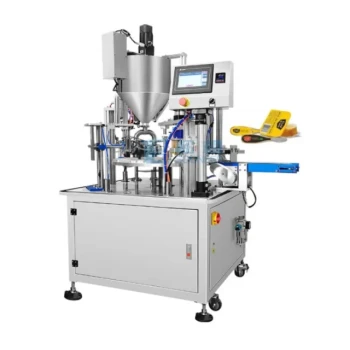
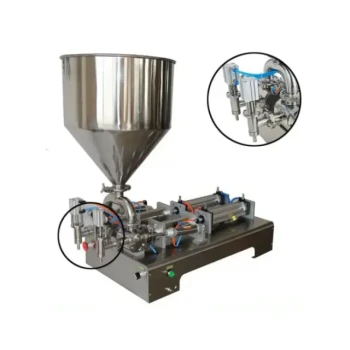
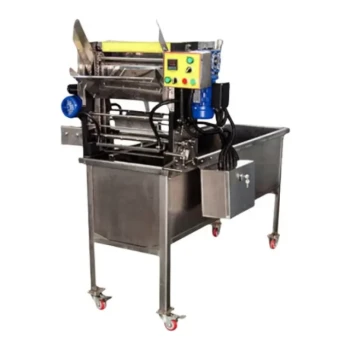
The advantages of automated honey filling machines center on three critical improvements: dosing precision, hygiene control, and operational scalability. Compared to manual methods, these systems provide high dosing precision to ensure net weight compliance, enhance hygiene to prevent secondary contamination, and significantly increase packaging speed to meet commercial market demands.
Automated filling does more than accelerate production; it standardizes product quality. By removing human error and environmental exposure, this equipment transforms honey from a raw bulk commodity into a shelf-ready, professional retail product.
Achieving Precision and Standardization
Exact Dosing Control
Manual filling inherently results in weight inconsistencies. Automated machines utilize high-precision quantitative filling systems to regulate flow exactitude. This ensures every container meets strict industry net weight standards, eliminating the risk of underweight products or revenue loss from overfilling.
Consistent Product Appearance
Consumer trust relies on visual consistency. Automation ensures that fill levels are uniform across every jar on the shelf. This standardization improves the professionalism of the product, making it viable for large-scale retail markets and international trade.
Hygiene and Bioactive Preservation
Eliminating Secondary Contamination
The primary reference highlights that automation effectively isolates honey during the packaging stage. Manual operations expose the product to human contact and environmental debris. Automated sealing processes create a hygienic barrier that prevents secondary contamination, ensuring the product remains pure from the tank to the bottle.
Protecting Pharmacological Stability
Honey contains sensitive bioactive substances, such as inhibines and phenolic antioxidants. Automated filling reduces the duration of air exposure during packaging. This protection is crucial for maintaining the honey's pharmacological stability and nutritional value, which can degrade with prolonged oxidation common in manual processing.
Operational Efficiency and Economics
Increasing Production Speed
For commercial apiaries, manual packaging is a bottleneck. Automated machines significantly increase packaging throughput, enabling producers to process large harvests rapidly. This speed is essential for meeting the demands of wholesale distributors without requiring a massive workforce.
Reducing Waste and Labor Costs
Manual transfer often leads to spills and drip waste. Precise metering minimizes this product loss, directly improving yield. Furthermore, automation reduces the dependency on manual labor, significantly lowering long-term operational costs.
Strategic Market Positioning
Transitioning to Retail Value
Manual operations often force beekeepers to sell honey as low-cost bulk raw material. Automation enables the production of retail-ready packaging directly at the source. This allows producers to capture the retail value-add, reducing reliance on intermediate traders and increasing profit margins.
Compliance with Safety Standards
International markets require rigorous adherence to food safety regulations. Automated systems ensure consistent physicochemical indicators and sterile sealing. This traceability and adherence to safety standards are necessary guarantees for entering high-end markets.
Understanding the Trade-offs
The Shift to Industrial Management
While automation solves volume and consistency issues, it introduces new requirements. Operators must move from artisan handling to equipment maintenance and calibration. The initial capital investment requires a sufficient production volume to justify the ROI, meaning this is a strategic leap rather than a simple upgrade for very small hobbyists.
Making the Right Choice for Your Goal
To decide if automation fits your operation, consider your primary business objective:
- If your primary focus is Brand Building: Automation is essential to ensure the visual consistency and professional appearance required to compete on retail shelves.
- If your primary focus is Product Quality: Automation provides the hygienic sealing necessary to protect oxygen-sensitive enzymes and bioactive compounds.
- If your primary focus is Profit Margins: Automation allows you to bypass bulk buyers and capture the full retail value of your harvest by packaging it yourself.
Investing in automated filling is not merely a purchase of faster equipment; it is the strategic infrastructure required to elevate a beekeeping operation into a commercial enterprise.
Summary Table:
| Feature | Manual Operations | Automated Filling Machines |
|---|---|---|
| Dosing Precision | Low (subject to human error) | High (precise quantitative systems) |
| Hygiene Control | Risk of secondary contamination | Sealed, hygienic barrier protection |
| Filling Speed | Slow; labor-intensive | High-speed; scalable for commercial use |
| Product Consistency | Variable fill levels | Uniform, professional retail appearance |
| Bioactive Preservation | High oxidation risk | Minimized air exposure; preserves enzymes |
| Economic Impact | High waste and labor costs | Reduced product loss and labor dependency |
Elevate Your Honey Production with HONESTBEE
Transition from bulk commodity sales to high-margin retail success. HONESTBEE empowers commercial apiaries and distributors with the professional machinery needed to scale operations.
Our comprehensive wholesale offering includes:
- High-Precision Honey-Filling Machines: Ensure net weight compliance and hygienic sealing.
- Complete Production Hardware: From hive-making machinery to advanced processing equipment.
- Essential Consumables: A full spectrum of beekeeping tools and industry essentials.
- Cultural Merchandise: Honey-themed goods to diversify your brand.
Ready to maximize your harvest's value and ensure international food safety compliance? Contact HONESTBEE today to discover how our professional beekeeping solutions can streamline your business and boost your profit margins.
References
- Nadiia Novhorodska, Halyna Lotka. OPTIMIZATION OF CONTINUOUS NECTAR-BEARING CONVEYOR IN BEEKEEPING. DOI: 10.37128/2707-5826-2021-3-6
This article is also based on technical information from HonestBee Knowledge Base .
Related Products
- Fully Automatic Honey Filling Packaging Machine for Processing Line
- Automatic Honey Filling and Filtering Machine for Beekeeping Bottle Filling
- Precision Durable Efficient HONESTBEE Rotary Honey Filling Machine
- Semi Automatic Small Honey Bottle Filling Machine Honey Filler
- Precision Automated Packaging Turntable Honey Spoon Filling Sealing Packing Machine
People Also Ask
- Why are fully automatic honey filling and packaging lines essential? Boost Your Honey's Market Value and Quality
- What is a fully-automatic honey filler? Streamline Your Production with High-Precision Automation
- How do automated honey filling and packaging machines affect profitability? Boost Margins with HONESTBEE Technology
- How do automated honey filling and packaging machines contribute to the market value of honey products? Maximize Your ROI
- How do industrial-grade automated honey filling and packaging machines mitigate the risk of physical contamination?