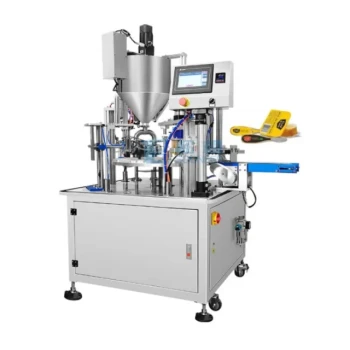
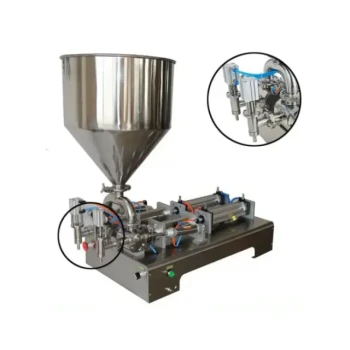
Industrial-grade honey-filling machines offer precise control over temperature and flow dynamics, critical factors that manual processing often fails to regulate. By eliminating excessive heat and mechanical friction, these systems protect the honey's delicate enzymes and active biological components, ensuring the product retains the therapeutic properties necessary for treating medical conditions like wounds and burns.
Core Takeaway While manual filling risks compromising honey through uncontrolled handling and environmental exposure, industrial automation preserves the product's "active state." The core advantage lies in maintaining the biological integrity of enzymes and antioxidants through a closed, temperature-regulated environment.
Preserving Biological Integrity
The primary value of industrial automation is not merely speed; it is the capability to maintain the honey's pharmacological stability during the transition from bulk storage to retail packaging.
Temperature Control and Enzyme Stability
Honey contains sensitive enzymes and active biological components that are easily denatured by heat.
Manual processing often relies on inconsistent heating methods to make honey viscous enough to pour, risking thermal degradation.
Industrial machines utilize precise temperature regulation systems. They maintain the honey at the optimal flow temperature without exceeding the threshold that destroys therapeutic properties.
Reducing Mechanical Stress
Physical agitation can act as a catalyst for crystallization and structural breakdown.
Manual handling involves scooping, pouring, and scraping, which generates significant mechanical friction.
Industrial systems use advanced flow control and metering pumps. These reduce friction, preventing the weakening of healing properties required for high-grade medical or therapeutic honey.
Protection Against Environmental Degradation
Beyond temperature, the atmospheric environment plays a significant role in the longevity of honey’s efficacy.
Minimizing Oxidation
Honey contains oxygen-sensitive bioactive substances, including inhibines, phenolic antioxidants, and vitamins.
Manual filling exposes the product to open air for extended periods, accelerating oxidation and neutralizing these beneficial compounds.
Industrial fillers operate within closed or semi-closed environments. This significantly reduces exposure to oxygen, ensuring that the bioactive profile remains intact from the apiary to the consumer.
Preventing Contamination and Spoilage
Aseptic operation is critical for preventing fermentation and ensuring safety.
Manual processes introduce risks of secondary contamination through human contact and airborne impurities.
Industrial machines employ high-precision metering and hygienic sealing mechanisms. By achieving airtight, food-grade packaging immediately upon filling, they eliminate contamination risks and extend shelf-life stability.
Understanding the Trade-offs
While industrial machines offer superior preservation of efficacy, they require specific operational conditions to function correctly.
Maintenance and Calibration Requirements
The precision of these machines is only as good as their calibration.
If temperature sensors or flow controls are not regularly calibrated, the machine can inadvertently apply the very heat or friction it is designed to avoid.
Complexity for Micro-Batches
For extremely small, artisanal batches where each jar varies significantly in viscosity, the setup time for an industrial machine may outweigh the preservation benefits.
In these specific scenarios, careful manual handling may offer more flexibility, albeit with higher biological risk.
Making the Right Choice for Your Goal
Selecting the right filling method depends on the market positioning of your final product.
- If your primary focus is Medical or Therapeutic Grade Honey: Prioritize machines with advanced temperature control to protect enzymes and ensure the product remains effective for wound care.
- If your primary focus is Mass Retail and Shelf Stability: Prioritize machines with closed-loop systems and airtight sealing to maximize hygiene and prevent fermentation during long storage periods.
Automation transforms honey packaging from a simple logistical step into a critical preservation strategy for bioactive excellence.
Summary Table:
| Feature | Manual Processing | Industrial-Grade Filling Machines |
|---|---|---|
| Temperature Control | Inconsistent; high risk of thermal degradation | Precise regulation; protects sensitive enzymes |
| Oxygen Exposure | High; leads to oxidation of antioxidants | Minimized; closed systems preserve bioactives |
| Mechanical Stress | High friction from scooping and pouring | Low-impact flow control; prevents crystallization |
| Contamination Risk | Significant risk from human/airborne contact | Low; hygienic sealing and aseptic operation |
| Shelf-Life Stability | Variable; prone to fermentation | High; airtight food-grade packaging |
| Best Use Case | Small, artisanal micro-batches | Medical-grade, therapeutic, and mass retail honey |
Elevate Your Honey Quality with HONESTBEE
Don't let manual processing compromise the biological integrity of your harvest. At HONESTBEE, we specialize in empowering commercial apiaries and distributors with the high-precision machinery needed to maintain the therapeutic value of your product.
From advanced honey-filling machines that protect delicate enzymes to a full spectrum of beekeeping tools and hardware, we provide the expertise to scale your operations without sacrificing quality. Whether you are looking for specialized hive-making equipment or premium honey-themed merchandise, our wholesale solutions are designed for your success.
Ready to optimize your production and preserve your honey's efficacy?
Contact Us Today to Find Your Ideal Equipment Solution
References
- Markus Hellner, Karsten Münstedt. Apitherapy: Usage and Experience in German Beekeepers. DOI: 10.1093/ecam/nem052
This article is also based on technical information from HonestBee Knowledge Base .
Related Products
- Commercial Rotary Honey Filling Machine for Production
- Precision Durable Efficient HONESTBEE Rotary Honey Filling Machine
- Fully Automatic Honey Filling Packaging Machine for Processing Line
- Economy Small Honey Filling Machine Honey Bottle Filler Packaging Machine
- Precision Automated Packaging Turntable Honey Spoon Filling Sealing Packing Machine
People Also Ask
- What role do commercial honey filling machines play in honey distribution? Scaling Efficiency and Quality Control
- What technical support do commercial-grade filling machines provide? Convert Honey NTFPs into Marketable Commodities
- What is the significance of specialized honey filling equipment? Scaling from Beekeeping to Commercial Success
- Why is professional honey filling machinery critical for honey production? Scale Your Apiary's Profit & Efficiency
- Why is high-capacity honey filling machinery necessary for Giant Honey Bees? Solve the Apis dorsata Volume Crisis