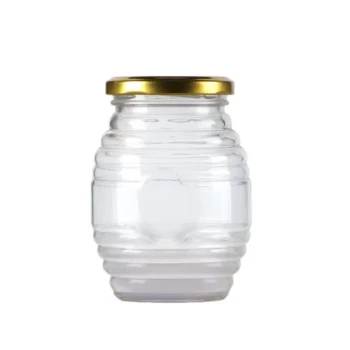
The primary advantages of using large-capacity glass containers, such as 120-ml Mason jars, lie in their ability to minimize biological stress while maintaining chemical integrity. These containers provide sufficient spatial volume to accommodate the relatively large size and social nature of honey bees, preventing overcrowding artifacts in your data. Additionally, the glass material is chemically inert, ensuring that toxicity results are not compromised by reactions with solvents or active ingredients.
Core Takeaway Successful honey bee experimentation requires a controlled environment that does not alter the test subject's physiology or the chemical agents involved. Large glass jars provide this balance by offering a stress-reducing volume for social interaction and a non-reactive surface for precise toxicological monitoring.
Optimizing Biological Conditions
Mitigating Stress Through Volume
Honey bees are social insects that require physical space to interact naturally. Confining them in small spaces induces stress, which can skew physiological data and mortality rates.
Using a large-capacity container, specifically around 120 ml, provides enough room to prevent overcrowding. This ensures that observed behaviors are reactions to experimental variables, not consequences of physical confinement.
Ensuring Chemical Accuracy
The material of the containment unit is just as critical as its size. Glass is preferred over plastic because it is chemically inert.
In toxicology experiments involving insecticides, researchers often use solvents like acetone or mineral oil. Glass does not react with these substances, ensuring the active ingredients remain stable and the container itself does not introduce contaminants.
Facilitating Data Collection
Continuous Visual Monitoring
Data integrity relies on the ability to observe subjects without disturbing them. The high transparency of glass Mason jars allows for unobstructed viewing.
Researchers can easily monitor mortality rates and identify abnormal behaviors over a full 24-hour observation period. This eliminates the need to open the container, which would otherwise disrupt the internal environment and stress the bees.
Maintaining Physiological Integrity
While the glass jar provides the structure, proper airflow is vital to prevent metabolic stress.
Drawing from best practices in bee transport, glass containers function best when paired with breathable closures, such as fabric lids. This setup prevents suffocation and airtight conditions that could damage the bees' physiological state before or during observation.
Understanding the Trade-offs
While Mason jars are excellent for controlled laboratory observation, they represent an artificial environment.
Unlike modified nucleus boxes—which feature wooden landing platforms and side ports to simulate a natural hive setting—jars isolate bees from the full colony structure.
Consequently, Mason jars are superior for specific toxicology or mortality screenings but may not be suitable for studying complex foraging behaviors or colony-level pheromone responses.
Making the Right Choice for Your Goal
Select your containment strategy based on the specific phase and objective of your research:
- If your primary focus is toxicological testing: Use 120-ml glass Mason jars to prevent chemical absorption and ensure the stability of solvents like acetone.
- If your primary focus is reducing confinement stress: Prioritize large-capacity volume to accommodate the social proximity needs of the bees without overcrowding.
- If your primary focus is maintaining sample viability during transport: Equip your glass containers with breathable fabric lids to ensure ventilation and prevent metabolic degradation.
Ultimately, the correct container acts as a silent partner in your research, preserving the natural state of the subject while providing a clear window into its biological responses.
Summary Table:
| Feature | Advantage | Benefit to Research |
|---|---|---|
| 120-ml Volume | Minimizes overcrowding and confinement stress | Ensures physiological data is not skewed by environmental stress |
| Glass Material | Chemically inert and non-reactive | Prevents contamination from solvents like acetone during toxicology tests |
| High Transparency | Unobstructed 24-hour visual monitoring | Allows mortality tracking without disturbing the internal environment |
| Breathable Closures | Facilitates proper airflow and ventilation | Prevents metabolic degradation and suffocation during observation |
Elevate Your Beekeeping Operations with HONESTBEE
At HONESTBEE, we understand that precision in observation leads to excellence in production. Whether you are a commercial apiary conducting internal health screenings or a distributor seeking high-quality supplies, we provide the comprehensive wholesale solutions you need.
Our portfolio spans from specialized hive-making and honey-filling machinery to essential industry consumables and honey-themed cultural merchandise. We empower our partners with professional-grade tools designed to maintain the physiological integrity of your bees and the purity of your honey products.
Ready to scale your apiary or restock your distribution line with industry-leading equipment?
Contact HONESTBEE Today to discover how our wholesale offerings can enhance your efficiency and market success.
References
- Hussein Sánchez‐Arroyo. DIFFERENTIAL TOXICITY OF PYRETHROID AND ORGANOPHOSPHATE INSECTICIDES TO THE HONEY BEE, APIS MELLIFERA AND THE YELLOW FEVER MOSQUITO, AEDES AEGYPTI. DOI: 10.32473/jfmca.v68i1.129102
This article is also based on technical information from HonestBee Knowledge Base .
Related Products
- Classic Glass Honey Jar with Metal Lug Cap for Beehive Storage
- Classic Boardman Entrance Bee Feeder Hive Front Feeding Solution
- White Plastic 0.5L Beekeeping Entrance Feeder for Bees
- Classic Beehive Honey Bottle Jar with Squeeze Dispenser Lid
- Plastic Transporting Bee Packages and Nuc Boxes for Beekeeping
People Also Ask
- What are the benefits of glass jars regarding strength and safety for storing honey? Ensure Purity and Long-Term Quality
- What are the advantages of using glass jars for honey storage? Ensure Purity and Premium Appeal for Your Product
- What are the benefits of using high-transparency Glass Jars for honey? Elevate Purity and Premium Branding
- What is the aesthetic appeal of using glass jars for honey? Elevate Your Brand with Premium Packaging
- Which container is best for storing honey? Preserve Purity & Flavor with the Right Choice