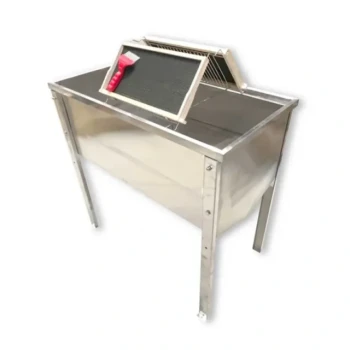
Active sampling methods such as powdered sugar shake tanks and soap wash kits provide a critical advantage over bottom boards: they generate reliable, real-time metrics regarding the actual number of mites living on your bees. While bottom boards passively collect fallen mites, wash and shake kits utilize physical agitation to dislodge parasites from adult bees, allowing for a precise quantification of infestation density at that specific moment.
Core Insight: Passive monitoring (bottom boards) measures mite mortality, while active monitoring (shake/wash kits) measures mite density. Active monitoring provides the definitive data necessary to justify immediate chemical treatments or breeding decisions.
The Superiority of Active Measurement
Real-Time Infestation Accuracy
The primary limitation of a beehive bottom board is that it is a passive tool. It counts mites that have died naturally, been groomed off by bees, or dropped due to medication.
In contrast, powdered sugar shake tanks and soap wash kits are active tools. They do not rely on natural mite fall rates, which can vary based on the colony's grooming behavior or environmental factors. Instead, they force the mites to detach, giving you a count that reflects the current biological reality of the hive.
Precise Quantification of Density
To manage a colony effectively, you need to know the ratio of mites to bees (infestation density). Shake tanks and wash kits allow you to calculate this percentage explicitly.
By washing or shaking a specific sample size of bees, you obtain a statistically significant "mite load" figure. This precision is difficult to achieve with bottom boards, where high mite drop counts could indicate high infestation, or simply a hygienic colony effectively grooming itself.
Data-Driven Decision Making
The accuracy provided by active sampling kits directly impacts management strategies. Because the data is precise and immediate, it empowers beekeepers to make informed decisions regarding:
- Chemical Treatments: Determining if the mite threshold has been crossed to warrant immediate intervention.
- Breeding Selection: Identifying colonies with lower mite loads for potential queen breeding.
Understanding the Trade-offs
Invasiveness vs. Non-Invasiveness
While shake and wash kits offer superior data for immediate decision-making, they require physical interaction with the bees. Soap wash kits, specifically, are lethal to the sample of bees tested.
Conversely, sticky monitoring boards placed on bottom boards are non-invasive. They analyze population trends and natural drops without consuming live bee samples. This makes bottom boards useful for observing long-term dynamics without disrupting the colony structure or reducing the worker population.
Scope of Monitoring
Bottom boards excel at tracking mortality trends over time, such as verifying the efficacy of an autumn treatment cycle or establishing baseline infestation levels across a commercial apiary. Shake and wash kits are less about trends and more about obtaining a "statistically valid snapshot" for immediate action.
Making the Right Choice for Your Goal
To select the correct tool, you must define the specific data point you need to capture right now.
- If your primary focus is determining if you need to treat immediately: Use a soap wash kit or sugar shake tank to get an accurate, real-time measure of mite density on the bees.
- If your primary focus is monitoring long-term population trends: Use sticky bottom boards to track natural mite drops non-invasively over the season.
- If your primary focus is verifying post-treatment efficacy: Use screened bottom boards with sticky traps to capture and count the total mite load killed by the miticide.
Ultimately, use shake or wash kits when you need the hard numbers required to save a colony, and bottom boards to monitor the general trends of your apiary.
Summary Table:
| Feature | Active Sampling (Shake/Wash Kits) | Passive Monitoring (Bottom Boards) |
|---|---|---|
| Data Type | Real-time mite density (mites per bee) | Natural mite mortality/drop trends |
| Accuracy | High: Quantitative and statistically valid | Variable: Influenced by grooming & environment |
| Timeframe | Immediate "snapshot" for action | Long-term population tracking |
| Invasiveness | High: Requires bee sampling | Low: Non-invasive observation |
| Best Use Case | Determining if immediate treatment is needed | Verifying treatment efficacy & long-term trends |
Maximize Your Apiary Productivity with HONESTBEE
Precise mite monitoring is the backbone of successful honey production. At HONESTBEE, we empower commercial apiaries and distributors with the professional-grade tools needed to maintain hive health. From precision shake tanks and soap wash kits to high-capacity honey-filling machines and specialized hive-making hardware, our comprehensive wholesale catalog covers every aspect of the beekeeping industry.
Whether you are scaling a commercial operation or supplying the next generation of beekeepers, our premium equipment and essential consumables ensure your success. Partner with HONESTBEE today to access industry-leading machinery and cultural merchandise tailored for professionals.
References
- Melissa A. Y. Oddie, Bjørn Dahle. Insights from Norway: Using Natural Adaptation to Breed <i>Varroa</i>-Resistant Honey Bees. DOI: 10.1080/0005772x.2021.1882783
This article is also based on technical information from HonestBee Knowledge Base .
Related Products
- Heavy Duty Stainless Steel Honey Processing Machine Decrystallizing Tank
- Stainless Steel Uncapping Tank with Stand and Strainer
People Also Ask
- What are the features of the processing tanks offered? Engineered for Purity and Efficiency
- What types of stainless steel processing tanks are used for honey? Essential Equipment for Quality Honey Production
- What design options are available for honey processing tanks? Optimize Efficiency with Custom Geometries
- What types of stainless steel are used for honey processing? Ensure Food Safety with 304 & 316 Grade Equipment
- Why is industrial-grade stainless steel processing equipment required for honey harvesting? Ensure Purity & Compliance