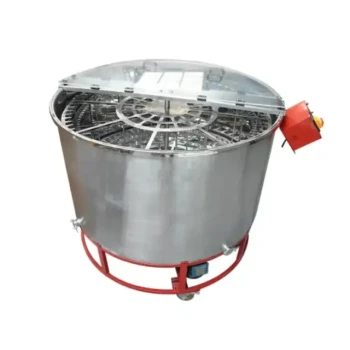
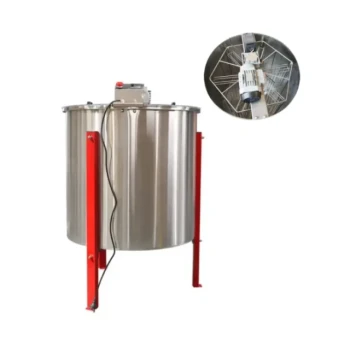
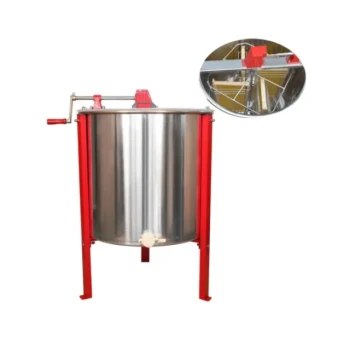
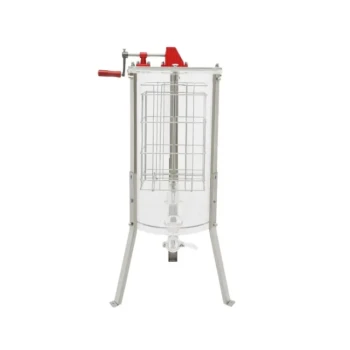
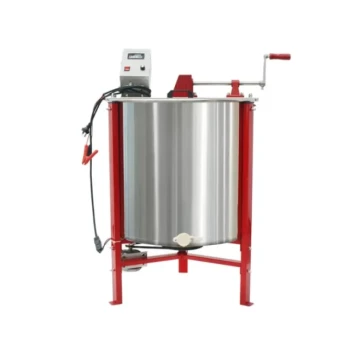
The fundamental process of extracting honey involves three mechanical stages: uncapping the sealed wax cells, using centrifugal force to spin the liquid out of the comb, and collecting the flow via gravity. You begin by using a heated or cold knife to slice the wax caps off the frame, place the frame into the extractor's basket, and spin the mechanism to force the honey against the drum walls where it drains into a collection vessel.
Core Takeaway While the mechanism is simple, the efficiency of extraction depends on balance and viscosity. Successfully using an extractor requires removing the wax cappings cleanly and loading the drum symmetrically to prevent vibration, ensuring you harvest the honey without destroying the delicate wax comb structure.
Phase 1: Preparation and Uncapping
Ensuring Frame Readiness
Before the extraction process begins, you must ensure the frames are free of bees. Gently wipe any lingering bees from the frame using a bee brush. Attempting to extract with bees present complicates the process and contaminates the product.
Removing the Wax Seals
Honey cannot leave the cell until the beeswax seal is broken. This process, known as uncapping, is the most labor-intensive step.
Bees seal the honeycomb with a thin layer of wax once the honey is cured. You must use a hot or cold knife to slice off these cappings. Ideally, you want to remove the wax flush with the frame to expose the honey fully without gouging the comb beneath.
Phase 2: Mechanical Extraction
Loading and Balancing
Once uncapped, the frames are placed vertically into the wire mesh baskets or the barrel of the extractor.
Balance is critical. You must distribute the weight evenly within the cylinder. If you place a heavy frame on one side, you must place a similarly heavy frame directly opposite it. Failing to balance the load will cause the extractor to wobble violently, potentially damaging the device or the frames.
Applying Centrifugal Force
The extractor operates on the principle of centrifugal force. Whether powered by a hand crank or an electric motor, the device spins the baskets rapidly.
As the basket rotates, the honey is pulled out of the open cells. It hits the inner wall of the drum and drips down to the bottom. For most manual setups, you should crank the handle for approximately one minute (or until the flow decreases significantly).
The "Flip" Procedure
Most basic extractors are "tangential," meaning only the side of the frame facing the wall is extracted.
After spinning the first side for roughly 20 to 30 seconds (or up to a minute depending on viscosity), the honey is removed from the outer face. You must then flip the frames—either by manually removing and reversing them or utilizing the mechanism of a reversible extractor. Spin again to extract the honey from the opposite side.
Phase 3: Collection and Filtering
Gravity Draining
As the honey runs down the sides of the drum, it pools at the bottom. The extractor is fitted with a spigot or honey gate at the base.
Open the spigot to allow the honey to flow out. It should be directed into a clean bucket or collection container.
Final Processing
The honey flowing from the extractor will contain bits of wax cappings and debris. While not explicitly part of the machine's operation, the standard workflow dictates that this honey flows through a strainer or filter as it enters the bucket to ensure a clean final product suitable for bottling.
Understanding the Trade-offs
Comb Damage vs. Extraction Speed
The primary risk during extraction is "blowing out" the comb. If you spin the extractor too fast, the centrifugal force may be strong enough to rip the wax foundation out of the frame along with the honey.
This is particularly relevant for foundationless frames. If your frames do not have a wire or plastic foundation, the wax is extremely delicate. You must operate the extractor at a very low speed. If the comb breaks, you lose the advantage of the extractor, which is preserving the comb for the bees to reuse.
Time vs. Completeness
Extracting every last drop of honey takes significantly longer than extracting 90% of it. Extended spinning (5 to 6 minutes) might yield slightly more product but increases labor time and wear on the gear mechanisms. A shorter spin of 1-2 minutes per side is usually the efficient "sweet spot" for hobbyists.
Making the Right Choice for Your Goal
To maximize your results, tailor your approach to your specific equipment and frame type:
- If your primary focus is preserving natural wax (foundationless): Spin at half-speed and accept a longer extraction time to prevent structural failure of the comb.
- If your primary focus is efficiency: Ensure your frames are perfectly balanced before spinning; this allows for higher speeds without wobbling, extracting honey faster.
- If your primary focus is budget: Utilize a manual hand-crank extractor, but be prepared to manually flip the frames to clear both sides of the comb.
Efficiency in extraction comes from proper uncapping and careful balancing, not just raw speed.
Summary Table:
| Stage | Key Action | Essential Tools | Critical Success Factor |
|---|---|---|---|
| Preparation | Uncapping wax seals | Hot/cold knife, bee brush | Clean removal without gouging comb |
| Extraction | Centrifugal spinning | Manual or electric extractor | Perfect weight balance in the drum |
| Collection | Gravity draining | Honey gate, strainer/filter | Filtering debris for a clear product |
| Safety | Speed control | Variable speed motor/crank | Preventing 'blow outs' of delicate wax |
Maximize Your Apiary's Productivity with HONESTBEE
Transitioning from hobbyist to commercial success requires reliable, industrial-grade equipment. HONESTBEE specializes in supporting commercial apiaries and distributors with a complete wholesale portfolio. From high-capacity honey-filling machines and precision hive-making hardware to a full spectrum of beekeeping tools and industry consumables, we provide the infrastructure your business needs to scale.
Whether you are looking to source specialized machinery or honey-themed cultural merchandise for your retail brand, our experts are ready to assist.
Contact HONESTBEE Today for Custom Wholesale Solutions
Related Products
- HONESTBEE 72 Frame Industrial Electric Honey Extractor for Beekeeping
- Commercial Electric 12 Frame Honey Extractor Spinner Motorized Honey Extractor
- HONESTBEE 3-Frame Manual Acrylic Honey Extractor
- electric honey extractor honey centrifuge 3 frame honey extractor stainless steel honey frame extractor
- HONESTBEE 6 Frame Self Reversing Electric Honey Extractor for Beekeeping
People Also Ask
- What is the importance of balancing honeycomb frames within a honey extractor? Ensure Stability and Protect Machinery
- How is honey separated from the frames after they are uncapped? Efficient Extraction Methods for High Yields
- What are the main benefits of using a honey extractor? Maximize Yields and Protect Your Honeycomb
- What are the recommended methods for removing honey from the honeycomb? Top Extraction Techniques for Maximum Efficiency
- How do manual honey extractors compare to electric honey extractors? Choosing the Right Tool for Your Apiary Growth