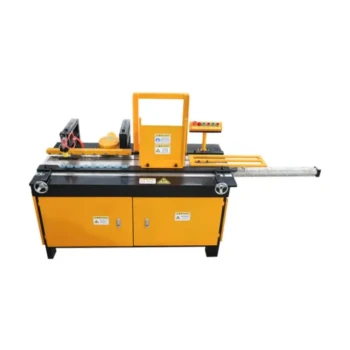
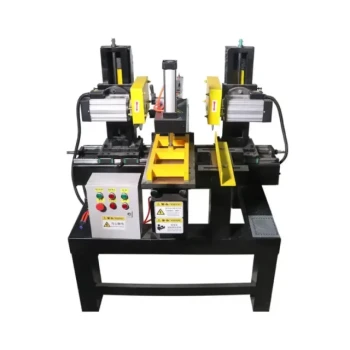
Automated hive-making machines revolutionize beekeeping manufacturing by utilizing high-precision processing to deliver standardized, consistent components that manual methods simply cannot match. For manufacturers, this technology offers the dual benefit of significantly reducing labor costs while simultaneously enhancing the structural integrity, sealing, and durability of the beehives produced.
Core Takeaway The transition to automated manufacturing is not merely about increasing production speed; it is about achieving the rigorous dimensional consistency required for large-scale, mechanized apiary management and ensuring the biological stability of the colony.
The Operational Impact of Standardization
The most immediate benefit of automation is the elimination of variance. In an industry where a few millimeters can disrupt the "bee space," precision is paramount.
Achieving True Interchangeability
The primary reference highlights that automated machines ensure all components are standardized and consistent. This allows for the seamless interchangeability of parts—such as frames, bottom boards, and supers—across different hives.
For the end-user, this simplifies logistics. Beekeepers can move frames between boxes during colony merging or relocation without worrying about fit, which is vital for large-scale commercial operations.
Facilitating Mechanized Management
Standardized dimensions create the foundation for broader automation in the apiary. When hives are uniform, they are compatible with automated honey harvesting and maintenance systems.
Non-standard equipment often jams or fails in mechanized extraction lines. By producing uniform gear, manufacturers enable their clients to scale their own operations efficiently.
Improving Product Quality and Colony Health
Beyond logistics, the physical quality of the hive directly impacts the biological success of the bees. Automated manufacturing produces a superior habitat.
Enhanced Structural Integrity and Sealing
Automated processing improves the sealing and weather resistance of beehives. Tighter joints and precise cuts eliminate gaps that cause drafts or water leaks.
This is critical for protecting colonies from extreme microclimates, particularly in urban settings or during harsh winters. Superior sealing improves overwintering conditions and helps prevent disease by maintaining a stable internal environment.
Optimizing for Bee Biology
High-precision construction ensures that internal dimensions align perfectly with bee biology. This reduces the likelihood of bees building "burr comb" in incorrect spaces, which complicates hive inspections.
Furthermore, advanced machines allow for customization to match the habits of specific species, such as the Italian bee or the Oriental honey bee, optimizing the physical structure for the specific colony type being managed.
Economic Advantages for Manufacturers
Investing in automation alters the cost structure of manufacturing, shifting the focus from variable labor to fixed asset efficiency.
reducing Labor Costs
As noted in the primary reference, automated machines significantly reduce labor costs. By automating the cutting and assembly processes, manufacturers can produce higher volumes with fewer personnel.
Minimizing Material Waste and Defects
Precision cutting reduces the amount of wasted lumber associated with manual errors. Additionally, high-quality construction reduces structural defects that can lead to honey loss or "bee absconding" (bees leaving the hive).
Eliminating these defects increases the economic returns for the beekeeper, making the manufacturer's product more attractive in a competitive market.
Understanding the Trade-offs
While the benefits are substantial, adopting automated hive-making technology requires a strategic shift in perspective.
High Capital vs. Operational Expenditure
The shift to automation requires a significant upfront capital investment compared to traditional carpentry tools. Manufacturers must have sufficient production volume to amortize the cost of these industrial-grade machines over time.
The Rigidity of Standardization
While standardization is a benefit for large operations, it can be a limitation for niche markets requiring unique, non-standard shapes. Once a machine is tooled for a specific specification, retooling for a small, bespoke run can be inefficient.
Making the Right Choice for Your Goal
When integrating these machines into your production line, focus on the specific value proposition you want to offer your customers.
- If your primary focus is Commercial Scalability: Prioritize machines that guarantee strict dimensional uniformity to support your clients' mechanized honey extraction systems.
- If your primary focus is Colony Health: Emphasize the machine's ability to produce air-tight, weather-resistant joints to improve overwintering survival rates.
- If your primary focus is Urban Markets: Utilize the precision of these machines to create modular, space-efficient designs suitable for rooftops and high-density arrangements.
Precision manufacturing transforms the beehive from a simple wooden box into an engineered agricultural tool.
Summary Table:
| Benefit Category | Key Advantage | Impact on Manufacturing/Apiary |
|---|---|---|
| Production Efficiency | Reduced Labor Costs | Lowers overhead and increases output volume |
| Product Quality | High-Precision Sealing | Enhances weather resistance and colony overwintering |
| Standardization | Part Interchangeability | Enables large-scale mechanized apiary management |
| Biological Optimization | Precise "Bee Space" | Minimizes burr comb and supports specific bee species |
| Economic Value | Minimized Material Waste | Reduces defects and increases ROI for end-users |
Scale Your Manufacturing with HONESTBEE Precision
At HONESTBEE, we empower commercial apiaries and beekeeping equipment distributors with the industrial-grade tools needed to lead the market. From high-precision hive-making machines and honey-filling lines to a full spectrum of specialized hardware and essential consumables, we provide the complete wholesale solution your business demands.
Why partner with HONESTBEE?
- Industrial Power: Automate your production to eliminate manual errors and slash labor costs.
- Global Quality Standards: Supply your clients with standardized, interchangeable equipment built for mechanized honey harvesting.
- Comprehensive Portfolio: Access everything from heavy machinery to honey-themed cultural merchandise in one place.
Ready to modernize your production line and enhance your competitive edge? Contact our expert team today to discuss our wholesale offerings and machinery solutions!
References
- Mert Kükrer, Aykut Kence. Honey Bee Diversity Is Swayed by Migratory Beekeeping and Trade Despite Conservation Practices: Genetic Evidence for the Impact of Anthropogenic Factors on Population Structure. DOI: 10.3389/fevo.2021.556816
This article is also based on technical information from HonestBee Knowledge Base .
Related Products
- Automatic High-Speed Bee Hive Box Stapling Machine
- High-Efficiency Pneumatic Bee Hive Making Machine for Rapid Box Assembly
- Mini Desktop Bee Hive Frame Forming Making Machine
- Beehive Handle and Frame Rest Cutting Machine: Your Specialized Hive Machine
- Beehive Machine Double End Saw for Precision Hive Component Manufacturing
People Also Ask
- How is the Bee Box machine adjusted for different box sizes? Maximize Your Woodworking Versatility and Precision
- How is the Bee Box machine operated? Optimize Your Commercial Hive Production with Scalable Staffing Solutions
- How was the Bee Box machine designed? Industrial Engineering for High-Volume Beekeeping Production
- What is the production capacity of the Bee Box machine? Boost Output up to 1,000 Boxes Daily
- What are the power requirements and control system for the Bee Box machine? Optimize Your Apiary Equipment Production