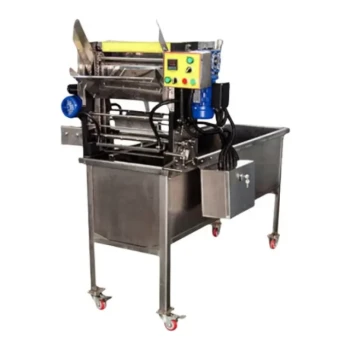
Industrial-grade automated honey filling and processing machinery fundamentally elevates apiary operations by delivering precise temperature-controlled filtration and constant-pressure filling. These mechanisms prevent the loss of active nutrients often seen in manual extraction, ensuring the final product meets rigorous food safety standards while maintaining brand consistency.
Core Takeaway: By transitioning from manual handling to automated industrial processing, apiaries can preserve the delicate bio-active properties of honey while achieving the sterilization and standardization necessary for high-end commercial markets.
Maximizing Product Quality and Nutritional Value
Precise Temperature and Pressure Control
The primary advantage of industrial machinery is the ability to regulate the processing environment. Constant-pressure filling and temperature-controlled filtration prevent the overheating and agitation that often degrade honey during manual processing. This precision preserves the active nutrients and enzymes that define high-quality raw honey.
Preservation of Flavor Profiles
Unlike traditional manual crushing methods, mechanized equipment is designed to handle honey gently. This protects the natural flavor profiles and active ingredients. By avoiding aggressive manual manipulation, the honey retains the distinct characteristics of its floral source, which is critical for maintaining product value.
Advanced Filtration Capabilities
Industrial systems offer superior filtration capabilities compared to manual methods. They efficiently remove impurities introduced during extraction without stripping the honey of its beneficial properties. This results in a cleaner, more visually appealing product that retains its nutritional integrity.
Ensuring Hygiene and Market Compliance
Eliminating Secondary Contamination
Manual handling is the leading cause of contamination in food processing. Automated machinery minimizes human contact with the product. By reducing manual intervention, these machines significantly lower the risk of secondary contamination, ensuring the honey remains sterile from extraction to bottling.
Meeting Commercial Safety Standards
To enter high-end distribution markets, honey must meet strict standardization requirements. Industrial machinery enables sterile bottling, dehydration, and consistent hygiene standards that are difficult to achieve manually. This compliance is essential for selling to major retailers and international markets.
Standardization of Viscosity and Packaging
Consumers and retailers expect consistency. Automated fillers ensure that every bottle maintains consistent honey viscosity and volume. This standardized packaging reinforces brand reliability and allows independent apiaries to compete with larger commercial producers.
Economic Stability and Market Expansion
Creating High-Value-Added Products
Industrial processing opens avenues for revenue beyond basic raw honey. Specialized machinery allows for the production of refined honey, beeswax, and propolis. These high-value-added products provide a stable revenue stream, helping apiaries mitigate financial risks associated with agricultural crop failures or irregular rainfall.
Brand Consistency and Competitiveness
Consistency builds trust. By ensuring that every batch of honey meets the same high standards of purity and presentation, apiaries can protect their brand reputation. This is particularly important when processing honey from diverse sources, such as rescued colonies, where the raw input may vary but the final output must remain uniform.
Understanding the Trade-offs
Capital Investment vs. Volume
Industrial-grade machinery represents a significant fixed asset cost. While it reduces variable costs (labor) over time, the initial investment requires a sufficient volume of honey to justify the expense. Smaller operations may find the ROI takes longer to realize compared to large-scale demonstration bases.
Operational Complexity
Transitioning to industrial automation requires a shift in skill sets. Operators must move from traditional beekeeping techniques to managing complex machinery. This may require training and a controlled indoor workshop environment to ensure the equipment functions correctly and maintains hygiene standards.
Making the Right Choice for Your Goal
To determine if industrial automation fits your current stage of growth, consider your primary business objective:
- If your primary focus is Entering High-End Retail: Invest in automation to ensure the strict hygiene compliance and standardized packaging required by major distributors.
- If your primary focus is Product Quality and Potency: Use the machinery’s precise temperature controls to preserve active nutrients and enzymes that command a premium price.
- If your primary focus is Risk Mitigation: Diversify your revenue by using processing equipment to create value-added byproducts like propolis and refined wax.
Ultimately, industrial processing bridges the gap between artisanal beekeeping and scalable commercial production, turning variable raw harvests into consistent, high-value commodities.
Summary Table:
| Benefit Category | Key Feature | Impact on Apiary Operations |
|---|---|---|
| Product Quality | Precise Temp & Pressure | Preserves bio-active enzymes and natural flavor profiles. |
| Hygiene & Safety | Automated Sterile Filling | Eliminates secondary contamination; meets high-end retail standards. |
| Market Readiness | Standardized Packaging | Ensures consistent viscosity and volume for brand reliability. |
| Economic Growth | Value-Added Processing | Facilitates production of refined wax, propolis, and specialty honey. |
Elevate Your Apiary's Commercial Potential with HONESTBEE
Transitioning from manual handling to industrial automation is the key to scaling your honey business. HONESTBEE specializes in supporting commercial apiaries and distributors by providing a comprehensive wholesale range of beekeeping tools, machinery, and consumables.
Our Value to You:
- Precision Machinery: From hive-making to honey-filling machines that ensure nutrient preservation.
- Full Spectrum Supply: Every tool and consumable needed for large-scale production.
- Brand Growth: Enhance your competitiveness with high-value-added products like refined beeswax and propolis.
Ready to transform your harvest into a premium, market-ready commodity? Contact us today to explore our wholesale solutions!
References
- Jovana Bila Dubaić, Aleksandar Ćetković. Unprecedented Density and Persistence of Feral Honey Bees in Urban Environments of a Large SE-European City (Belgrade, Serbia). DOI: 10.3390/insects12121127
This article is also based on technical information from HonestBee Knowledge Base .
Related Products
- Fully Automatic Honey Filling Packaging Machine for Processing Line
- Automatic Honey Filling and Filtering Machine for Beekeeping Bottle Filling
- Precision Durable Efficient HONESTBEE Rotary Honey Filling Machine
- Precision Automated Packaging Turntable Honey Spoon Filling Sealing Packing Machine
- Commercial Rotary Honey Filling Machine for Production
People Also Ask
- Why are fully automatic honey filling and packaging lines essential? Boost Your Honey's Market Value and Quality
- What is a fully-automatic honey filler? Streamline Your Production with High-Precision Automation
- How do automated honey filling and packaging machines affect profitability? Boost Margins with HONESTBEE Technology
- How do automated honey filling and packaging machines contribute to the market value of honey products? Maximize Your ROI
- How do industrial-grade automated honey filling and packaging machines mitigate the risk of physical contamination?