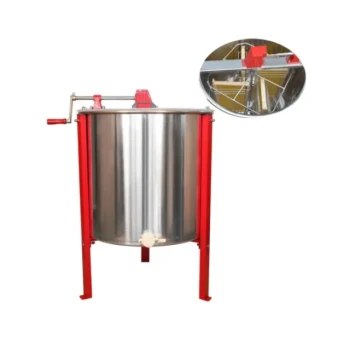
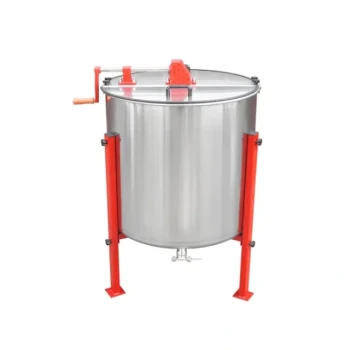
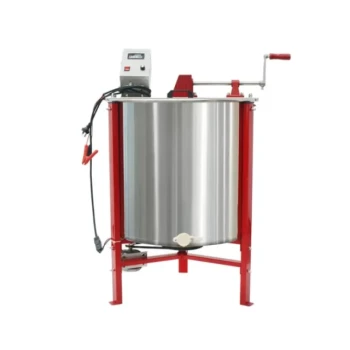
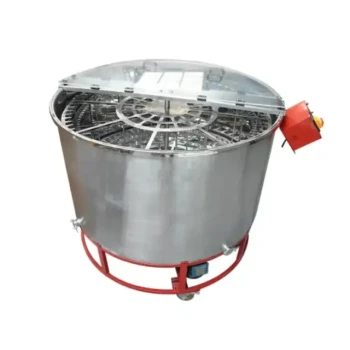
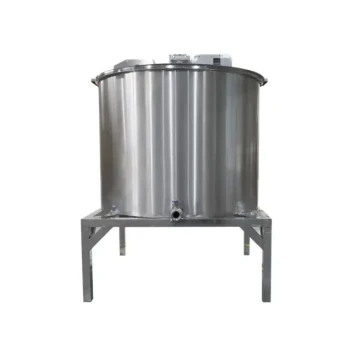
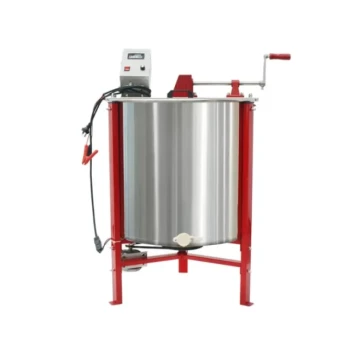
Manual honey extractors are mechanical harvesting devices defined by their simplicity and hand-operated design. Primarily targeted at beginning beekeepers and hobbyists, these extractors rely on a side-mounted or top-mounted crank to spin honey frames using centrifugal force. They are typically constructed from stainless steel or plastic and are valued for their cost-effectiveness and lack of complex electronic components.
The Core Insight For beekeepers managing fewer than 10 hives, the manual extractor is often the most logical investment. It balances affordability with high tactile control, allowing you to harvest honey anywhere without electricity while minimizing the risk of damaging your wax combs.
Distinctive Characteristics
Simple Mechanical Operation
The defining feature of these units is the hand crank. Instead of a motor, the operator provides the power, turning a handle located either on the top or the side of the drum to generate spin.
varied Construction Materials
You will typically find these extractors in two primary builds: stainless steel or heavy-duty plastic. Stainless steel offers durability and longevity, while plastic models provide a lighter, often more affordable entry point.
Adjustable Configurations
Most manual models are designed with removable legs. This feature simplifies the setup process during harvest and makes the unit significantly easier to store when the season ends.
Frame Capacity Options
Manual extractors are not "one size fits all." They come in various sizes, offering high or low frame capacities to match the specific volume requirements of your apiary.
Strategic Benefits for the Hobbyist
Precision Speed Control
One of the most critical technical benefits is the ability to control spin speed instantly. Because you feel the resistance on the crank, you can start slowly and accelerate gradually.
This tactile feedback is essential for preventing "blowouts," where centrifugal force destroys delicate or uncapped honeycombs.
Operational Independence
Manual extractors require no power source. This makes them fully portable, allowing you to process honey in off-grid locations, right in the field, or in sheds without reliable electricity.
Low Maintenance and Sanitation
Without a motor or complex wiring, these units are exceptionally easy to clean and maintain. There are fewer components to break, ensuring long-term reliability with minimal upkeep.
A Quiet, Tactile Experience
For many, the noise of an electric motor detracts from the beekeeping experience. Manual extractors operate quietly, fostering a deeper connection to the harvest through the physical effort involved.
Understanding the Trade-offs
Physical Exertion Required
It is important to acknowledge that this method is physically demanding. Extracting honey manually requires sustained physical effort, which can become exhausting if you are processing a large number of frames.
Volume Limitations
While excellent for small-scale operations (generally under 10 hives), manual extraction is time-consuming. As your apiary grows, the time and effort required to crank by hand may become a bottleneck compared to motorized alternatives.
Making the Right Choice for Your Goal
If you are deciding whether a manual extractor fits your current needs, consider these scenarios:
- If your primary focus is starting on a budget: The manual extractor is the ideal entry point, offering the lowest cost while teaching you the mechanics of extraction.
- If your primary focus is preserving comb: The manual crank gives you superior sensitivity and control to prevent destroying fresh wax.
- If your primary focus is remote location: The lack of dependency on electricity makes this the only viable option for field or off-grid processing.
Manual extraction transforms the harvest from an industrial task into a hands-on craft, offering the perfect balance of control and simplicity for the small-scale beekeeper.
Summary Table:
| Feature | Manual Honey Extractor Detail |
|---|---|
| Best For | Beginner beekeepers and hobbyists (under 10 hives) |
| Power Source | Manual hand crank (No electricity required) |
| Key Materials | Food-grade stainless steel or heavy-duty plastic |
| Control | Tactile feedback to prevent honeycomb blowouts |
| Portability | High; often features removable legs and lightweight frame |
| Maintenance | Low; simple mechanical components are easy to clean |
Scale Your Beekeeping Business with HONESTBEE
Whether you are a growing commercial apiary or a distributor looking for reliable supply, HONESTBEE provides the professional-grade tools you need to succeed. From durable manual extractors to industrial honey-filling machines and specialized hive-making hardware, we offer a comprehensive wholesale portfolio of beekeeping equipment and consumables.
Why partner with HONESTBEE?
- Full Spectrum Supply: Access everything from basic tools to advanced machinery and honey-themed cultural merchandise.
- Wholesale Excellence: Competitive pricing and bulk availability tailored for distributors.
- Industry Expertise: Quality equipment designed to withstand the rigors of commercial honey production.
Ready to enhance your apiary's efficiency? Contact us today to explore our wholesale offerings!
Related Products
- Stainless Steel 3 Frame Manual Honey Extractor Spinner for Bee Honey Extraction
- HONESTBEE 4 Frame Manual Self Reversing Honey Extractor for Beekeeping
- HONESTBEE 3-Frame Manual Acrylic Honey Extractor
- Stainless Steel Manual 8 Frame Radial Honey Extractor Machine for Beehives
- 6 Frame Manual Stainless Steel Honey Extractor Beekeeping Equipment
People Also Ask
- Which type of honey extractor is generally more durable? Focus on Material & Build Quality for Longevity
- What are the disadvantages of a manual honey extractor? Overcome Efficiency Bottlenecks in Your Apiary
- What is a manual honey extractor? The Essential Guide to Cost-Effective Beekeeping for Beginners
- Why are manual extractors popular among beginner beekeepers? A Guide to Starting Simple & Saving Money
- What are the primary advantages of utilizing a manual honey extractor? Cost-Effective & Gentle Harvesting