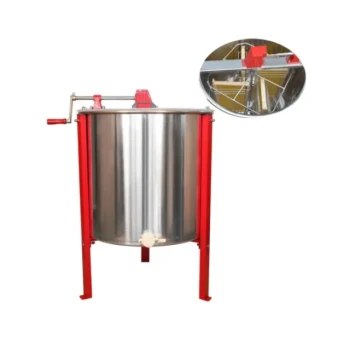
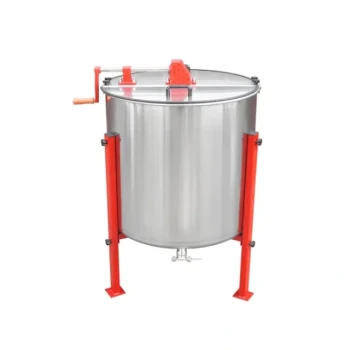
A manual honey extractor is defined by its reliance on a hand-operated crank. Instead of a motor, it requires physical effort to spin the frames within a drum, using centrifugal force to pull honey from the comb. These devices are characterized by their mechanical simplicity, independence from electricity, and significantly lower cost compared to motorized alternatives.
Core Takeaway Manual honey extractors are the foundational tool for small-scale beekeeping, offering a balance of affordability and control. They are best suited for hobbyists managing fewer than 10 hives who value portability and simplicity over high-volume speed.
Defining Characteristics of Manual Extractors
Mechanical Operation
The most distinct feature of these extractors is the built-in hand crank. This crank may be mounted on the side or the top of the unit.
By turning the crank, the operator spins the internal basket holding the frames. This manual input allows the user to have direct tactile control over the speed and direction of the spin.
Construction and Capacity
Manual extractors are typically constructed from stainless steel or food-grade plastic. They are designed to hold a specific number of frames, with common configurations available in 2-frame, 4-frame, and 8-frame models.
Many models feature removable legs. This design choice simplifies storage and makes the unit easier to set up in various locations.
Independence from Power Sources
Because they do not require an electric motor, manual extractors can be used anywhere. This makes them ideal for remote apiaries or processing areas where access to electricity is limited or non-existent.
Who Should Choose a Manual Extractor?
The Hobbyist Beekeeper
The primary reference indicates that these extractors are generally better suited for beekeepers with fewer than 10 hives.
At this scale, the physical effort required to crank the extractor is manageable. The volume of honey produced by a small number of hives does not typically justify the investment in a motorized unit.
The Budget-Conscious Beginner
Manual extractors are significantly less expensive than electric models.
For those just starting, the lower price point lowers the barrier to entry. It allows beginners to acquire necessary equipment without a massive financial commitment before they are sure they want to scale up their operation.
The "Hands-On" Practitioner
Some beekeepers prefer the intimate connection to the process that manual cranking provides. The ability to control the speed manually allows for a gentle extraction that minimizes damage to delicate combs.
Understanding the Trade-offs
Physical Exertion Required
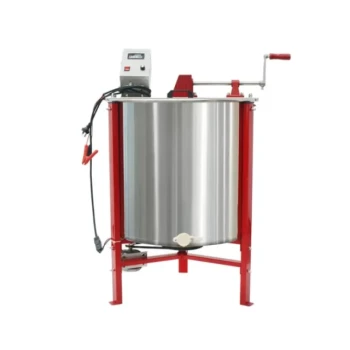
The most significant downside is the physical labor involved. Unlike electric extractors, which allow the operator to uncap the next batch of frames while the machine spins, a manual extractor requires your constant attention and effort.
Lower Efficiency for Volume
Manual extraction is slower. If you expand beyond the 10-hive mark, the time and energy required to hand-crank every frame can become a bottleneck in your harvesting process.
Making the Right Choice for Your Apiary
To decide if a manual extractor fits your current needs, consider your specific goals:
- If your primary focus is budget and simplicity: A manual extractor is the most cost-effective entry point and is easy to maintain.
- If your primary focus is mobility: Choose a manual model for its ability to operate off-grid without power cords or generators.
- If your primary focus is preserving delicate comb: The manual crank offers superior tactile feedback, allowing you to slow down instantly to prevent blowouts.
Select the tool that matches the current scale of your apiary, knowing you can always upgrade as your hive count grows.
Summary Table:
| Feature | Manual Honey Extractor Details |
|---|---|
| Drive System | Hand-operated crank (No electricity required) |
| Typical Capacity | 2-frame, 4-frame, or 8-frame configurations |
| Construction | Food-grade stainless steel or high-quality plastic |
| Best Suited For | Hobbyists managing 1 to 10 hives |
| Key Advantages | Lower cost, portable, tactile control, and easy maintenance |
Scale Your Beekeeping Success with HONESTBEE
Whether you are a growing distributor or a commercial apiary, HONESTBEE provides the professional-grade tools you need to succeed. From high-durability manual extractors to advanced honey-filling machines and specialized hive-making equipment, our comprehensive wholesale catalog covers the full spectrum of industry essentials.
Why partner with HONESTBEE?
- Wholesale Excellence: Competitive pricing on bulk orders of beekeeping machinery and consumables.
- Diverse Portfolio: Everything from specialized hardware to honey-themed cultural merchandise.
- Tailored Solutions: Equipment designed to meet the rigorous demands of commercial operations.
Ready to enhance your inventory or upgrade your apiary's efficiency? Contact us today to explore our full range of solutions!
Related Products
- Stainless Steel 3 Frame Manual Honey Extractor Spinner for Bee Honey Extraction
- HONESTBEE 4 Frame Manual Self Reversing Honey Extractor for Beekeeping
- HONESTBEE 3-Frame Manual Acrylic Honey Extractor
- Stainless Steel Manual 8 Frame Radial Honey Extractor Machine for Beehives
- 6 Frame Manual Stainless Steel Honey Extractor Beekeeping Equipment
People Also Ask
- Which type of honey extractor is generally more durable? Focus on Material & Build Quality for Longevity
- What are the disadvantages of a manual honey extractor? Overcome Efficiency Bottlenecks in Your Apiary
- What is a manual honey extractor? The Essential Guide to Cost-Effective Beekeeping for Beginners
- Why are manual extractors popular among beginner beekeepers? A Guide to Starting Simple & Saving Money
- What are the primary advantages of utilizing a manual honey extractor? Cost-Effective & Gentle Harvesting