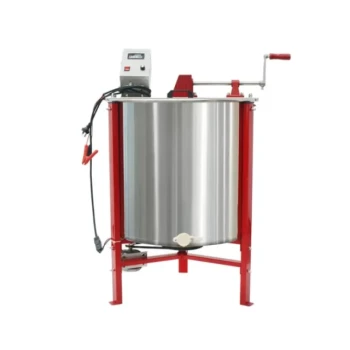
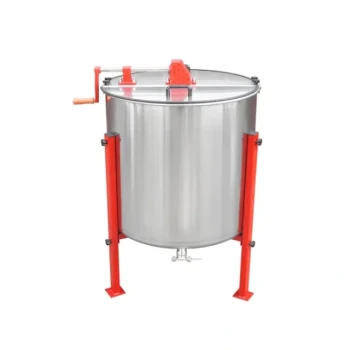
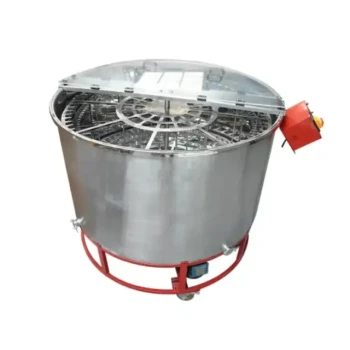
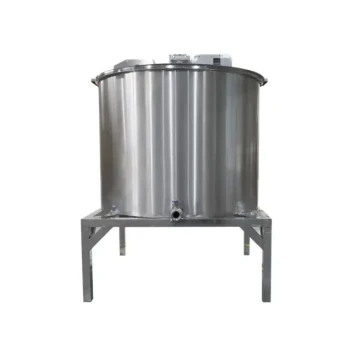
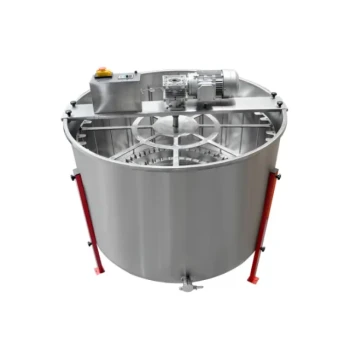
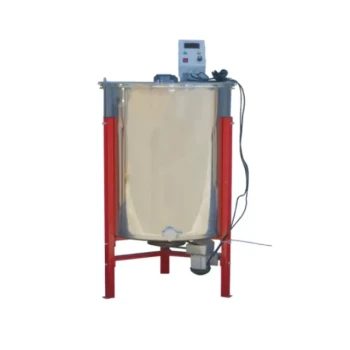
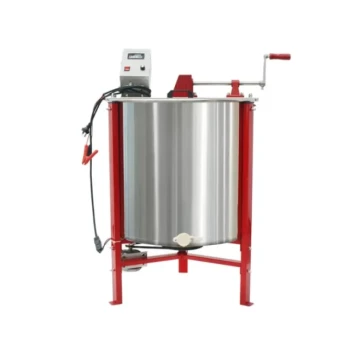
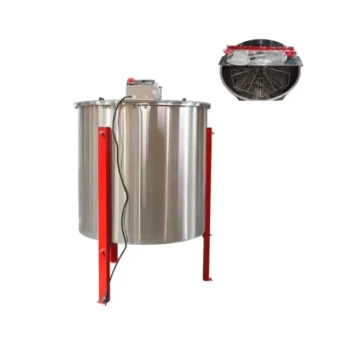
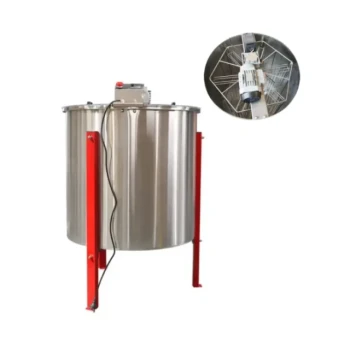
Parallel radial honey extractors are a specialized, high-capacity machine characterized by a horizontal spindle and cage design, distinct from the vertical orientation found in standard extractors. In this configuration, frames are loaded so that their side bars lead the direction of rotation, allowing the machine to achieve significantly higher speeds and shorter cycle times.
Core Takeaway: The parallel radial extractor is a rare, performance-driven variation of the standard radial design. By utilizing a horizontal axis and specific frame orientation, it maximizes rotational speed to drastically reduce extraction time, making it a niche solution for high-volume commercial operations.
The Structural Difference
The Horizontal Advantage
The defining characteristic of a parallel radial extractor is its horizontal spindle. While the vast majority of extractors utilize a vertical shaft (resembling a top-loading washing machine), the parallel radial operates on a horizontal axis.
This configuration changes the mechanics of the spin. It alters how the machine handles vibration and how honey is ejected from the comb relative to gravity.
Unique Frame Orientation
In a standard radial extractor, frames are usually arranged like spokes on a wheel with the top bars facing the outer wall.
In a parallel radial setup, the frames are positioned differently. The side bars lead the rotation. This aerodynamic orientation is key to the machine's ability to handle the physical stresses of higher speeds.
Performance Characteristics
High-Speed Extraction
The primary operational benefit of this design is speed. Because of the frame positioning and horizontal stability, these machines can rotate much faster than vertical models.
This increased velocity generates stronger centrifugal force. Consequently, the honey is forced out of the comb more aggressively, resulting in a very quick extraction cycle.
Commercial Efficiency
This architecture is specifically engineered for throughput. The combination of simultaneous two-sided extraction (a feature of all radial units) and high rotational speed minimizes the time frames spend in the machine.
For commercial beekeepers, this reduction in cycle time translates directly to higher daily productivity.
Understanding the Trade-offs
Rarity and Availability
Despite their performance benefits, parallel radial extractors are very rare. They are not standard stock items and are difficult to source compared to vertical electric or manual models. This implies that parts and service may also be harder to secure.
Risk to Wax Combs
While the primary reference highlights speed, it is vital to apply general radial extraction principles here. Radial force can be harsh on wax.
Because parallel radial machines operate at such high speeds, the risk of "blowing out" (breaking) combs is elevated. This design is likely unsuitable for fragile, older, or uneven combs that cannot withstand intense centrifugal force.
Making the Right Choice for Your Goal
To determine if this specific architecture aligns with your needs, consider the scale of your operation:
- If your primary focus is maximum commercial throughput: Investigate parallel radial extractors for their ability to drastically cut cycle times, provided you have durable combs and a source for these rare machines.
- If your primary focus is general reliability and ease of sourcing: Stick to a standard vertical radial extractor, which balances efficiency with widespread availability and parts support.
- If your primary focus is preserving delicate or hobby-scale comb: Avoid high-speed radial units entirely and opt for a tangential extractor, which is gentler on the wax.
Summary: The parallel radial extractor is a high-velocity tool for the impatient professional, trading ubiquity and gentleness for raw speed and efficiency.
Summary Table:
| Feature | Parallel Radial Extractor | Standard Radial Extractor |
|---|---|---|
| Spindle Orientation | Horizontal | Vertical |
| Frame Positioning | Side bars lead rotation | Top bars face outer wall |
| Extraction Speed | Extremely High | Moderate to High |
| Cycle Time | Shortest | Moderate |
| Target User | High-volume Commercial | General Commercial / Hobbyist |
| Availability | Rare / Niche | Widely Available |
Scaling Your Honey Production? Partner with HONESTBEE
At HONESTBEE, we specialize in empowering commercial apiaries and distributors with high-performance beekeeping solutions. Whether you are looking for advanced honey-filling machines or high-capacity extraction equipment to optimize your throughput, our comprehensive wholesale portfolio has you covered. From specialized hardware to essential industry consumables and honey-themed cultural merchandise, we deliver the tools you need to lead the market.
Ready to upgrade your commercial honey processing? Contact us today to explore our full equipment range!
Related Products
- 24 Frame Honey Extractor Commercial Radial Honey Frame Extraction Machine
- Stainless Steel Manual 8 Frame Radial Honey Extractor Machine for Beehives
- HONESTBEE 8 Frame Electric and Manual Three Use Honey Extractor
- 6 Frame Manual Stainless Steel Honey Extractor Beekeeping Equipment
- Electric 4 Frame Tangential Honey Extractor
People Also Ask
- How does a radial honey extractor leverage the natural structure of a honeycomb? Optimize Your Apiary's Efficiency
- How do modern honey extraction machines improve harvest efficiency? Boost Your Yield with Radial Technology
- Why must the head of the honey comb be placed near the center axis? Protect Your Comb During Radial Extraction
- Why is the width of iron rings varied for radial honey extractor tilt? Optimize Your Harvest with Precise Engineering
- What are the operational differences between radial and tangential honey extractors? Maximize Your Harvest Efficiency