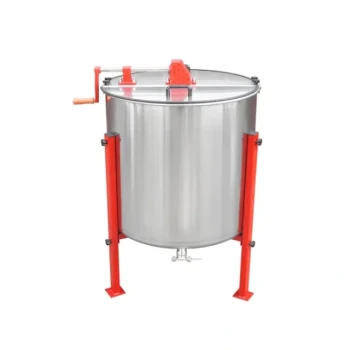
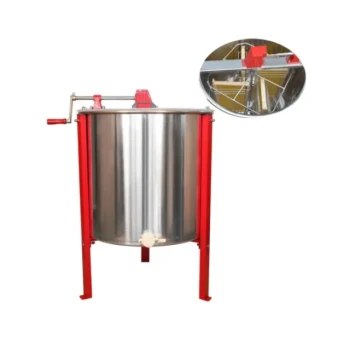
There are two primary methods for extracting honey from frames: using a mechanical extractor or employing the crush-and-strain technique. The most common and efficient method relies on a centrifugal honey extractor (either manual or electric) to spin honey out while preserving the wax comb, while the crush-and-strain method is a manual process used when specialized equipment is unavailable.
The choice of extraction method dictates not only the speed of your harvest but also the future productivity of your hive; preserving the drawn comb allows bees to focus on honey production rather than rebuilding wax.
The Pre-Requisite: Uncapping the Frames
Accessing the Honey
Before any extraction method can be used, the wax cappings sealing the honeycomb cells must be removed. This exposes the liquid honey inside the frame.
Tools for Uncapping
For small operations (1 to 50 hives), beekeepers typically use a serrated knife, a hot knife, or an uncapping fork. An electric uncapping knife is highly efficient, using heat to slice smoothly through the caps without damaging the cell walls.
Method 1: Centrifugal Extraction (The Standard)
utilizing Centrifugal Force
This method uses a specialized machine called an extractor. The machine spins the frames at high speeds, generating centrifugal force that flings the liquid honey out of the cells and against the inner wall of the drum.
The Extraction Process
After uncapping, frames are placed into the extractor's wire baskets. The operator spins the frames for 20 to 30 seconds to empty one side. The frames are then flipped (or the basket is reversed) to extract honey from the opposite side.
Preserving the Comb
The significant advantage of this method is hygiene and integrity. Because the wax foundation remains intact, the empty frames can be returned to the hive for immediate reuse by the bees.
Manual vs. Electric Models
Extractors come in two forms. Manual extractors rely on a hand crank to generate rotation, while electric extractors use a motor for consistent speed and ease of use.
Method 2: The Crush-and-Strain Technique
A Low-Tech Alternative
When an extractor is not available, beekeepers use the crush-and-strain method. This involves physically breaking or scraping the wax comb off the frame foundation.
Filtering the Harvest
Once the comb is crushed, the mixture of wax and honey is poured into a filter or cheesecloth. Gravity separates the mixture, allowing the liquid honey to drip through while the wax debris is caught in the strainer.
Understanding the Trade-offs
Equipment Cost vs. Hive Labor
Centrifugal extractors represent a financial investment but save the bees immense labor. If you use crush-and-strain, you destroy the comb, forcing the bees to consume resources to rebuild the wax before they can store honey again.
Efficiency and Speed
Using an extractor is significantly faster, especially for multiple hives. The crush-and-strain method is slow, messy, and generally only practical for those with a very small number of hives.
Making the Right Choice for Your Goal
Selecting the right method depends largely on your budget and the scale of your apiary.
- If your primary focus is long-term yield and hive health: Invest in a centrifugal extractor to preserve the drawn comb and allow bees to focus entirely on honey production.
- If your primary focus is low initial cost for a single hive: Utilize the crush-and-strain method to harvest honey without purchasing expensive machinery.
Choose the method that balances your current budget with the long-term productivity goals of your apiary.
Summary Table:
| Feature | Centrifugal Extraction | Crush-and-Strain Method |
|---|---|---|
| Efficiency | High (Fast & Scalable) | Low (Slow & Manual) |
| Comb Integrity | Preserved (Reusable) | Destroyed (Must be rebuilt) |
| Equipment | Manual or Electric Extractor | Basic Strainer & Containers |
| Best For | Commercial & Scale-up Apiaries | Hobbyists with 1-2 Hives |
| Hive Health | Faster honey production | Bees must spend energy on wax |
Maximize Your Harvest Efficiency with HONESTBEE
Whether you are scaling a commercial apiary or supplying the beekeeping industry, HONESTBEE provides the professional-grade tools you need to succeed. We specialize in high-performance centrifugal honey extractors, electric uncapping tools, and specialized machinery like honey-filling units to streamline your workflow.
Why partner with HONESTBEE?
- Comprehensive Wholesale Catalog: From hive-making machines to essential consumables.
- Built for Scale: Reliable equipment designed for distributors and large-scale operations.
- Industry Expertise: Quality hardware that preserves comb integrity and boosts yield.
Ready to upgrade your production? Contact us today to explore our wholesale solutions!
Related Products
- Stainless Steel 3 Frame Manual Honey Extractor Spinner for Bee Honey Extraction
- Manual Hand Crank 4 Frame Honey Extractor Centrifuge for Beekeeping
- HONESTBEE 3-Frame Manual Acrylic Honey Extractor
- Stainless Steel Manual 8 Frame Radial Honey Extractor Machine for Beehives
- Plastic Hand Crank 2 Frame Honey Extractor Low Price
People Also Ask
- Which type of honey extractor is generally more durable? Focus on Material & Build Quality for Longevity
- What are the disadvantages of a manual honey extractor? Overcome Efficiency Bottlenecks in Your Apiary
- What is a manual honey extractor? The Essential Guide to Cost-Effective Beekeeping for Beginners
- Why are manual extractors popular among beginner beekeepers? A Guide to Starting Simple & Saving Money
- What are the primary advantages of utilizing a manual honey extractor? Cost-Effective & Gentle Harvesting