The primary consequences of premature harvesting or incorrect storage are fermentation and significant devaluation of the product. When honey is harvested before the bees have finished dehydrating it, or when it is stored in conditions that allow moisture absorption, the water content remains too high. This excess moisture allows yeast to thrive, causing the honey to ferment and spoil in the jar.
The root cause of honey spoilage is high water content. Whether caused by pulling frames too early or storing them improperly, excess moisture triggers fermentation, rendering the final product unsuitable for general sale and downgrading it to lower-quality "baker's honey."
The Science of Spoilage
The Moisture Threshold
Honey is naturally hygroscopic, meaning it absorbs moisture from its environment. Stability depends entirely on keeping water content low.
When water content exceeds stable levels, the natural yeasts found in honey become active.
The Fermentation Process
Once activated by moisture, these yeasts consume the sugars in the honey.
This process produces alcohol and carbon dioxide, resulting in fermentation. This changes the flavor profile, often making it sour or yeasty, and ruins the texture.
Risks of Premature Harvesting
Harvesting Before Capping
Premature harvesting typically occurs when a beekeeper removes frames where the honey cells are not yet fully capped by wax.
Bees cap cells only when the nectar has been dehydrated to the correct moisture level.
Immediate Degradation
By bypassing this natural finish line, you harvest honey with excessive moisture content.
This leads to fermentation directly within the jars, resulting in what the primary reference describes as "unnecessary waste" of the harvest.
The Dangers of Incorrect Storage
Vulnerability Before Extraction
Even if you intend to extract later, storing frames with uncapped honey improperly is a critical error.
If these frames are kept in humid environments before extraction, the exposed nectar will absorb water from the air, increasing the water content before it ever hits the jar.
Post-Extraction Risks
Incorrect storage after extraction can also compromise the batch.
If containers are not sealed air-tight or are stored in damp conditions, the honey will pull moisture from the atmosphere, eventually crossing the threshold into fermentation.
Economic Implications: The "Baker's Honey" Trade-off
Understanding the Downgrade
Fermented honey is generally considered unfit for direct consumption or retail sale as table honey.
It is not necessarily toxic, but its altered taste and quality mean it is suitable only as baker's honey, which is used in cooking where the flavor is masked or altered.
Financial Impact
This represents a significant loss of value for the producer.
Baker's honey commands a much lower market price than premium table honey, turning a potentially profitable harvest into a break-even venture at best.
Ensuring a High-Quality Harvest
To maximize the value and shelf-life of your honey, focus on moisture management at every stage.
- If your primary focus is Retail Quality: Ensure frames are fully capped before harvesting to guarantee the bees have reduced the moisture content naturally.
- If your primary focus is Process Management: Store any frames waiting for extraction in a climate-controlled, low-humidity environment to prevent moisture absorption.
- If your primary focus is Salvaging a Mistake: Label any fermented batches clearly as "baker's honey" to utilize the product without compromising your reputation for table-grade quality.
Control the moisture, and you control the quality of the final product.
Summary Table:
| Factor | Premature Harvesting | Incorrect Storage |
|---|---|---|
| Primary Cause | Extracting uncapped honey frames | Exposure to high humidity/unsealed containers |
| Chemical Effect | High moisture content (>18-20%) | Absorption of atmospheric water (Hygroscopy) |
| Biological Result | Yeast activation and fermentation | Rapid spoilage and sour flavor profile |
| Market Value | Downgraded to "Baker's Honey" | Significant loss of premium retail price |
| Solution | Ensure 100% capping before harvest | Climate-controlled, airtight storage |
Protect your harvest's value with professional-grade equipment. HONESTBEE empowers commercial apiaries and distributors with high-performance honey-filling machines and precision beekeeping tools designed to maintain product integrity. From specialized hive-making machinery to essential consumables, we provide the full spectrum of equipment needed to prevent spoilage and maximize your market returns. Contact us today to upgrade your honey processing line!
Related Products
- High Quality Honey Dehumidifier Dryer Thickening Machine for Beekeeping
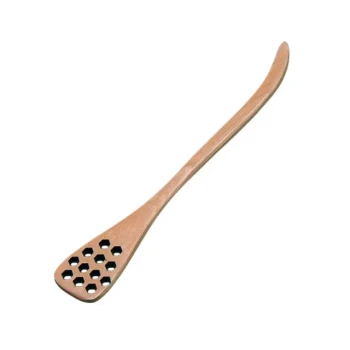
- Modern Honeycomb Pattern Wooden Honey Dipper for Stirring and Drizzling
- Economy Small Scale Honey Dryer Dehumidifier Thickening Machine
- Classic Honey Bear Jars with Flip Top Dispensing Cap for Liquid Sweeteners
- Inverted Squeezable Honey Jar with No Drip Flip Top Cap for Easy Pouring
People Also Ask
- Can you dehumidify honey? A Beekeeper's Guide to Preventing Fermentation
- How to dry up honey? The Safe Guide to Stabilizing Honey and Preventing Fermentation
- How can the moisture content of honey be reduced? A Guide to Safe, Effective Drying Methods
- How to remove humidity from honey? Protect Your Harvest from Fermentation
- How to decrease moisture in honey? Prevent Fermentation and Ensure Long-Term Quality