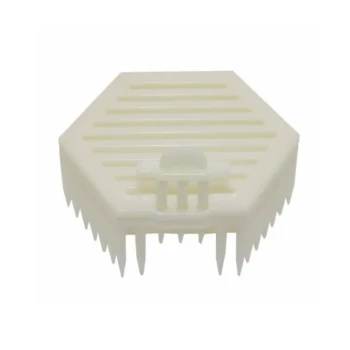
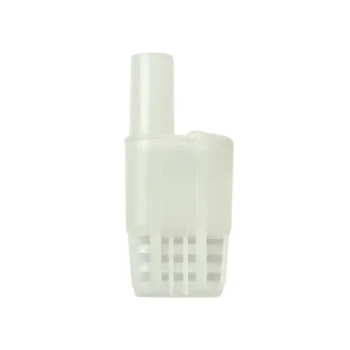
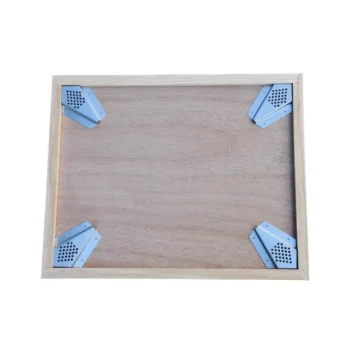
Wooden cages equipped with metal mesh function as a specialized semi-permeable barrier in field resistance tests, designed to isolate specific honeycombs containing bees, brood, and honey. Their primary purpose is to physically contain experimental treatments—specifically Entomopathogenic Nematode suspensions—while maintaining the environmental connectivity required for valid biological data.
The core value of this apparatus lies in its ability to balance containment with connectivity. It prevents the uncontrolled spread of pathogens across the hive while permitting the airflow and social interactions necessary to simulate natural immune responses.
Mechanisms of Control and Interaction
Preventing Experimental Contamination
The fundamental role of the wooden structure is physical isolation. By enclosing the target honeycomb, the cage prevents the unintended migration of applied treatments to the rest of the colony.
This is particularly critical when using fluid suspensions, such as Entomopathogenic Nematodes. The cage ensures the agent remains localized, protecting the broader hive population from exposure.
Maintaining Hive Atmospherics
While the wood isolates, the dual-sided metal mesh ensures the enclosed environment does not become stagnant.
The mesh allows for continuous airflow, preventing heat buildup or oxygen deprivation that could stress the bees and invalidate the test results.
Enabling Social Connectivity
Total isolation often alters insect behavior, rendering experiments useless. The mesh pores serve as a vital interface, allowing worker bees outside the cage to interact with the internal honeycomb.
This permeability ensures that the isolated bees remain integrated into the colony's pheromonal and sensory network, despite the physical barrier.
Simulating Natural Defenses
Observing Social Immunity
The ultimate goal of using this equipment is to observe natural resistance behaviors under controlled conditions.
The setup is specifically designed to allow the expression of social immunity, such as the detection and removal of infected larvae.
Realistic Biological Response
By allowing outside workers to interact with the interior through the mesh, the experiment simulates a realistic hive dynamic.
This ensures that the resistance data collected reflects true biological capabilities rather than artificial behaviors induced by stress or total separation.
Methodological Considerations and Trade-offs
The Barrier Limitation
While the mesh allows for interaction, it is still a physical impediment. Researchers must acknowledge that direct physical manipulation by outside workers is restricted compared to a completely open frame.
Dependency on Pore Size
The effectiveness of this function is entirely dependent on the mesh pore size.
If the pores are too small, airflow and sensory interaction are compromised; if they are too large, the containment of specific biological agents may fail.
Making the Right Choice for Your Goal
When designing a field resistance test, the configuration of your isolation cage dictates the quality of your data.
- If your primary focus is pathogen containment: Verify that the wooden frame is strictly sealed and the mesh size prevents any leakage of the Nematode suspension.
- If your primary focus is behavioral accuracy: Prioritize a mesh gauge that maximizes airflow and tactile interaction to ensure social immunity behaviors are not inhibited by the barrier.
This equipment ultimately provides the necessary compromise between rigorous experimental control and the chaotic reality of a living superorganism.
Summary Table:
| Function | Key Mechanism | Benefit to Experiment |
|---|---|---|
| Physical Isolation | Sealed wooden frame | Prevents cross-contamination and localized treatment spread |
| Atmospheric Regulation | Dual-sided metal mesh | Ensures continuous airflow and prevents heat stress |
| Social Integration | Mesh pore connectivity | Allows pheromonal interaction and social immunity expression |
| Behavioral Simulation | Semi-permeable barrier | Reflects natural hive dynamics for realistic biological data |
Elevate Your Beekeeping Operations with HONESTBEE
At HONESTBEE, we understand that precision is the backbone of successful commercial apiculture. Whether you are conducting rigorous field research or scaling up production, our comprehensive wholesale offering provides the specialized tools you need. From high-quality wooden hive components and metal mesh hardware to advanced honey-filling machines and hive-making equipment, we cater specifically to commercial apiaries and distributors worldwide.
Partner with us to access a full spectrum of industry-leading consumables and specialized machinery designed to optimize colony health and operational efficiency. Contact HONESTBEE today to discuss your bulk equipment needs and discover how our expertise can strengthen your supply chain.
References
- Mohamed S. Younis, Yasmin Fergani. Is It Possible to Use Entomopathogenic Nematodes inside Honey Bee, (Apis mellifera L.) Colonies?. DOI: 10.21608/eajbsa.2020.68034
This article is also based on technical information from HonestBee Knowledge Base .
Related Products
- Classic Wooden and Mesh California Queen Cage
- Wood and Mesh Push-In Queen Cage
- Premium Wood and Steel Push In Queen Cage
- Hexagonal Direct Comb Introduction Queen Bee Cage
- Professional Queen Cage with Sliding Gate and Feeder Plug
People Also Ask
- How are queen cages used to protect newly hatched queens? Secure Your Virgin Queens During Development
- Why are queen cages or grid cages used in bee studies? Achieve Precise Biological Data for Research
- Why are professional queen cages necessary for queen replacement? Secure Your Apiary’s Future
- What should be done if bees damage the queen cage? Secure Your Queen with These Emergency Intervention Steps
- What is the correct procedure for installing a queen cage into a new hive? A Pro Guide for Colony Success