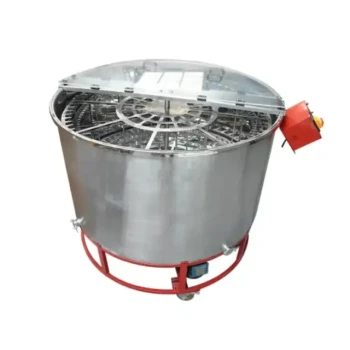
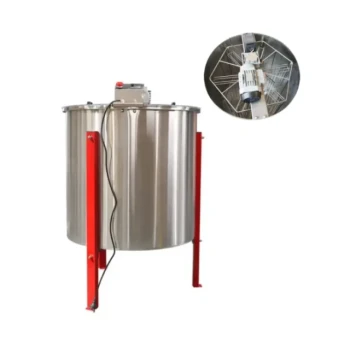
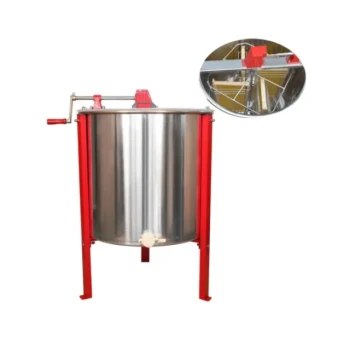
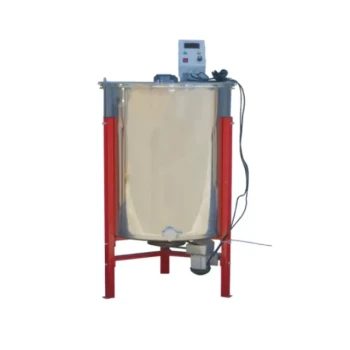
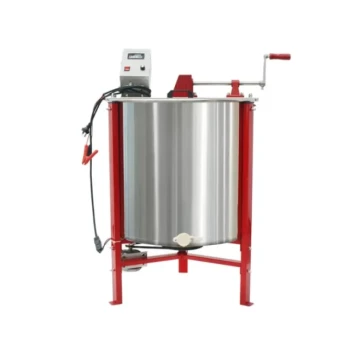
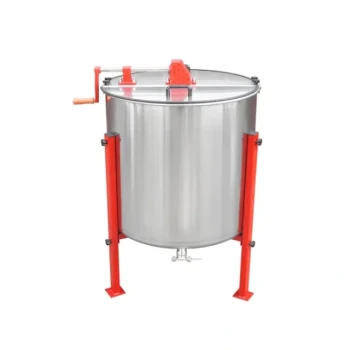
Selecting the correct honey extractor capacity is determined primarily by the current size of your operation and your anticipated growth. As a general rule, a 2-frame extractor is sufficient for 1-2 hives, a 6/3-frame extractor is suitable for 10-15 hives, and an 8/4-frame extractor is recommended for apiaries with 15 or more hives.
Core Takeaway Matching extractor capacity to hive count is a balance between efficiency and investment. While a 2-frame unit handles the basics for a couple of colonies, stepping up to a 6/3 or 8/4 combination model is essential for mid-sized apiaries to prevent the harvest process from becoming a significant bottleneck.
Matching Extractor Size to Apiary Scale
The Hobbyist (1-2 Hives)
For beekeepers maintaining a very small operation of just one or two hives, a 2-frame extractor is the standard recommendation.
At this volume, the time required to extract honey is minimal. A smaller unit offers a cost-effective solution without occupying excessive storage space.
The Growing Apiary (10-15 Hives)
Once an operation expands to between 10 and 15 hives, the efficiency of a 2-frame model becomes a liability.
For this intermediate stage, a 6/3-frame extractor is the appropriate choice. This capacity allows for faster processing of larger honey volumes, significantly reducing the labor hours required during harvest.
The Large-Scale Operation (15+ Hives)
For apiaries managing 15 hives or more, maximizing throughput is critical to managing the workload.
An 8/4-frame extractor is recommended at this level. These larger units are designed to handle the substantial volume produced by established colonies, ensuring the extraction process remains manageable.
Understanding Capacity Notation
The "Combo" Capacity (6/3 and 8/4)
You will notice recommendations often list capacity as "6/3" or "8/4." This notation refers to the machine's ability to accommodate different frame sizes.
Typically, the larger number refers to smaller frames (such as medium or shallow supers), while the smaller number refers to deep brood frames.
Frame Size Flexibility
A single machine often provides versatility depending on the frames you utilize.
For example, a unit might hold nine deep frames or, alternatively, eighteen medium frames. It is vital to verify that the specific model you choose can accommodate the frame dimensions used in your hives.
Strategic Trade-offs to Consider
Throughput vs. Physical Footprint
While larger extractors reduce the time spent spinning honey, they require significantly more floor space for operation and storage.
Moving from a 2-frame to an 8/4-frame model often means transitioning from a unit that can be stored on a shelf to one that requires dedicated floor space.
Initial Cost vs. Future-Proofing
A common pitfall is purchasing an extractor based solely on current hive counts without accounting for near-term growth.
If you plan to expand from 2 hives to 10 within a year, investing in a 2-frame extractor now may result in wasted capital. It is often more economical to purchase a slightly larger unit upfront than to upgrade shortly after.
Making the Right Choice for Your Goal
Before making a final decision, assess your long-term commitment to the scale of your apiary.
- If your primary focus is keeping a small, static backyard apiary: Stick to a 2-frame extractor to minimize cost and storage requirements.
- If your primary focus is expanding your operation over the next few seasons: Invest in a 6/3 or 8/4-frame model immediately to avoid outgrowing your equipment.
Select the tool that serves the apiary you plan to have next year, not just the one you have today.
Summary Table:
| Apiary Scale | Hive Count | Recommended Extractor Size | Key Benefit |
|---|---|---|---|
| Hobbyist | 1 - 2 Hives | 2-Frame Extractor | Cost-effective & compact storage |
| Growing Apiary | 10 - 15 Hives | 6/3-Frame Extractor | Faster processing; reduces labor |
| Large Scale | 15+ Hives | 8/4-Frame Extractor | Maximum throughput for high volumes |
| Commercial | 50+ Hives | Radial/Industrial Machinery | Industrial speed & automated workflow |
Scale Your Honey Production with HONESTBEE
Maximize your harvest efficiency with high-performance beekeeping machinery. HONESTBEE specializes in supporting commercial apiaries and distributors with a complete wholesale range of professional tools. Whether you need high-capacity honey extractors, hive-making machines, or honey-filling lines, we provide the industrial-grade equipment and consumables your business needs to grow.
Looking for bulk supplies or specialized hardware? Contact us today to receive a custom quote and expert consultation.
Related Products
- HONESTBEE 72 Frame Industrial Electric Honey Extractor for Beekeeping
- Commercial Electric 12 Frame Honey Extractor Spinner Motorized Honey Extractor
- HONESTBEE 6 Frame Self Reversing Electric Honey Extractor for Beekeeping
- HONESTBEE 3-Frame Manual Acrylic Honey Extractor
- Stainless Steel Manual 8 Frame Radial Honey Extractor Machine for Beehives
People Also Ask
- What is the importance of balancing honeycomb frames within a honey extractor? Ensure Stability and Protect Machinery
- How is honey separated from the frames after they are uncapped? Efficient Extraction Methods for High Yields
- What are the main benefits of using a honey extractor? Maximize Yields and Protect Your Honeycomb
- What are the recommended methods for removing honey from the honeycomb? Top Extraction Techniques for Maximum Efficiency
- How do manual honey extractors compare to electric honey extractors? Choosing the Right Tool for Your Apiary Growth