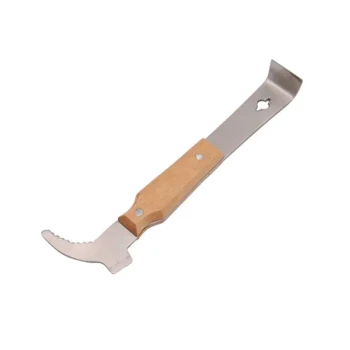
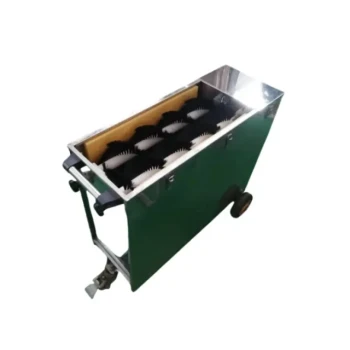
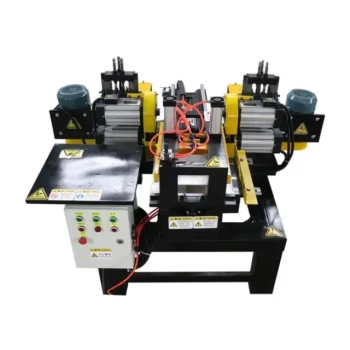
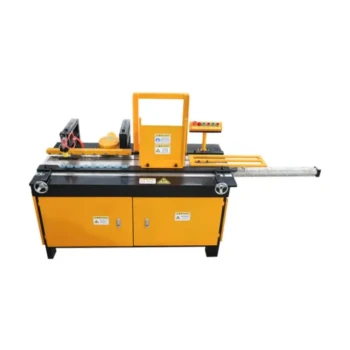
Efficiency, affordability, and ease of use are the primary drivers for small-scale family farms when selecting beekeeping machinery and tools. These operations prioritize equipment that lowers technical barriers, minimizes maintenance costs, and allows for immediate integration into local income-generating activities.
For distributors and resellers, the key to capturing the small-scale farm market lies in providing a comprehensive, standardized product portfolio that balances low-cost entry with the durability required for long-term agricultural success.
Prioritizing Operational Simplicity and Technical Accessibility
Lowering the Barrier to Entry
Small-scale family farms often rely on traditional experience blended with basic scientific knowledge. Equipment must be intuitive to operate, ensuring that farmers can manage hives effectively without intensive technical training.
Minimizing Maintenance Requirements
For these users, downtime is a significant risk to their seasonal income. Tools and machinery must be rugged and require minimal specialized upkeep, allowing farmers to focus on colony health rather than equipment repair.
Balancing Cost and Performance
Affordable investment costs are critical for small-scale operations looking to diversify their income. Resellers should focus on sourcing high-quality, cost-effective starter kits that include essential hand tools, smokers, and protective gear.
Scaling Equipment to Hive Population
The Transition to Semi-Commercial Scale
When a farm grows to 51–100 colonies, manual processes often become a bottleneck for labor efficiency. At this stage, distributors should offer more mechanized solutions, such as automated honey extractors and professional transport equipment.
Matching Tools to Task Intensity
The selection of protective gear depends heavily on the duration and intensity of the hive inspection. While full-body suits are necessary for long-duration maintenance, lightweight jackets and gloves are preferred for brief assessments and high-temperature environments.
Essential Startup Configurations
Every small-scale farm requires a foundational set of hardware, including Langstroth hives, hive stands, and feeding supplies. Providing these as a unified, one-stop sourcing package ensures compatibility and simplifies the procurement process for the end-user.
Ensuring Precision through Standardization
The Critical Role of "Bee Space"
Equipment must adhere to precise industry standards for "bee space" to prevent the construction of excess burr comb or propolis. Standardized dimensions allow for the easy interchange of frames, covers, and bottom boards across different hives.
Durability and Storage Optimization
Beekeeping equipment is a long-term investment that must be stored in dry, well-ventilated, and pest-free environments. Resellers who provide expert advice on maintenance and storage build deeper trust with their B2B clients.
Professional Manufacturing vs. DIY
While some farmers attempt to build their own covers or hive bodies, manufacturing high-precision frames is difficult and time-consuming. Commercial-grade, factory-made frames ensure structural integrity and better long-term performance for the apiary.
Understanding the Trade-offs
Manual Labor vs. Automation
The primary trade-off in small-scale beekeeping is between low upfront equipment costs and high manual labor intensity. While manual tools are affordable, they limit the number of hives a family can manage before productivity plateaus.
Investment Cost vs. Material Longevity
Cheaper materials may reduce initial capital requirements but often lead to higher replacement costs due to rot or pest damage. High-quality wood or specialized plastics provide better ROI through extended service life and improved colony protection.
Standardization vs. Customization
Custom-built equipment may solve specific local problems but often breaks compatibility with standard honey-filling lines or extractors. Sticking to global standards like the Langstroth system ensures that the farm can scale and integrate with industrial processing later.
Making the Right Choice for Your Goal
As a distributor or reseller, your sourcing strategy should reflect the specific growth stage and technical capability of your target market.
- If your primary focus is supporting new hobbyists: Prioritize one-stop starter kits that include entry-level protective gear, manual smokers, and standardized Langstroth hive bodies.
- If your primary focus is helping farms scale to semi-commercial levels: Focus on high-efficiency mechanization, such as electric extractors and automated monitoring systems that reduce labor per colony.
- If your primary focus is maximizing supply chain reliability: Emphasize rapid response times and ultra-fast delivery of standardized components to ensure your clients never miss a honey flow.
By aligning your product portfolio with these core attributes, you empower family farms to achieve sustainable growth while securing your position as a trusted industry partner.
Summary Table:
| Key Attribute | Focus Area for Small-Scale Farms | Distributor Strategy (B2B) |
|---|---|---|
| Simplicity | Intuitive use; low technical barriers | Supply standardized, ready-to-use kits |
| Affordability | Low entry cost; high ROI | Balance material quality with price points |
| Scalability | Transition to semi-commercial use | Offer mechanized extractors & transport gear |
| Standardization | Industry standards (e.g., Langstroth) | Ensure compatibility across all components |
| Durability | Rugged materials; low maintenance | Source high-precision, factory-made frames |
Elevate Your Beekeeping Wholesale Business with HONESTBEE
As a premier partner for distributors, wholesalers, and B2B resellers, HONESTBEE provides a comprehensive one-stop sourcing experience. Our full-spectrum portfolio includes everything from specialized hive-making and honey-filling machinery to essential beekeeping tools and unique honey-themed cultural merchandise.
We understand the needs of the commercial market, offering:
- Reliable Supply Chains: Ultra-fast delivery and efficient order fulfillment.
- Premium Support: Dedicated customer service and deep professional industry expertise.
- Scalable Solutions: High-quality products designed to maximize your profit margins and support OEM/ODM requirements.
Ready to secure a competitive edge in the beekeeping industry? Contact us today to explore our wholesale offerings!
References
- MONICA FRANCHI CARNIELLO, MARIANA ARANHA DE SOUZA. A APICULTURA COMO TECNOLOGIA SOCIAL NO DESENVOLVIMENTO LOCAL DA REGIÃO IMEDIATA DE ITAJUBÁ.. DOI: 10.29327/xiiicicted24.956147
This article is also based on technical information from HonestBee Knowledge Base .
Related Products
- Stainless Steel J Hook Hive Tool for Beekeeping
- HONESTBEE Classic Pry Bar Hive Tool with High Visibility Finish for Beekeeping
- HONESTBEE 15-in-1 Beekeeper Multi-Tool with Hammer and Pliers for Beekeeping
- HONESTBEE Professional Mini J-Hook Hive Tool for Beekeeping
- Multi-Function Plier-Style Frame Grip Hive Tool
People Also Ask
- What specific challenges do beekeeping hive tools address during hive maintenance? Essential Solutions for Apiaries
- What is a J-hook hive tool and why is it favored by some beekeepers? Master Gentle Frame Handling
- What are the features of a J-hook hive tool? Effortlessly Lift Frames with Superior Leverage
- What is the purpose of the J-hook hive tool? Effortlessly Lift Frames with Superior Leverage
- How is a J-hook hive tool designed and what is its primary use? Master Effortless Hive Inspections