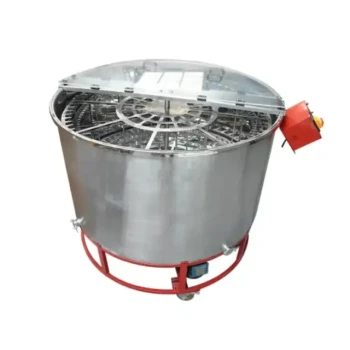
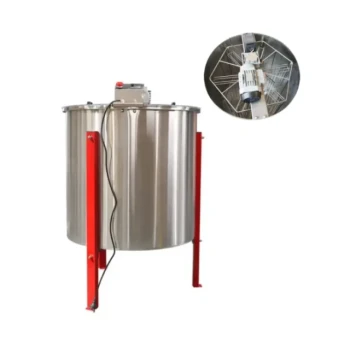
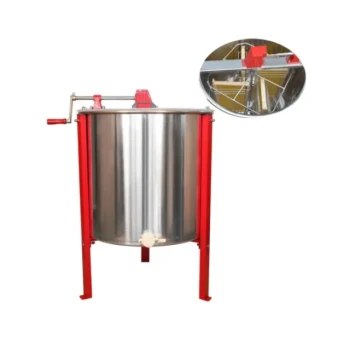
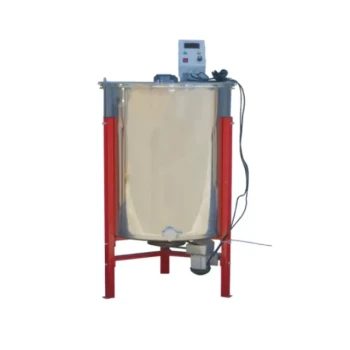
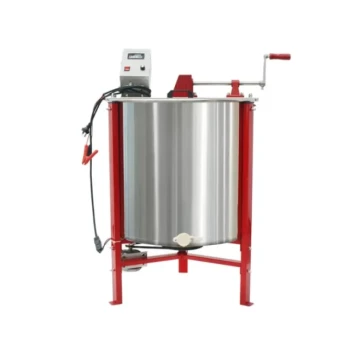
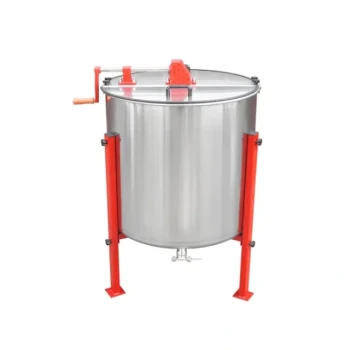
To use a honey extractor effectively, you must follow a specific five-step sequence aimed at preserving the comb. Begin by using a bee brush to gently remove bees from the frame, then remove the wax cappings from the cells. Load the frames vertically into the extractor and spin for 5 to 6 minutes; reverse the direction (or manually flip the frames) to extract the second side. Finally, collect the honey in a clean bucket for processing.
The true value of a honey extractor lies in its ability to use centrifugal force to harvest honey while leaving the wax honeycomb structure intact, allowing you to return the frames to the hive for immediate reuse by the colony.
Preparing for Extraction
Clearing the Hive Frames
Before bringing frames to your extraction area, you must ensure they are free of bees. Use a bee brush to wipe any lingering bees off the frame gently to avoid agitating them or contaminating the harvest.
Uncapping the Wax Cells
Honey cannot exit the comb if the cells remain sealed. You must physically remove the wax caps from the honeycomb cells. This prepares the frame for the centrifugal process that follows.
Operating the Extractor
Loading the Unit
Place each uncapped frame vertically inside the extractor basket. It is critical to load the machine in a balanced manner. An unbalanced load will cause excessive vibration and potential damage to the equipment during the spin cycle.
The Spinning Cycle
Once loaded, spin the frames for 5 to 6 minutes in one direction. Ideally, start at a slower speed and gradually increase it. This initial spin removes the bulk of the honey from the first side.
Extracting the Second Side
Honey must be removed from both sides of the foundation. If you are using a reversible extractor, simply reverse the spin direction. If using a tangential extractor, you must stop the machine and manually flip the frames to expose the other side before spinning again.
Finalizing the Harvest
Collection and Filtering
Open the gate at the bottom of the extractor to let the honey flow into a clean bucket. While the primary reference suggests simply collecting it, best practice dictates filtering the honey at this stage to remove suspended wax particles and impurities before bottling.
Common Pitfalls to Avoid
Speed vs. Comb Integrity
A common mistake is spinning the extractor at excessive speeds too quickly. While you need centrifugal force, too much pressure can cause the honeycomb to break or "blow out." Control your speed to protect the wax structure.
Extracting Unripe Honey
Avoid attempting to extract honey from uncapped or unripe honeycombs. Unripe honey has a high water content and can spoil; only harvest frames where the bees have capped the majority of the cells.
Equipment Overload
Do not overload the extractor with an excessive number of frames beyond its rated capacity. This strains the mechanism and often results in uneven extraction or mechanical failure.
Making the Right Choice for Your Goal
To get the most out of your extraction process, tailor your approach to your specific objectives:
- If your primary focus is comb preservation: Start your spin cycle slowly and gradually increase speed to prevent the centrifugal force from shattering the wax.
- If your primary focus is equipment longevity: Prioritize balancing the load perfectly to minimize vibration and wear on the central shaft and bearings.
- If your primary focus is honey clarity: Integrate a filtration step immediately as the honey exits the extractor to remove debris before it settles.
By mastering the mechanical process and respecting the delicate nature of the comb, you ensure a clean harvest and a sustainable cycle for your bees.
Summary Table:
| Step | Action Item | Key Goal |
|---|---|---|
| 1. Preparation | Clear bees and uncap wax | Expose honey cells for extraction |
| 2. Loading | Place frames vertically and balance load | Prevent machine vibration and damage |
| 3. First Spin | Spin for 5-6 minutes at gradual speed | Extract honey from the first side |
| 4. Reversing | Flip frames or reverse spin direction | Complete extraction for the second side |
| 5. Collection | Open gate and filter into clean bucket | Remove impurities for a clear final product |
Scaling Your Honey Production?
At HONESTBEE, we specialize in empowering commercial apiaries and beekeeping distributors with professional-grade solutions. Whether you need high-capacity honey extractors, specialized honey-filling machines, or durable beekeeping tools, our comprehensive wholesale portfolio is designed to maximize your efficiency and output.
From industrial-scale machinery to essential consumables and honey-themed cultural merchandise, we provide the hardware and expertise to grow your business. Contact us today to discover how HONESTBEE can streamline your harvesting operations with a tailored wholesale partnership.
Related Products
- HONESTBEE 72 Frame Industrial Electric Honey Extractor for Beekeeping
- Commercial Electric 12 Frame Honey Extractor Spinner Motorized Honey Extractor
- HONESTBEE 6 Frame Self Reversing Electric Honey Extractor for Beekeeping
- HONESTBEE 3-Frame Manual Acrylic Honey Extractor
- Stainless Steel Manual 8 Frame Radial Honey Extractor Machine for Beehives
People Also Ask
- What is the importance of balancing honeycomb frames within a honey extractor? Ensure Stability and Protect Machinery
- How is honey separated from the frames after they are uncapped? Efficient Extraction Methods for High Yields
- What are the main benefits of using a honey extractor? Maximize Yields and Protect Your Honeycomb
- What are the recommended methods for removing honey from the honeycomb? Top Extraction Techniques for Maximum Efficiency
- How do manual honey extractors compare to electric honey extractors? Choosing the Right Tool for Your Apiary Growth