Emergency worker-cell queen rearing is operationally simple and inexpensive, but it carries a higher risk of producing inferior queens. By removing the queen or splitting a colony, beekeepers can allow queenless workers to convert existing worker cells into emergency queen cells using standard brood frames, nucleus hives, and basic equipment. The trade-off is reduced control over larval age, cell placement, feeding conditions, and production consistency compared with specialized queen-rearing systems.
Emergency rearing is valuable for rapid, low-cost colony recovery, especially when equipment or time is limited. Specialized setups require greater investment and management skill, but they provide tighter control over larval selection, nutrition, scale, and queen quality.
Where Emergency Rearing Provides Operational Advantages
Lower Equipment and Setup Costs
Emergency queen rearing uses equipment already present in most apiaries, including brood frames, standard hive bodies, and nucleus colonies. It avoids the immediate need for grafting needles, artificial cell cups, cell bars, incubators, and dedicated mating equipment.
This makes the method practical for small operations, remote apiaries, or urgent colony-replacement situations where a specialized setup is not immediately available.
Faster Response to Queen Loss
When a colony suddenly becomes queenless, worker bees can begin modifying suitable worker cells into emergency queen cells. The beekeeper can therefore initiate queen replacement without waiting for purchased queens or preparing a complete production system.
For distributors and commercial suppliers, this operational simplicity also supports a basic emergency-recovery offering built around standard hive components rather than a complex equipment package.
Minimal Training Requirements
Emergency rearing does not require precise grafting technique or detailed handling of newly hatched larvae. The colony performs the cell conversion and much of the nursing work naturally.
That lowers the training barrier for beginning beekeepers and allows experienced operators to restore a colony quickly when controlled queen production is not the primary objective.
Useful for Small-Scale Replacement
A beekeeper needing only a limited number of replacement queens may not justify the labor and capital required for a dedicated queen-rearing operation. Emergency cells can provide a practical solution when uniformity and high-volume output are less important than restoring colony function.
Why Specialized Equipment Improves Control
More Precise Larval Selection
Professional queen-rearing systems allow operators to select larvae under 36 hours old for grafting or transfer. This matters because young larvae have the greatest opportunity to receive the feeding regime required for full queen development.
Emergency-rearing colonies do not provide the same level of selection control. Workers may choose larvae that are too old, particularly when the colony is responding urgently to queen loss.
Better Control of Cell Placement and Handling
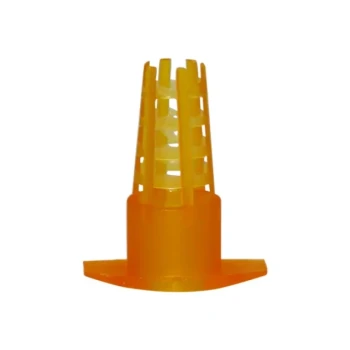
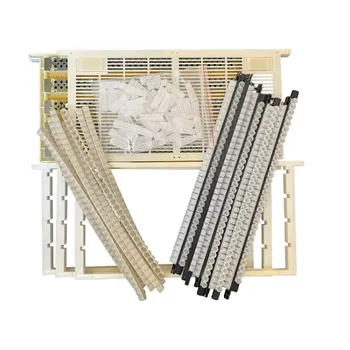
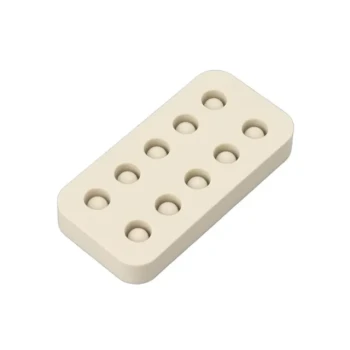
Cell cups, cell bars, and industrial queen-rearing frames organize queen cells in consistent positions. Pre-spaced cell bars can reduce the labor of attaching individual cups, while segmented designs make it easier to separate mature cells for later colony management.
This standardized arrangement improves handling efficiency and reduces disruption during transfer, grafting, and mating-nuc preparation.
Stronger Feeding and Nursing Management
Starter and finisher hives can be configured for the different nutritional and nursing requirements of early and later queen development. Separating these phases gives the beekeeper more control over the conditions surrounding the developing queen cells.
Emergency cells depend primarily on the conditions of the queenless colony at that moment. Colony strength, nurse-bee availability, and nutritional status may vary substantially between batches.
Higher Throughput and Uniformity
Industrial queen-rearing frames can support the simultaneous production of hundreds of queen cells. This is a major operational advantage for commercial apiaries, colony-replacement programs, and distributors serving customers with recurring demand.
A controlled system also creates a more uniform developmental environment, improving consistency among queens produced in the same batch.
Improved Genetic and Production Control
Specialized equipment supports planned grafting, cell transfer, mating-nuc management, and the propagation of selected bee strains. Temperature- and humidity-controlled incubators can provide a more consistent physiological environment for developing larvae.
These controls are important when queen quality, genetic characteristics, and repeatable production outcomes directly affect commercial value.
The Main Quality Risk in Emergency Rearing
Older Larvae Can Produce Weaker Queens
The most important risk is the selection of larvae that are older than approximately 36 hours. In an emergency response, workers may begin with existing worker-cell larvae that have already progressed too far in development.
Queens raised from older larvae may be smaller, develop fewer ovarioles, and have reduced reproductive capacity. The result may be a queen that is accepted by the colony but performs below the standard expected from a fully developed production queen.
Worker Cells Do Not Provide the Same Starting Conditions
Emergency queen cells are created by modifying worker cells. The colony must adapt the existing cell structure rather than begin with a purpose-designed queen cup and a deliberately selected larva.
That conversion can work effectively for colony survival, but it offers less control over cell geometry, larval age, and the timing of feeding than a planned grafting system.
Colony Conditions Can Vary
The quality of an emergency queen also depends on the strength and condition of the queenless colony. A colony with insufficient nurse bees, poor nutrition, or limited resources may not provide the same support as a dedicated starter-finisher arrangement.
For this reason, emergency rearing should be evaluated as a recovery method rather than automatically treated as equivalent to controlled production rearing.
Understanding the Trade-offs
Emergency Rearing Favors Availability
The principal advantage is availability: the method can begin with equipment and biological resources already in the hive. It is especially useful when rapid intervention matters more than precise control.
Its limitations are less visible at the start. A colony may appear to recover successfully, while the replacement queen later reveals weaker reproductive performance.
Specialized Systems Favor Repeatability
A specialized setup favors repeatability through standardized cell cups, organized cell bars, controlled larval selection, dedicated nursing configurations, and mating equipment. These features increase the probability of consistent queen development across multiple production cycles.
However, the system requires capital, consumables, labor, training, and reliable supply of compatible components. Equipment availability and fulfillment speed can therefore affect the practical value of the system.
Precision Does Not Eliminate All Biological Risk
Specialized equipment improves control, but it does not guarantee superior outcomes in every case. Grafting skill, colony strength, nutrition, mating conditions, and handling practices still influence final queen quality.
The correct comparison is therefore not “natural versus artificial” in absolute terms. It is limited control with low overhead versus higher control with greater operational complexity.
Equipment Compatibility Matters
Cell cups, bars, frames, incubators, starter-finisher hives, and mating nucs must work together as an operating system. Buying isolated components without considering spacing, transfer steps, and colony configurations can create bottlenecks.
For commercial buyers, a full-spectrum supplier that can provide compatible equipment, consumables, and responsive technical support may reduce procurement delays and simplify order fulfillment.
Making the Right Choice for Your Goal
The appropriate method depends on whether the priority is urgent recovery, low-cost operation, predictable quality, or commercial scale.
- If your primary focus is rapid colony recovery: Use emergency worker-cell rearing when standard brood equipment is available and immediate queen replacement is more important than maximum queen quality.
- If your primary focus is low capital expenditure: Use emergency rearing for occasional replacement needs, while recognizing that outcomes may vary with larval age and colony condition.
- If your primary focus is queen quality: Use grafting or another controlled method that allows deliberate selection of larvae under 36 hours old and provides stronger control over nursing conditions.
- If your primary focus is high-volume production: Use standardized cell cups, cell bars, rearing frames, starter-finisher configurations, and mating nucs to improve throughput and batch consistency.
- If your primary focus is dependable commercial fulfillment: Source compatible equipment and consumables through a supplier able to provide broad product coverage, rapid response, technical expertise, and efficient delivery.
Emergency rearing is an efficient recovery tool, while specialized equipment is the stronger choice when queen quality, consistency, and production scale determine the economics of the operation.
Summary Table:
| Aspect | Emergency Worker-Cell Rearing | Specialized Queen-Rearing Equipment |
|---|---|---|
| Cost | Low, uses existing equipment | Higher, requires investment in specialized tools |
| Setup Time | Rapid, minimal training | Requires skill and preparation |
| Larval Age Control | Poor, larvae may be too old | Precise, select larvae under 36 hours |
| Cell Management | Limited, relies on natural conversion | Controlled, standardized cell cups and bars |
| Feeding Control | Dependent on colony condition | Optimized with starter/finisher hives |
| Throughput | Low, few queens at a time | High, hundreds of queens simultaneously |
| Consistency | Variable, affected by colony | Uniform, predictable outcomes |
| Quality Risk | Higher, weaker queens possible | Lower, better development conditions |
| Best For | Emergency recovery, small-scale replacement | Commercial production, quality-focused operations |
Ready to enhance your queen-rearing operation? HONESTBEE offers a full spectrum of beekeeping equipment, from emergency rearing essentials to advanced grafting systems. As a trusted wholesale supplier for commercial apiaries and distributors, we provide one-stop sourcing, rapid delivery, and expert support to keep your colonies thriving. Contact us today to discuss your needs and get a tailored quote—get in touch with our team!
Related Products
- JZBZ Style Push-In Cell Protector for Professional Queen Rearing Kits
- JZBZ Style Shipping Cell Protector for Queen Rearing Kit
- JZBZ Langstroth Queen Rearing Frame for Beekeeping
- Premium Nicot Style Cell Bar Holder and Queen Cell Cup Holder System
- JZBZ Type Wide Base Plastic Queen Cell Cups for Base Mounting and Queen Rearing
People Also Ask
- What is the necessity of using queen cell protectors or emergence cages during the late stages of honeybee queen rearing?
- What are some methods and types of queen cell protectors? Safeguard Your Queen Introduction Process
- What is the role of queen cell protectors and emergence cages? Secure Your Genetic Stock and Hive Stability
- What is the primary reason for using queen cell protectors? Secure Your Yield with Proven Protection
- What is the purpose of queen cell protectors in a hive? Secure Your Hive's Future with Professional Protection