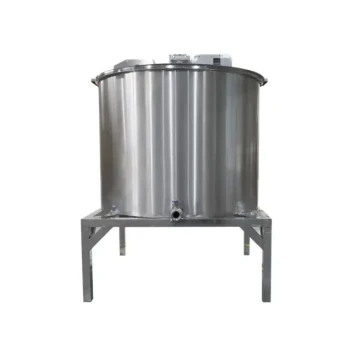
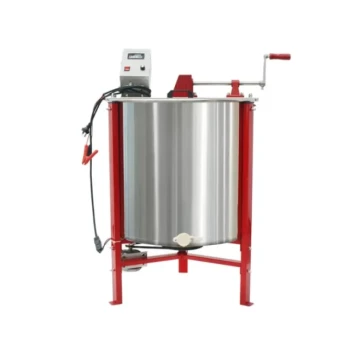
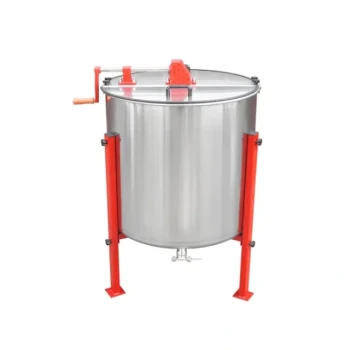
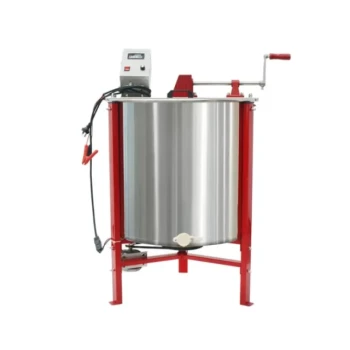
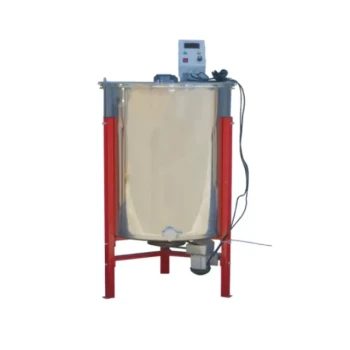
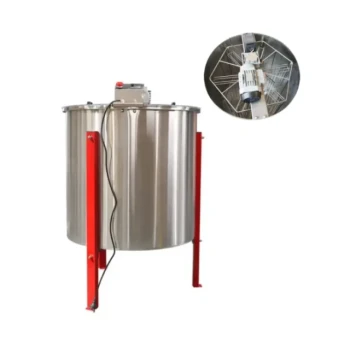
Automated honey extraction represents a critical evolution in modern apiary management, fundamentally shifting operations from manual labor to streamlined industrial processing. The primary advantages are a significant increase in labor productivity and a drastic reduction in the time required to move honey from the hive to storage containers, which directly lowers unit production costs through technical economies of scale.
By replacing labor-intensive manual tasks with mechanized operations, automation allows apiaries to handle peak honey flows without bottlenecks. This investment drives down the cost per unit of honey produced, ensuring economic sustainability and market competitiveness for both growing family farms and large commercial entities.
Maximizing Operational Efficiency
Accelerating the Harvest Cycle
The most immediate impact of automation is the reduction of honey turnover time. Automated machinery allows beekeepers to process frames and extract honey rapidly, significantly shortening the duration between removing frames from the hive and placing the product into storage.
Capturing Peak Production
During peak honey flow periods, manual extraction often creates a backlog that limits how much honey can be harvested. Industrial-grade centrifugal and filtration processes ensure apiaries can maximize the capture of output, even in areas with high-density bee populations. This speed ensures that yield per hive is maximized rather than limited by human processing speed.
Reducing Labor Dependency
Advanced machinery replaces the most physically demanding and repetitive manual tasks with mechanized operations. This allows staff to focus on apiary management rather than extraction, effectively increasing labor productivity across the entire operation.
Economic Implications and Scalability
Lowering Unit Production Costs
The primary reference highlights that automation utilizes technical scale effects to lower production costs. By processing larger volumes in less time, the cost attributed to producing each kilogram of honey decreases, directly enhancing the apiary's profit margins.
Balancing Operational Expenses
Commercial beekeeping involves high overhead, including colony replenishment and general management. High-efficiency production equipment provides the stable cash flow needed to offset these expenses. Furthermore, by improving the commercialization rate of honey, beekeepers can maintain profitability even when revenue from pollination services is insufficient.
Product Quality and Standardization
Ensuring Hygiene and Purity
Manual extraction introduces risks of contamination and inconsistency. Automated systems, particularly those with closed centrifugal and filtration units, maintain strict hygiene standards. This technology helps produce impurity-free honey, which is critical for meeting export trade standards and securing premium market prices.
Preserving Nutritional Value
Professional extraction machinery is designed to increase harvest efficiency while preserving natural nutrients. By minimizing the honey's exposure to the environment and controlling the processing conditions, the final product retains a higher quality profile compared to slower, more invasive manual methods.
Consistent Packaging
While the primary focus is extraction, integrated automated filling machinery ensures high consistency in fill volume and product specifications. This reduces honey loss during packaging and supports the standardized management required for building a reliable commercial brand.
Operational Considerations and Trade-offs
Capital Intensity vs. Labor Savings
While unit costs decrease over time, the initial transition to industrial-scale production requires significant upfront capital investment. Apiaries must calculate the break-even point where labor savings and increased yield justify the cost of the machinery.
Maintenance and Complexity
Moving from manual tools to automated assembly lines introduces technical complexity. Beekeepers must be prepared to manage equipment maintenance and calibration to ensure the machinery continues to operate at the high-precision levels required for consistent output.
Making the Right Choice for Your Goal
Whether you are scaling a family run operation or managing a commercial enterprise, the technology you choose should align with your specific business objectives.
- If your primary focus is Scaling Production: Prioritize machinery with high centrifugal output to shorten turnover time during peak honey flows, ensuring you capture maximum yield per hive.
- If your primary focus is Brand Consistency: Invest in equipment that integrates extraction with high-precision filling systems to guarantee hygiene and standardized product specifications for retail.
Automating extraction is the most effective lever for reducing unit costs and transforming a labor-intensive apiary into a sustainable, industrial-grade business.
Summary Table:
| Key Advantage | Manual Extraction | Automated Machinery | Business Impact |
|---|---|---|---|
| Processing Speed | Slow, labor-intensive | High-speed centrifugal | Faster turnover & higher yields |
| Labor Costs | High per-unit dependency | Minimal; focus on management | Lower unit production costs |
| Product Quality | Variable hygiene | Consistent & impurity-free | Premium market pricing |
| Scalability | Limited by physical labor | High; handles peak flows | Technical economies of scale |
Elevate Your Honey Production with HONESTBEE
Ready to transform your labor-intensive harvest into a streamlined industrial operation? HONESTBEE specializes in empowering commercial apiaries and distributors with high-performance beekeeping technology.
From industrial-grade honey-filling machines to advanced hive-making hardware and essential consumables, we provide the full spectrum of tools needed to lower your unit costs and maximize profit margins. Whether you are scaling a family business or managing a large-scale commercial enterprise, our comprehensive wholesale offerings ensure you stay competitive in the global market.
Maximize your yield today. Contact our experts for a custom equipment solution!
References
- Alla Chmil. MODELING OF THE BEEKEEPING SECTOR BY USING THE AGMEMOD MODEL FOR UKRAINE. DOI: 10.32782/2415-8801/2019-6.37
This article is also based on technical information from HonestBee Knowledge Base .
Related Products
- Commercial Electric 12 Frame Honey Extractor Spinner Motorized Honey Extractor
- HONESTBEE 72 Frame Industrial Electric Honey Extractor for Beekeeping
- 32 Frame Commercial Electric Honey Extractor for Beekeeping and Honey Production
- Stainless Steel Manual 8 Frame Radial Honey Extractor Machine for Beehives
- HONESTBEE 6 Frame Three Use Electric Honey Extractor for Beekeeping
People Also Ask
- Who are commercial honey extractors designed for? Scaling Your Industrial Beekeeping Success
- What is a commercial honey extractor? The Essential High-Volume Solution for Large Apiaries
- How is honey extracted commercially? Maximize Your Apiary's Efficiency and Honey Yield
- What are commercial honey extractors used for? Boost Your Apiary's Efficiency & Profitability
- What are the advantages of motorized extractors? Boost Honey Production and Save Time