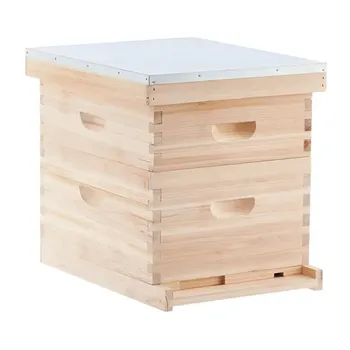
Standardized wooden hive boxes are the cornerstone of professional meliponiculture. These structures provide a stable, bio-mimetic environment that mimics natural tree hollows, ensuring colony health while enabling the rapid transport and systematic inspection required for large-scale commercial pollination. By bridging the gap between natural nesting habits and industrial agricultural needs, they serve as the essential vehicle for modern, scalable stingless bee management.
Standard wooden hive boxes transform stingless beekeeping from a niche practice into a scalable commercial service. Their modular design optimizes colony health, simplifies logistics, and ensures the consistent pollination performance required by high-value agricultural operations.
The Strategic Advantage of Standardization
Simulating the Natural Environment
Standard wooden boxes provide a stable physical environment that closely replicates the natural tree hollows preferred by species like Tetragonula pagdeni. This bio-mimetic approach reduces colony stress and promotes the natural nesting biology of the bees.
Streamlined Logistics and Transport
The uniform dimensions of standardized boxes are critical for efficient transport between pollination zones. This consistency allows for predictable stacking and securing during transit, which is vital for distributors managing large-scale colony deployments across diverse agricultural sites.
Rapid Health and Status Inspections
Standardized structures allow beekeepers to quickly verify the queen-right status and resource levels of a colony. Before deployment, operators can efficiently assess honey and pollen stores to ensure the pollinators are healthy and active enough for the rigors of commercial work.
Enhancing Operational Efficiency
Modular Design for Scalability
The modular nature of these hives supports artificial colony division and splitting, which is essential for scaling operations. This allows commercial providers to multiply their "pollination units" rapidly to meet increasing market demand.
Optimized Productivity Monitoring
Vertical wooden hive boxes often utilize a layered structure that isolates the brood area from honey storage pots. This configuration allows for routine inspections and honey harvesting with minimal disturbance to the queen and larvae, maintaining colony stability throughout the pollination season.
Precision Deployment in Greenhouses
The rectangular design of modern wooden hives acts as a core vehicle for industrial management in controlled environments. They are easily integrated into strawberry and tomato greenhouses, where precise placement is required to maximize crop yields.
Ensuring Long-Term Colony Sustainability
Thermal and Humidity Regulation
Wooden materials offer natural temperature and humidity buffering, which is critical for species like Tetragonula iridipennis. This thermal balance protects the colony from extreme external fluctuations, ensuring the vitality and longevity of the bees in varied climates.
Minimizing Hive Damage
The use of removable internal structures and supers significantly reduces physical damage during maintenance or honey extraction. Unlike traditional harvesting methods, these professional hives allow for the sustainable collection of honey and propolis without compromising the core colony structure.
Professionalism and Public Engagement
For tourism-oriented apiaries or "melitourism," wooden hives can be equipped with transparent covers. This allows for safe observation of bee activity, adding value for distributors who supply educational or eco-tourism sectors.
Understanding the Trade-offs
Material Quality and Maintenance
While wood is an excellent insulator, it is susceptible to weathering and rot if not properly treated or sourced. High-quality timber is required to ensure the hives last multiple seasons, which may increase the initial capital investment for wholesalers.
Weight and Handling
Wooden boxes are generally heavier than plastic alternatives, which can impact shipping costs and manual handling requirements. Distributors must balance the biological benefits of wood against the logistical costs of weight in their supply chain.
Species-Specific Customization
A "one-size-fits-all" approach may not work for every stingless bee species. Standardized boxes must still be selected based on the specific nesting volumes required by the target species to prevent pest infestations or colony failure.
Making the Right Choice for Your Goal
As a distributor or B2B reseller, selecting the right hive system is about balancing biological success with operational efficiency. Our expertise ensures you have access to a full-spectrum portfolio designed for rapid fulfillment.
- If your primary focus is rapid business scaling: Prioritize modular, vertical wooden hives that facilitate easy colony splitting and high-volume transport.
- If your primary focus is greenhouse pollination services: Choose standardized rectangular boxes that offer precise placement and superior thermal stability for controlled environments.
- If your primary focus is sustainable high-end honey production: Invest in hives with dedicated super structures that isolate honey storage to minimize colony disturbance during harvest.
By utilizing standardized wooden hives, commercial operations can ensure the reliable, healthy, and scalable pollination services that modern agriculture demands.
Summary Table:
| Key Benefit | Operational Impact | Commercial Value for Distributors |
|---|---|---|
| Standardization | Enables predictable stacking and rapid transport | Simplifies large-scale logistics and deployment |
| Modular Design | Facilitates easy colony splitting and division | Allows for rapid scaling of pollination units |
| Thermal Regulation | Provides natural insulation and humidity control | Ensures colony longevity and reduced replacement costs |
| Vertical Supering | Isolates honey storage from the brood area | Higher purity honey and efficient harvesting |
| Bio-mimetic Structure | Mimics natural tree hollows to reduce bee stress | Promotes healthier colonies and consistent performance |
Scale Your Beekeeping Business with HONESTBEE
Are you a distributor, wholesaler, or B2B reseller looking to dominate the commercial pollination market? HONESTBEE is your premier partner for one-stop beekeeping sourcing. We provide a comprehensive full-spectrum portfolio designed to maximize your profit margins and operational reliability.
Why partner with HONESTBEE?
- Complete Equipment Range: From specialized hive-making hardware to advanced honey-filling machines and essential consumables.
- Rapid Fulfillment: Benefit from our ultra-fast delivery and efficient order fulfillment to keep your inventory moving.
- Expert Support: Leverage our deep professional industry expertise and dedicated customer service for OEM/ODM requirements.
- Premium Quality: Supply your clients with tools that ensure colony sustainability and high-performance pollination.
Ready to elevate your supply chain? Contact us today to explore our wholesale offerings!
References
- Kanyanat Wongsa, Atsalek Rattanawannee. Pollination efficacy of stingless bees, <i>Tetragonula pagdeni</i> Schwarz (<i>Apidae</i>: <i>Meliponini</i>), on greenhouse tomatoes (<i>Solanum lycopersicum</i> Linnaeus). DOI: 10.7717/peerj.15367
This article is also based on technical information from HonestBee Knowledge Base .
Related Products
- 5 Frame Wooden Nuc Box for Beekeeping
- Wholesales Dadant Size Wooden Bee Hives for Beekeeping
- Wooden Bee Hive Frames for Beekeeping and Wholesale
- HONESTBEE Wooden Bee Escape Board with Triangle Mesh Design for Beekeeping
- Australian Langstroth Beehive Boxes for Beekeeping Wholesales
People Also Ask
- What are the options for adding frames to a nuc after taking two frames from the parent colony?
- What frames should be moved into the queenless hive when requeening with a nuc? Ensure a Successful Queen Introduction
- What roles do five-frame nucleus boxes and ten-frame Langstroth hive boxes play in colony standardization?
- What is the primary function of five-frame nuclei boxes? Master Early Colony Establishment for Stronger Hives
- What is the typical composition of frames in a nuc? A 5-Frame Blueprint for a Thriving Hive